IndexNow Explained: the Protocol, Key and Engines

IndexNow is a ping protocol with one unusual rule: you notify one participating search engine, and that engine shares your notification with every other participant. Submit once, and Bing, Yandex, Naver, Seznam and Yep all hear about the URL, without you pinging five endpoints. This guide walks the whole protocol with the same worked example domain as the rest of this blog, example.com: what a ping actually contains, how the key and its file prove you own the host, the single URL and bulk submission formats, every response code the engines can answer with, and the honest limits of what a notification can do. There is also a submission builder you can type your own host and key into, which renders the exact requests to send.
Key takeaways#
- IndexNow notifies engines that a URL was added, updated or deleted. It does not submit content, does not create indexing, and does not replace a sitemap.
- One submission reaches all participating engines, because every engine in the protocol agrees to share the URLs it receives with the other participants.
- The five engines behind the protocol are Microsoft Bing, Naver, Seznam.cz, Yandex and Yep. Google does not participate.
- The key is 8 to 128 characters from letters, digits and dashes, and it lives in a UTF-8 text file named after itself,
{your-key}.txt, hosted on the same host as the URLs you submit. - A single URL goes by GET, a batch goes by POST with up to 10,000 URLs, and the six response codes are documented and specific.
What the protocol actually is#
IndexNow is a simple ping. Your server tells a search engine "this URL changed", and the engine decides for itself what to do with that information, usually scheduling a crawl of the page. The protocol defines only the message, the key that proves you may send it, and the acknowledgment.
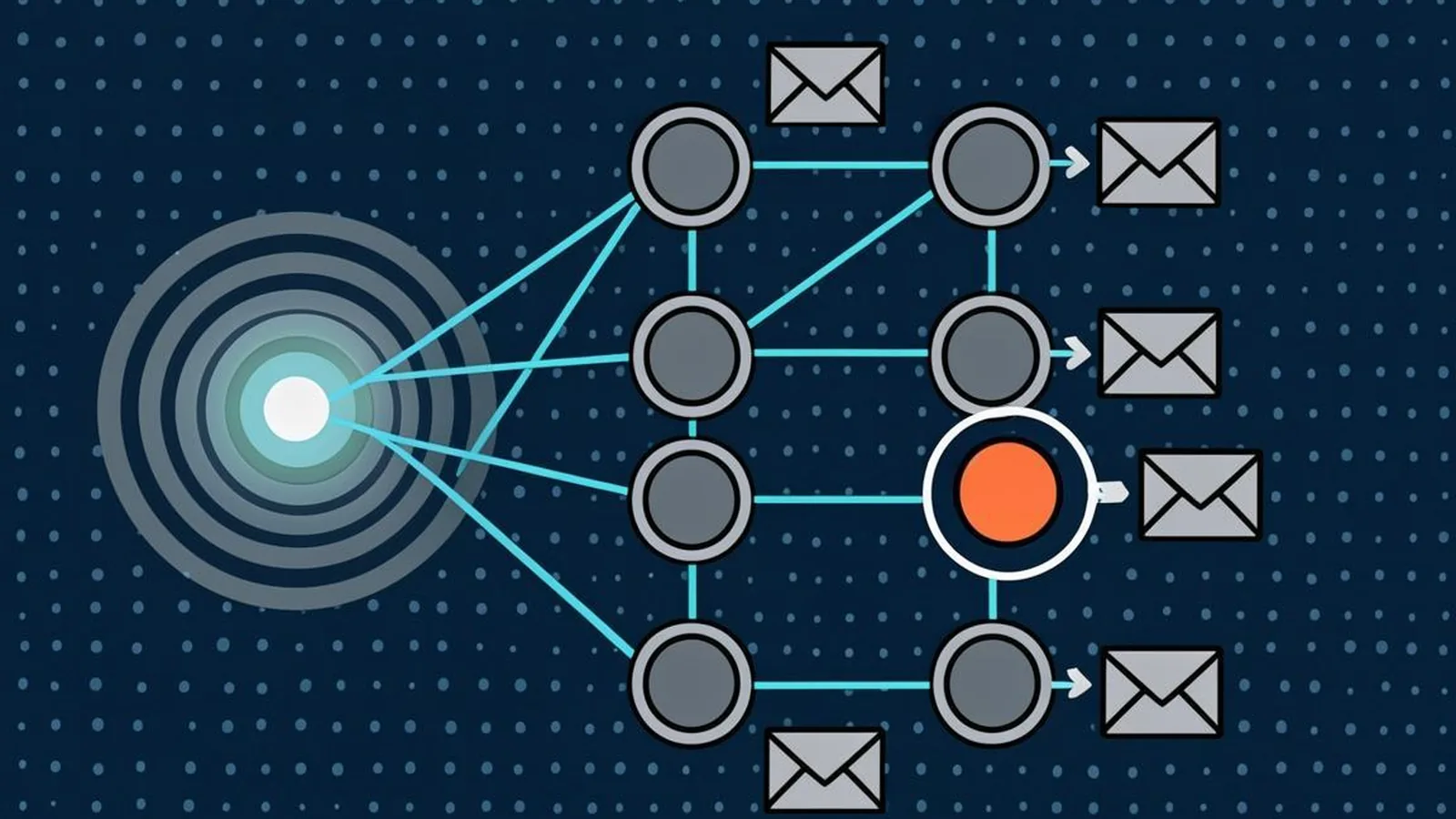
What makes it unusual is the sharing rule baked into the protocol itself. A search engine joining IndexNow agrees to share the URLs it receives with all other participating engines, so a submission to one endpoint fans out to everyone. That is the whole growth strategy of the protocol: every new participant makes every existing submission more valuable.
The participation requirement cuts both ways, and it is worth knowing what it does not mean. The engines receive your URL; nothing obliges them to crawl it promptly or index it at all. IndexNow buys you the notification channel, not the outcome, and the section on limits below is the honest version of that sentence.
The five engines#
| Engine | Notes |
|---|---|
| Microsoft Bing | The anchor engine; ChatGPT search, Microsoft Copilot and DuckDuckGo draw on Bing's index, so a URL that reaches Bing can matter well beyond Bing |
| Yandex | Russian-language market anchor; accepts the standard protocol |
| Naver | Korean market anchor; accepts the standard protocol |
| Seznam.cz | Czech market anchor; accepts the standard protocol |
| Yep | Independent index by Ahrefs; smaller but growing coverage |
Google is not a participant and has its own documented route, the Google Indexing API plus sitemaps. Amazon is not a participant either; Amazon uses IndexNow to publish its own product content, which is a different direction of use. A site that wants full engine coverage needs both halves: IndexNow for the five participants above, and Google's own route for Google.
The key and its file#
Submitting URLs requires proving you own the host those URLs live on, and the proof is a key file you host.
The key itself is a string of 8 to 128 characters, built from lowercase letters, uppercase letters, numbers and dashes. The file is a UTF-8 encoded text file named {your-key}.txt, whose content is exactly the key, hosted on the same host as the URLs you are submitting.
For the worked example, host example.com and key a1b2c3d4e5f6a7b8c9d0:
- File location:
https://example.com/a1b2c3d4e5f6a7b8c9d0.txt - File content:
a1b2c3d4e5f6a7b8c9d0 - Content type served:
text/plain, UTF-8 encoded
The protocol documents two placement options. Option 1 is the root of the host, as above, and it is strongly recommended by the documentation. Option 2 allows the key file in a subdirectory, for example https://example.com/catalog/key12457EDd.txt, but then the key can only submit URLs under that path prefix: https://example.com/catalog/show?item=23 is valid, https://example.com/help/page is not, and URLs outside the prefix may simply not be considered. If you use option 2, every notification must say where the key file is, through the keyLocation parameter, which Option 1 makes unnecessary.
When an engine receives your first submission, it crawls the key file to validate ownership, and it keeps using the key until you change it. A 403 response usually means that validation failed: the file was not found, or the file was found but did not contain the key.
Submitting one URL#
The single URL form is a plain GET, readable in a browser:
https://api.indexnow.org/indexnow?url=https://example.com/product.html&key=a1b2c3d4e5f6a7b8c9d0Three parameters: the URL, which must be URL escaped and follow RFC-3986, the key, and optionally the keyLocation when the key file is not at the root. That is the entire request. Engines accept this form for one-off updates, and it is the version most people test with, because the response code arrives directly in the browser.
Submitting many URLs#
Batch submission is a POST with a JSON body:
POST /indexnow HTTP/1.1
Content-Type: application/json; charset=utf-8
Host: api.indexnow.org

{
  "host": "example.com",
  "key": "a1b2c3d4e5f6a7b8c9d0",
  "keyLocation": "https://example.com/a1b2c3d4e5f6a7b8c9d0.txt",
  "urlList": [
    "https://example.com/url1",
    "https://example.com/folder/url2",
    "https://example.com/url3"
  ]
}
The host field is the host all the URLs must belong to. The urlList carries the changed URLs, up to 10,000 per POST, and http and https URLs can be mixed in one request. The keyLocation is included for completeness; with a root-level key file it is optional, and with a subdirectory key file it is required.
A URL list longer than 10,000 must be split into multiple POSTs. There is no documented per day quota in the protocol, but the 429 response exists for engines that consider the volume spammy, so pacing a very large backlog across hours is the conservative reading.
The endpoints#
Every participating engine exposes the same path, /indexnow, on its own host, and the documentation tells you to use the URL provided by the search engine. In practice the shared endpoint api.indexnow.org/indexnow is accepted by the participants and is the one most integrations use, because the sharing rule makes the destination engine a detail: submit to any participant and the others receive the URLs anyway.
For engine-direct submissions, the documented form is the same path on each engine's host, for example https://www.bing.com/indexnow or https://yandex.com/indexnow. Use the shared endpoint when you do not care which engine validates first, and an engine's own endpoint when you are debugging that engine's specific response.
What the engines answer#
The protocol documents six response codes, and they are specific enough to debug from:
| Code | Response | Meaning |
|---|---|---|
| 200 | OK | URL submitted successfully |
| 202 | Accepted | URL received, key validation still pending |
| 400 | Bad request | Invalid format |
| 403 | Forbidden | Key not valid: not found, or the file was found but the key was not in it |
| 422 | Unprocessable Entity | URLs do not belong to the host, or the key does not match the protocol schema |
| 429 | Too Many Requests | Too many requests, potential spam |
The 202 deserves a note, because it looks like success and is not quite one. The engine has your URLs, but it has not yet fetched the key file to confirm you own the host, so the submission is conditional on that validation passing. If the key file is correct, the 202 resolves on its own; if it is not, what follows is a 403.
The 422 is the URL and host agreement check: every URL in the urlList must belong to the host field, and the key must match the schema, 8 to 128 characters from letters, digits and dashes. A stray uppercase character in a key you pasted from a document with smart quotes is enough to produce this one.
What IndexNow is not#
The protocol's own description is careful: it is a ping that lets search engines know a URL changed. Three limits follow, and each one answers a real question.
IndexNow is not an indexing guarantee. The engines decide what to crawl and what to index, exactly as they do with a sitemap. A URL that is notified but never crawled is in the same place as a URL in a sitemap that is never crawled, and the fix is the same: find the reason, which usually lives in crawl budget, content quality, or a directive like noindex.
IndexNow is not a sitemap replacement. A sitemap is the full map, pulled by engines on their schedule; IndexNow is the per page push when a page changes. Sites that publish continuously get the most from IndexNow, and sites that change rarely get little from either beyond the basics. Most serious setups run both, plus RSS where it fits.
IndexNow is not a way to reach Google. Google does not participate, so Google needs its own route: the Google Indexing API for notifications, sitemaps for the map, and Search Console for the verdicts. The two halves of the engine world have separate plumbing, and a complete setup has both.
| Sitemaps | IndexNow | Google Indexing API | |
|---|---|---|---|
| Direction | Pull, engine scheduled | Push, per page | Push, per page |
| Engines | All | Bing, Yandex, Naver, Seznam, Yep | |
| Unit | Whole site, one file | One URL or a batch up to 10,000 | One URL per call, batched by 100 |
| Cost | None | None | None |
| Guarantees | None | None | None |
The submission builder#
Submission builder
Build your IndexNow requests
Type your host, paste a key or generate one. The builder renders the key file and the exact single URL and batch requests. Nothing is submitted anywhere; this is a formatter.
Keeping the key healthy#
The key file is the only moving part that lives on your server, and most long-lived IndexNow problems trace back to it.
Deploys are the classic failure: the key file was placed on the server by hand, a later release rebuilt the site from a repository that never contained the file, and every subsequent submission 403s. Ship the key file in the deploy pipeline, the same way the verification file for Search Console should ship.
Regeneration is the remedy for a leaked key. Anyone who knows the key and can serve the key file could notify on your behalf, so a key that has escaped should be replaced: generate a new one, host the new file, and submit once with the new key. Engines keep using a key until you change it, so the switch is one successful submission.
Propagation is the last wrinkle. A first submission against a brand new key file answers 202 while validation runs, and a key file created seconds before the first ping can still be momentarily unavailable to the engine's crawler. One retry after a minute settles it, which is exactly what the 202 code is telling you.
Running this as a system#
The protocol is simple enough to script in an afternoon, and hard enough to operate well that the plumbing is its own project: a queue of changed URLs so nothing is lost, throttled submissions so the engines never see a 429, the key file hosted and renewed, per engine response codes recorded so a 403 is visible the day it starts, and a sitemap watcher feeding the queue when pages change.
Indexer runs that whole loop. The IndexNow key is generated for you and the key file is hosted for you, so protocol verification is one click instead of a deploy. Sitemap sync feeds the queue on a schedule, submissions go out inside the documented limits, the response code for every attempt is kept in a per URL history, and the Google side of the house runs through the Indexing API with its own quota handling. The documentation walks the setup click by click with a worked example domain.
FAQ#
What is IndexNow in simple terms?#
A ping protocol. When a page on your site is added, updated or deleted, your server sends one notification, and the search engines participating in the protocol, Bing, Yandex, Naver, Seznam and Yep, receive the URL and decide whether to crawl it. One submission reaches all of them, because the engines share what they receive.
Does IndexNow work with Google?#
No. Google does not participate in IndexNow. Google's documented routes are the Google Indexing API, sitemaps and Search Console, so a site targeting both halves of the engine world runs IndexNow for its five engines and the Indexing API for Google.
How do I get an IndexNow key?#
You generate it yourself. The key is 8 to 128 characters built from letters, digits and dashes, and you host it in a UTF-8 text file named {your-key}.txt at the root of your host, containing exactly the key. No registration, no account, no approval process.
Can I submit 10,000 URLs at once to IndexNow?#
Yes, the documented batch limit is 10,000 URLs per POST request, mixing http and https URLs. Larger sets are split across multiple POSTs, and pacing large backlogs is the conservative choice, because the 429 response exists for engines that consider the volume spammy.
Sources#
Further reading#
- Google Indexing API Setup: From Cloud Console to First Submission
- Google Indexing API Errors and Quotas: Every Fix
- The Indexer documentation: the same setup, click by click
- How to Index Your Website on Google
- Search Console URL Inspection API: Fields, States, Quota
- Search Console Verification: Every Method Compared
- Sitemap XML Explained: Format, Limits and Lastmod
- Why Is My Website Not on Google? 9 Reasons and the Fix for Each
- 404s in Your Sitemap: The Silent Indexing Killer
- AI Overviews and Your Traffic: How to Adapt
- Alternate Page with Proper Canonical: Should You Fix It?
- Answer Engine Optimization (AEO) vs. GEO vs. SEO
- Backlink Indexers Explained: How They Work and When to Use Them
- BYOK Explained: Why Bring-Your-Own-Key SaaS Is Taking Over