404s in Your Sitemap: The Silent Indexing Killer

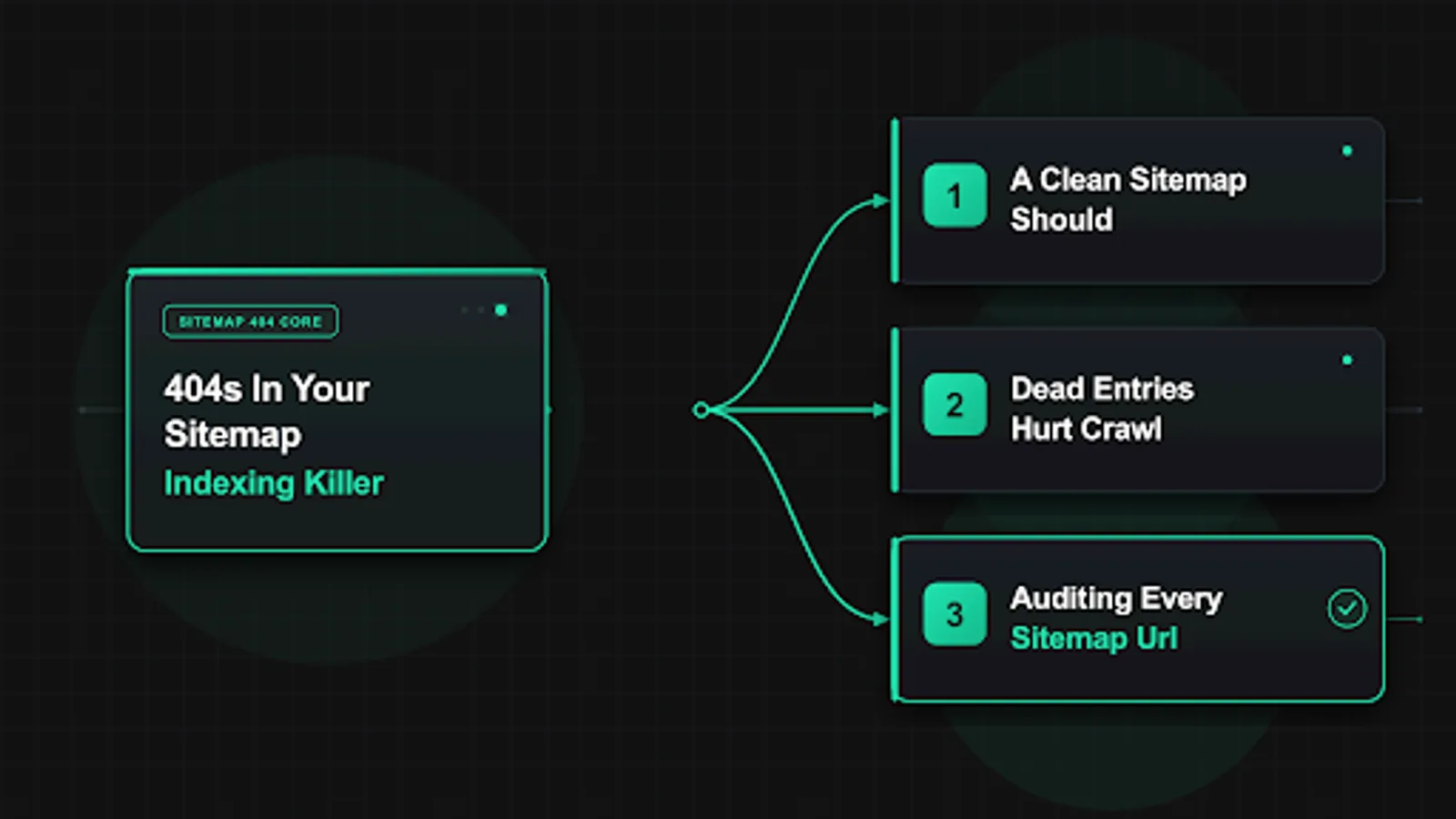
Your XML sitemap is supposed to be a trusted list of URLs you want indexed. When that list contains 404s, redirects, noindex pages, or thin shells, it sends the opposite message and teaches search engines to trust your sitemap less. Crawl budget is spent checking dead ends, new content is discovered more slowly, and Search Console fills with Submitted URL not found warnings that obscure real issues. This guide is for site owners, SEOs, and developers who want a clean sitemap that accelerates indexing instead of slowing it. The primary keyword for this guide is 404 in sitemap, and each section shows how to find dead entries, remove them correctly, and keep them out for good.
You will learn what sitemaps should and should not contain, why 404s end up listed, how to audit with Search Console and crawlers, how to fix generators across WordPress and custom stacks, how to handle redirects and retired content, and how to monitor sitemap health as a routine. By the end you will have a sitemap that lists only live, indexable, valuable URLs with accurate metadata, plus workflows that keep it that way through inventory changes and site updates.
Key takeaways
- Sitemaps should list only URLs that return 200, allow indexing, self declare canonical, and contain substantive content.
- Dead entries usually come from stale generators, retired products without cleanup, staging leaks, and plugin defaults that include every post type.
- Audit by fetching every sitemap URL for status, robots, canonical, and content quality, then fix the generator, not just the file.
- Monitor Submitted URL not found and redirect warnings monthly to catch regressions early.
- What a clean sitemap should contain and why it matters
- Why 404 in sitemap entries end up listed on real sites
- How dead entries hurt crawl budget and trust
- Reading Submitted URL not found warnings correctly
- Auditing every sitemap URL step by step
- Fixing generators in WordPress and custom stacks
- Handling redirects retired products and expired content
- Lastmod changefreq and priority getting metadata right
- Sitemap index files images videos and large sites
- Monitoring sitemap health as a routine
- Rebuilding trust after a long dirty sitemap period
- FAQ
- Sources
- Further reading
 <!-- IMAGE-PROMPT cover: 1200x630, DependsIt brand, deep charcoal #121212 or clean white background, vibrant mint #22E3B0 accent glow, thin node-network line art, Clash Display style bold heading space on left, General Sans clean labels, subject: XML sitemap cleaning with dead links removed and checkmarks, flat vector, high contrast, accessible, no photorealistic faces, no text smaller than 24px, no em dash in rendered text, export PNG then cwebp -q 82 to WEBP -->
What a clean sitemap should contain and why it matters
A clean XML sitemap is a short list of your best current URLs, each live and indexable, with honest metadata. Every entry should return HTTP 200, allow crawling in robots.txt, allow indexing without noindex tags, declare itself as canonical, and contain enough distinct content to deserve indexing. Lastmod dates should reflect real content changes, not template touches or daily regeneration. The sitemap index should reference only current child sitemaps, each under size and URL count limits, served with the correct content type and stable location. When these conditions hold, search engines can treat the sitemap as a reliable discovery feed and prioritize its URLs for crawling.
Sitemaps matter because they guide discovery and signal maintenance quality. For new sites and deep pages with few internal links, the sitemap may be the primary way crawlers find URLs. For large e commerce and publisher sites, sitemaps coordinate discovery across sections that internal linking alone cannot cover efficiently. Beyond discovery, sitemap hygiene signals operational care. A sitemap full of errors suggests the site struggles with inventory control, while a clean sitemap suggests each listed URL is intentionally maintained. That trust does not override content quality, but it removes friction that slows indexing of good pages.
What sitemaps should exclude is equally important. Exclude 404 and 410 URLs, redirecting URLs, noindex pages, canonicalized variants, paginated thin tails without distinct value, internal search result pages, staging and preview URLs, and parameter variants that should consolidate to clean forms. Exclude thin placeholders such as coming soon products and empty categories until they meet your content standard. Every excluded category has a proper handling elsewhere. Retired URLs belong to redirect or error handling. Variants belong to canonical logic. Placeholders belong to draft states. The sitemap itself should never be used as a general URL dump.
Size and structure rules support reliability. Keep each sitemap under 50,000 URLs and 50 MB uncompressed, with far smaller files preferred for faster fetching and easier debugging. Split by section or post type so errors isolate to one child file. Name files stably and reference them from a sitemap index at a predictable location. List the sitemap index in robots.txt and submit it in Search Console. Avoid generating sitemaps on every request. Build them on content change or on a schedule, cache the output, and serve quickly from edge cache. Fast, stable sitemaps get fetched often. Slow or flaky sitemaps get fetched less, which delays discovery exactly when you need it most.
For teams, the standard fits in one sentence. If a URL would disappoint a visitor or a crawler, it does not belong in the sitemap. Apply that test to every generator rule and every manual inclusion. The sections below show where dead entries come from and how to enforce the standard automatically rather than through periodic heroics.
Why 404 in sitemap entries end up listed on real sites
Stale generators are the leading cause. Many sitemap plugins and custom scripts build entries from publish flags without checking current status, robots, canonical, or content depth. A product deleted from inventory stays listed because no hook removes it. A post moved to draft stays listed because the generator caches old output. A category emptied by seasonal change stays listed because population is never validated. Over months, the sitemap drifts from reality while nobody owns regeneration logic. Fixing the file once without fixing the generator guarantees the same errors return within weeks.
Retirement workflows without sitemap steps come next. Content teams delete products, expire events, unpublish articles, and merge categories through CMS actions that handle the page but forget the sitemap. Developers implement redirects or 410 handling for the URL but leave sitemap inclusion rules untouched. Marketing archives campaigns without updating feeds. Each action is locally correct and globally inconsistent. The remedy is to make sitemap updates part of the definition of done for every publish, update, redirect, and delete operation. If the CMS action cannot update the sitemap automatically, it should queue a regeneration task that runs within minutes.
Plugin defaults and post type sprawl add volume. SEO plugins often include tags, authors, attachments, custom post types, and paginated archives unless explicitly disabled. Page builders create template post types that leak into sitemaps. Translation plugins add alternate URLs with thin boilerplate. E commerce extensions add filter and variant URLs. Audit every included post type and taxonomy against your indexability policy. Most sites should include posts, pages, core products, and populated categories, while excluding tags, authors, search, attachments, and internal variants unless a specific page proves distinct demand and meets content standards.
Environment leaks are more embarrassing but common. Staging, development, or preview hosts get indexed in sitemap references, or production sitemaps include staging URLs through hardcoded domains and copied databases. CDN rewrites and migration scripts can also inject legacy hostnames. Protect non production environments with authentication and noindex headers, exclude them from sitemap generation entirely, and add deploy checks that assert production sitemaps contain only production canonical URLs. A single staging leak can generate hundreds of 404 and redirect warnings when staging is later torn down.
Parameter and variant handling finishes the list. Faceted filters, session IDs, sort orders, and tracking parameters create variants that sitemap logic mistakenly treats as distinct pages. Printer friendly duplicates, AMP shells without unique value, and feed URLs add more. Standardize on clean canonical forms for sitemap inclusion and handle variants through canonical tags and robots controls instead. The Google documentation on sitemaps best practices defines which URLs belong in sitemaps and how to structure files for reliable fetching. Align generator rules to that reference so debates about inclusion end with a shared standard.
How dead entries hurt crawl budget and trust
Crawl budget is the practical limit on how many URLs Google will fetch from your site in a given period, shaped by capacity and demand. Every fetch of a dead sitemap entry consumes budget that could have discovered a new product, refreshed an updated article, or revalidated a fixed page. On small sites the waste is minor but still noisy. On large sites with millions of URLs, thousands of dead entries divert meaningful crawl share away from revenue critical templates. Logs show the pattern clearly. Googlebot repeatedly requests sitemap listed 404s, receives errors, and returns less often to productive sections. Cleaning the list redirects that effort to live pages without any new content work.
Trust effects compound the waste. Sitemaps are advisory. Search engines learn over time whether a given sitemap accurately predicts indexable content. A sitemap with high error rates teaches crawlers to deprioritize its hints, fetch it less often, and verify each entry more skeptically. A clean sitemap with fast 200 responses and accurate lastmod dates earns the opposite treatment. This is not a formal score shown in Search Console, but behavior differences are visible in fetch frequency and in how quickly new sitemap entries get crawled. Sites that clean long dirty sitemaps often report faster discovery of new content within weeks, even though rankings still depend on quality.
Report noise is another cost. Submitted URL not found, Submitted URL has redirect, and Excluded by noindex warnings multiply when sitemaps list dead ends. Teams then struggle to spot new issues among chronic warnings they have learned to ignore. Alert fatigue sets in, real regressions hide, and quarterly audits become archeology. A clean sitemap keeps warnings near zero, so any new entry points to a fresh defect worth investigating immediately. That signal clarity is often more valuable than the crawl budget savings alone.
User impact follows indirectly. Dead sitemap entries correlate with dead internal links, outdated feeds, and retired inventory that still appears in navigation or search features. Visitors encounter errors, support tickets rise, and conversion paths break. Fixing sitemap hygiene alongside link hygiene improves both crawler efficiency and human experience in one pass. For broader context on how crawl shortfalls leave valid pages undiscovered, see the guide to discovered currently not indexed causes and fixes.
Reading Submitted URL not found warnings correctly
Submitted URL not found means a URL listed in your sitemap returned 404 when Google tried to fetch it. The warning names the mismatch between your declaration and server reality. It does not mean Google penalizes the site, but it does mean the sitemap misled discovery and the URL cannot be indexed in its current state. A handful of transient entries after deletions is normal. Persistent volume, or entries for URLs you believe are live, points to generator bugs, host mismatches, or deployment issues that need systematic fixes.
Start by exporting the warning examples and checking each URL manually. Confirm status with external fetches, verify the exact hostname and protocol match your canonical domain, and check whether the URL should exist at all. Common findings include products deleted without sitemap cleanup, posts returned to draft, protocol variants such as HTTP listed while canonical is HTTPS, www versus non www mismatches, and staging hostnames leaking into production files. Group findings by cause rather than fixing URLs individually. A hostname mismatch fixed in generator config clears hundreds of warnings at once, while individual URL edits do nothing for the next regeneration.
Distinguish not found from adjacent warnings. Submitted URL has redirect means the sitemap lists a redirecting URL instead of its target. Update the sitemap to list targets directly and keep redirects only for external history. Excluded by noindex or Blocked by robots means the sitemap contradicts your own directives. Either the URL should be indexable and the directive is wrong, or the URL should stay excluded and the sitemap is wrong. Rarely should both remain. Crawled not indexed and Discovered not indexed for sitemap listed URLs suggest quality or prioritization issues beyond status, which need content and linking work after sitemap accuracy is restored.
Check timing and lastmod behavior. If warnings spike immediately after a deploy, migration, or inventory import, review what changed in generation or retirement logic. If lastmod dates update daily for unchanged content, crawlers learn to ignore the signal, which reduces the benefit of accurate listings. Set lastmod to real content modification times from the CMS, not file build times. Stable, honest metadata plus live URLs turns the sitemap from a warning source into a discovery asset within a few fetch cycles.
Auditing every sitemap URL step by step
A complete audit fetches every URL in every child sitemap and records the facts needed to decide inclusion. Start by downloading the sitemap index and all child files. Parse all loc entries plus lastmod values. Deduplicate across files and note which child lists each URL. For large sites, sample by section first to find patterns, then expand to full coverage for affected sections. Keep the raw files with dates so later audits can diff and prove improvement.
Fetch each URL and record status code, final URL after redirects, hop count and codes, robots header and meta robots, canonical tag, title and H1, rendered main content word count, and internal link count. Automated crawlers can collect most fields in one pass. Add CMS joins for publish state, inventory count, and content completeness. The resulting table answers inclusion directly. Keep only rows with 200 status, zero hops from sitemap form, indexable robots, self referencing canonical, and content that meets your minimum standard. Everything else needs a generator fix, a redirect or error decision, or a content improvement before it can stay listed.
Prioritize by impact. High traffic and high revenue templates come first, because dead entries there waste the most valuable crawl share and create the most report noise around pages stakeholders watch. Next, fix systemic causes such as hostname mismatches, post type inclusions, and stale cache that affect thousands of rows with one config change. Finally, handle long tail one offs through retirement workflows. Track counts per cause so progress is visible. A typical mid size audit moves from thousands of dead entries to dozens within one focused pass, with the remainder scheduled alongside content work.
Validate fixes before resubmission. Regenerate sitemaps from corrected logic, refetch all entries to confirm 200 and indexable state, verify the sitemap index references only current children, and check robots.txt points to the right index location. Submit the index in Search Console and monitor warnings over the next two fetch cycles. Do not resubmit the same dirty file repeatedly while debugging the generator. Each submission with known errors reinforces distrust. Submit once the file is clean, then let accurate fetches rebuild confidence.
Document the audit with before and after counts, cause breakdowns, config changes, and owner assignments. Save the URL level table for the next review so regressions are caught by diff rather than rediscovery. This record turns sitemap work from a mysterious chore into a repeatable quality gate that any teammate can run.
 <!-- IMAGE-PROMPT diagram-01: 1600px max, DependsIt brand mint #22E3B0 on charcoal #121212 or white, node-network line art, subject: sitemap audit diagram checking status robots canonical and content quality, flat vector, accessible, no em dash, Clash Display headings feel and General Sans labels feel -->
Fixing generators in WordPress and custom stacks
WordPress fixes start with inclusion settings. Open your SEO plugin sitemap controls and disable taxonomies, post types, and archives you do not want indexed. Common exclusions include tags, author archives for single author sites, date archives, search results, attachments, and internal post types from builders and forms. Set media attachments to redirect to parents. Ensure noindex rules and sitemap rules agree. A taxonomy marked noindex must not remain in the sitemap. After settings changes, regenerate, refetch entries, and confirm warnings decline. Review settings after every plugin update, because updates can re enable defaults.
Custom stacks need code level rules. Build sitemap queries from the same canonical dataset that powers rendering, filtering by published state, indexable flag, inventory threshold, and content completeness. Verify status by fetching or by joining to routing logic rather than assuming database flags imply servability. Generate on content change events plus a scheduled full rebuild, cache output at the edge, and serve with correct content type and compression. Add automated tests that assert every generated URL returns 200, allows indexing, self declares canonical, and meets minimum content length. Fail the build when assertions fail so dirty files never deploy.
Multilingual and multi store setups need explicit per locale logic. Each locale sitemap should list only its own canonical finals with correct hreflang return tags. Avoid mixing locales in one child file. Ensure translated pages meet the same content standard as primaries. Thin machine translated shells without localized detail should stay out until improved. Validate hreflang separately, because hreflang errors keep alternate URLs in reports even after sitemap status looks clean. The MDN reference on HTTP 404 handling helps developers standardize when retired locale URLs should return true errors versus redirects during cleanup.
Headless and static builds add build time considerations. Generate sitemaps during the same build that publishes pages, using the same data snapshot so listings match deployed routes. Handle client side routes carefully. URLs that depend on browser state or query parameters for content should not be listed unless they have distinct server rendered canonical forms. Preview branches should never overwrite production sitemap paths. Isolate preview sitemaps behind authentication or separate hostnames with noindex handling, and add deploy checks that fail if production files contain preview hosts.
API driven catalogs need incremental discipline. Product imports that create, update, and retire thousands of SKUs daily must emit sitemap add, update, and remove events in the same transaction. Retirements should trigger redirect or 410 decisions plus sitemap removal together, not as separate tickets that drift apart. Monitor import logs for sitemap queue depth and error rates. A healthy catalog pipeline keeps sitemap composition stable through high churn, while a disconnected pipeline produces daily waves of dead entries that erode trust.
Handling redirects retired products and expired content
Retired URLs need explicit outcomes, and the sitemap must reflect the choice immediately. When a successor exists, implement a single hop 301 to the closest intent match and remove the old URL from the sitemap while adding the target if it is not already listed. When no successor exists, serve 404 or 410, remove the URL from the sitemap, and clean internal links that still reference it. Use 410 for permanent removals you want dropped faster. Keep the redirect or error stable while Google recrawls. Toggling between states confuses consolidation and extends warnings.
Expired content such as events, jobs, and listings deserves template rules decided in advance. Options include keeping an evergreen parent with historical context and related current items, redirecting expired entries to the parent hub, or serving 410 for one off expirations with no hub value. Whatever the rule, apply it consistently and encode it in CMS workflows so editors do not improvise per item. The sitemap should list only live current entries plus valuable evergreen hubs, never expired shells. Consistency here prevents the slow accumulation of dead entries that characterizes neglected catalogs.
Redirect hygiene interacts directly with sitemap accuracy. Audit internal links and feeds to point to final targets, not legacy addresses. Replace homepage catch all redirects with specific parents or recreate missing high value pages. Flatten chains so legacy URLs reach finals in one hop. After flattening, verify that sitemaps list finals only. Submission queues and push mechanisms should also reference finals. For teams that notify search engines about new URLs, the patterns in the complete Indexing API setup guide emphasize submitting current targets rather than legacy addresses, which aligns sitemap and push signals instead of splitting them.
Pagination and filter handling needs restraint. Do not list every page of thin pagination or every facet combination. List the main collection plus paginated pages only when each page holds distinct indexable value with proper canonical and navigation handling. Keep faceted combinations out unless a specific combination has proven demand, unique content, and explicit approval. This restraint keeps sitemaps focused on URLs that can rank, rather than exhaustive enumerations of template variations that dilute crawl share.
Document retirement decisions with dates and reasons. A simple log of removed URLs, chosen outcomes, and target mappings helps future audits distinguish intentional retirements from generator bugs. It also helps support teams answer why old bookmarks land where they do. Over time, the log becomes evidence that dead entries reflect deliberate lifecycle management rather than neglect, which is exactly the operational story a clean sitemap should tell.
Lastmod changefreq and priority getting metadata right
Lastmod is the most useful sitemap metadata when honest and the most harmful when faked. Set lastmod to the actual content modification time from the CMS, such as product description updates, article revisions, or inventory significant changes. Do not set lastmod to build time, deploy time, or a daily refresh that touches every URL. Crawlers learn to trust accurate lastmod for prioritizing recrawls. Daily blanket updates teach them to ignore the field entirely, which removes a lever you could use to highlight genuinely fresh content during launches and corrections.
Changefreq and priority are largely ignored by Google and should not drive strategy. If your generator includes them, set conservative values and focus effort on lastmod accuracy and list membership instead. Do not attempt to force crawling by marking every URL as always fresh with maximum priority. That overstatement blends with the same distrust created by dead entries. A sitemap that lists the right URLs with truthful lastmod dates outperforms a sitemap stuffed with optimistic hints every time.
Metadata stability matters for large files. Regenerating IDs, reordering entries, or changing file names without reason forces unnecessary refetching and complicates diffing. Keep stable loc values, stable child file names, and append only growth where possible. When URLs legitimately change, update loc plus lastmod together and keep redirects from old forms for history. Stable structure plus honest timestamps lets both your own audits and search engine fetches focus on real changes rather than churn.
Validate metadata with sampling. After each regeneration, check that recently updated pages show recent lastmod while untouched pages retain older dates. Confirm that retired URLs disappear rather than lingering with fresh timestamps. Monitor Search Console sitemap fetch stats for success and freshness. If lastmod accuracy slips, fix the CMS timestamp source rather than patching output. Durable metadata comes from clean content lifecycle data, not from sitemap formatting tricks.
Sitemap index files images videos and large sites
Large sites need partitioned sitemaps that isolate concerns. Split by section, post type, or locale so each child file stays small and errors point to one owner. A typical structure lists posts, pages, products, categories, and locales in separate children under one index. Keep each child well under limits for faster fetching and easier debugging. Name files descriptively and stably, such as sitemap-posts.xml and sitemap-products.xml, and avoid date stamped names that churn. Reference children from the index with absolute canonical URLs and keep the index itself lightweight.
Image and video sitemaps deserve selective use. Include media that adds search value, such as product photos, tutorial images, and hosted videos with dedicated landing pages, not every decorative asset. Ensure each media URL is accessible, served quickly, and paired with a relevant landing page that is itself indexable. For publishers and stores with strong visual search potential, curated media sitemaps improve discovery of assets that HTML crawling might deprioritize. For sites where media duplicates landing page content without distinct queries, a separate media sitemap adds maintenance without benefit. Choose based on measured image and video traffic, not completeness instinct.
News sitemaps follow stricter freshness rules and suit publishers with timely content. Include only recent articles that meet news policies, with accurate publication times and titles. Keep the file small and current, removing entries as they age out. General web sitemaps remain the foundation for evergreen discovery. Do not mix news urgency into evergreen files by faking lastmod dates. Parallel structures with clear ownership keep each feed trustworthy for its purpose.
Large catalog operations need automation with guardrails. Generate children incrementally on content events, run nightly full validation that refetches samples per child, and alert on error rate, file size spikes, fetch latency, and missing children. Cap new URL additions per day to match crawl capacity during migrations so discovery stays orderly. During high churn events such as catalog refreshes, prioritize best sellers and updated items in earlier children or with accurate lastmod rather than dumping everything as new. Orderly discovery beats bulk dumping for both crawl efficiency and index stability.
Monitoring sitemap health as a routine
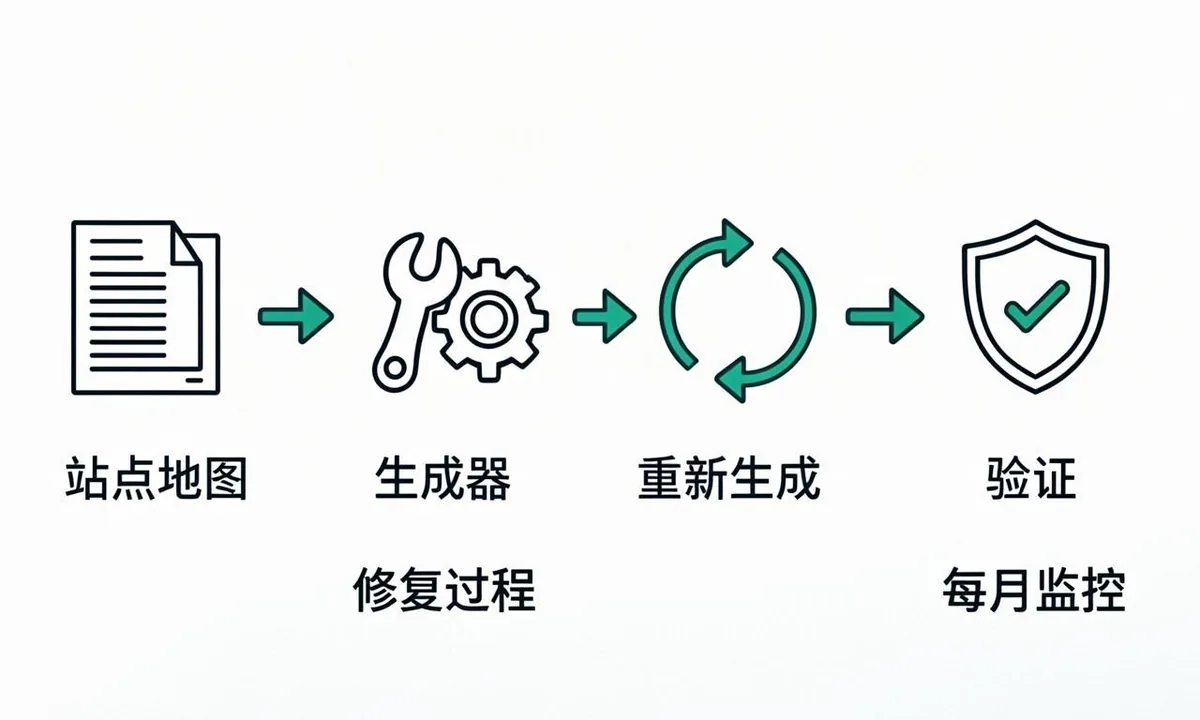
Routine monitoring keeps sitemaps clean with little effort. Monthly, review Search Console sitemaps for fetch success, last read time, discovered URL counts, and warnings per child file. Investigate any child with new Submitted URL not found, redirect, or noindex warnings before the next cycle. Quarterly, run a full fetch audit of every listed URL for status, robots, canonical, and content depth. After every deploy, migration, or bulk import, run a targeted check on affected sections. These three cadences catch generator regressions, retirement drift, and environment leaks while each is still small.
Dashboards should join sitemap, crawl, and index data. Chart listed URL count per child, error share, fetch latency, indexed share per template, and performance for sitemap driven cohorts. Annotate deploys and imports on the same timeline. When indexed share dips for a child, the dashboard shows whether the cause is dead entries, redirect growth, or quality exclusions. Without joined data, teams debate opinions. With it, they fix the named cause in the named file.
Alerting should be specific and actionable. Alert when any child fetch fails, when dead entry share exceeds a low threshold such as 2 percent, when file size or URL count spikes unexpectedly, when lastmod freshness looks synthetic, or when production files contain non production hosts. Route alerts to the owner of the generating system with runbook links for regeneration, validation, and resubmission. Vague alerts that only say sitemap warning go ignored. Precise alerts that name the child, the cause pattern, and the fix path get resolved quickly.
Ownership prevents drift. Assign each child sitemap an owner in engineering or SEO who approves inclusion rule changes and reviews monthly health. Require change requests for new post types, new locales, and new parameter handling. Log rule changes with dates so audits can correlate warning spikes to specific decisions. Sites with named owners keep sitemaps clean for years. Sites without owners relearn the same lesson every year through emergency cleanups that could have been routine checks.
 <!-- IMAGE-PROMPT workflow-02: 1600px max, DependsIt brand, deep charcoal #121212 background with mint #22E3B0 node-network line art, subject: sitemap health monitoring workflow with alerts and clean discovery loop, flat vector, accessible, no em dash, Clash Display headings feel and General Sans labels feel -->
Rebuilding trust after a long dirty sitemap period
When sitemaps have been dirty for months, recovery needs a visible reset. Start with a full audit and generator fix, not a superficial file edit. Remove all dead, redirecting, excluded, and thin entries in one corrected regeneration. Validate every remaining URL externally before submission. Submit the clean index in Search Console and record the submission date. Expect warnings to persist briefly as Google refetches, then decline over the next cycles. Communicate the plan internally so stakeholders do not mistake lagging warnings for failed work.
Support the reset with discovery signals. Restore internal links to listed URLs, ensure listed pages have substantive content and correct canonicals, and use accurate lastmod to highlight genuinely updated pages. Avoid bulk manual inspection requests for the entire list. Validate high value samples, then let natural fetching confirm the rest. Monitor fetch frequency and new page discovery times as trust proxies. Faster pickup of new entries after cleanup is a practical sign that hints are being weighted more heavily again.
Hold the gains with process changes. Encode inclusion rules in code and tests, add deploy gates that block dirty files, assign owners per child, and schedule monthly and quarterly reviews. Report progress with before and after counts, warning trends, and discovery time improvements. A documented reset plus guardrails turns a chronic liability into a durable asset. Future site changes then extend a clean foundation instead of reintroducing the same silent killer that slowed indexing before.
FAQ
Should XML sitemaps contain 404 URLs?
No. Sitemaps should list only live indexable URLs that return 200, allow crawling and indexing, self declare canonical, and contain useful content. Listing dead pages creates sitemap 404 errors, wastes crawl budget, and teaches search engines to trust the feed less. To clean sitemap output durably, handle retired URLs with single hop redirects or proper 404 or 410 responses outside the sitemap, then regenerate from canonical finals. Keep the index as a short list of pages you actively maintain.
How do I find which sitemap entries return 404?
Run a full sitemap audit by downloading all child files, extracting every loc URL, and fetching each one for status, final URL, robots, canonical, and content depth. Group failures by cause such as deleted products, hostname mismatches, or plugin inclusions that bloat the file. To fix sitemap urls at the root, correct the generator config or retirement workflow behind each pattern, then regenerate, revalidate every entry externally, and resubmit the clean index. Save the URL table so the next review can diff instead of starting over.
Why does Search Console say Submitted URL not found for pages I see as live?
Usually the cause is a hostname, protocol, or path mismatch rather than a truly missing page. The listed URL may show as not found in sitemap checks because the file uses HTTP while canonical is HTTPS, www while canonical is non www, staging hosts, or parameter variants that now redirect. A 404 search console warning of this type needs an external fetch of the exact listed URL to reproduce the fault. Correct the generator to emit canonical finals, verify status and canonical, then resubmit a clean file.
Should redirects stay in the sitemap?
No. List redirect targets directly and keep redirecting URLs out of the file. Sitemap entries should resolve in zero hops to 200 indexable pages. When you remove 404 from sitemap handling, apply the same rule to redirects, because keeping legacy addresses listed splits signals between sitemap hints and server behavior. Maintain redirects for external history and bookmarks, but stop advertising legacy addresses as current. After cleanup, verify that every remaining entry returns 200 and self declares canonical.
How often should I update and resubmit sitemaps?
Update on content change events with a scheduled full rebuild as backup, and resubmit the index in Search Console after meaningful corrections. Avoid daily blanket lastmod updates for unchanged content, because synthetic freshness teaches crawlers to ignore timestamps. For steady sitemap health, monitor fetch success and warnings monthly, run full audits quarterly, and check affected sections after every deploy or bulk import. A sound sitemap error fix routine names the child file, the cause pattern, and the owner so issues close quickly.
Will cleaning the sitemap alone restore indexing?
Cleaning removes friction but does not override quality evaluation. After cleanup, listed pages still need substantive content, internal links, and correct directives to be indexed and to rank. A clean submitted url not found 404 report is the first win, followed by faster discovery and clearer coverage. Expect gradual indexing gains as Google reevaluates improved pages through normal crawling. Track indexed share per template and impression growth per section to prove that hygiene plus quality compounds over time.
Sources
- https://developers.google.com/search/docs/crawling-indexing/sitemaps/build-sitemap
- https://developers.google.com/search/docs/crawling-indexing/sitemaps/overview
- https://developer.mozilla.org/en-US/docs/Web/HTTP/Status/404
- https://support.google.com/webmasters/answer/7440203
- https://www.indexnow.org/documentation