AI Search Indexing: How to Get Into ChatGPT and Perplexity
This guide explains ai search indexing for site owners who want their pages to appear as sources in ChatGPT and Perplexity. It is for content teams, SEOs, and developers who already understand basic crawling and who want a clear workflow for AI visibility. You will learn how each assistant discovers content, what blocks AI crawlers, how to structure pages so models can reuse them, and how to measure whether your work leads to citations and visits.
Key takeaways
- ChatGPT and Perplexity can only cite pages their systems have crawled or retrieved, so crawl access plus clear page structure comes before any citation tactic.
- ChatGPT blends training data with live browsing and search, while Perplexity runs live retrieval for almost every answer, which changes how fast new pages can appear.
- Robots.txt, JavaScript rendering, canonical tags, and thin content are the most common reasons good pages stay invisible to AI assistants.
- Quotable pages share traits: direct answers in the first screen, facts grouped with context, stable URLs, dates, authors, and semantic HTML.
- Track AI referrals, branded prompts, and citation frequency, then refresh on a fixed schedule instead of publishing once and waiting.
- How AI search indexing actually works
- How ChatGPT discovers and selects sources
- How Perplexity discovers and selects sources
- Crawl access for AI bots and robots rules
- Technical foundations that keep pages indexable
- Sitemaps internal linking and freshness signals
- Content patterns that earn citations
- Structured data and semantic clarity
- Measuring AI visibility and referral traffic
- Maintenance workflow to stay indexed and cited
- FAQ

How AI search indexing actually works
AI search indexing is the process by which an assistant makes your pages available for retrieval when it builds an answer. It has three stages. First, a crawler fetches the page HTML and resources. Second, the system parses the content, extracts text and structure, and stores it in an index or vector store with metadata such as URL, title, date, and freshness. Third, at query time the system retrieves candidate passages and the language model composes an answer with citations to the most useful sources. If any stage fails, the page cannot be cited, no matter how good the writing is.
This is different from classic web search indexing, but the overlap is large. Both depend on crawl access, clean HTML, stable URLs, and signals of quality. The main difference is the retrieval step. Classic search ranks whole pages against a query. AI assistants retrieve short passages and then synthesize across several sources. That means a page can win a citation for one clear paragraph even if the page as a whole would rank on page two in classic results. It also means structure matters more. Headings, lists, tables, and short factual blocks are easier to retrieve than long unbroken prose with the key fact buried in the middle.
A second difference is update speed. Training data changes slowly, often on a scale of weeks to months. Retrieval indexes used for live answers update much faster, sometimes within hours or days for frequently crawled sites. ChatGPT uses a mix of stored knowledge plus live browsing and search for current topics. Perplexity leans heavily on live retrieval for almost every query. In both cases, publishing a page does not place it into answers immediately. The page must be discovered, fetched, parsed, and then judged useful for specific prompts. Planning for that delay keeps expectations realistic.
Site owners sometimes assume that submitting URLs through IndexNow or a search console will push pages into ChatGPT. That is not how it works. IndexNow notifies participating search engines such as Bing and Yandex about changed URLs, and Google does not support IndexNow at all. Those signals help classic discovery, and because some AI retrieval leans on Bing indexes, faster Bing indexing can indirectly help AI visibility. But there is no direct submit button for ChatGPT or Perplexity. The reliable path is to make pages easy to crawl, easy to parse, and clearly useful, then monitor citations over time. The overview in the complete guide to the open indexing protocol explains what IndexNow does and does not cover, which helps avoid wasted effort.
To put this into practice, think in terms of eligibility, retrievability, and quotability. Eligibility means bots can fetch the page and are allowed to use it. Retrievability means the important facts are in plain HTML with clear headings so the passage ranker can find them. Quotability means the facts are stated directly, with numbers, dates, steps, and definitions that an answer can quote without heavy rewriting. Most sites are weak on at least one of the three. A common pattern is strong writing with poor eligibility because JavaScript hides the text, or good eligibility with poor quotability because the page never states the answer plainly. Audit all three before adding more content.
A practical starting checklist helps. Confirm the page returns 200 to unauthenticated crawlers, loads main content without scrolling or clicking, has a self referencing canonical, has no conflicting noindex, and appears in your XML sitemap with an accurate lastmod. Then view the rendered text only version and ask whether the core answer appears in the first 800 words. If it does not, restructure. Then check that each factual claim sits near its context, for example the price next to what it includes, the date next to what happened, the step next to its precondition. These small placement choices decide whether a retrieval system pulls a complete and citable passage or a fragment it cannot use.
Finally, remember that AI indexing complements classic indexing. Sitemaps, RSS, internal linking, canonical tags, robots.txt, and crawl budget still matter, as they control whether any crawler finds and keeps your pages. AI crawlers add their own user agents and rules on top, but they benefit from the same hygiene. Teams that already keep classic indexing clean have a head start. Teams with crawl debt will see the same debt reflected in AI answers. Fix the foundation first, then optimize for answer style.
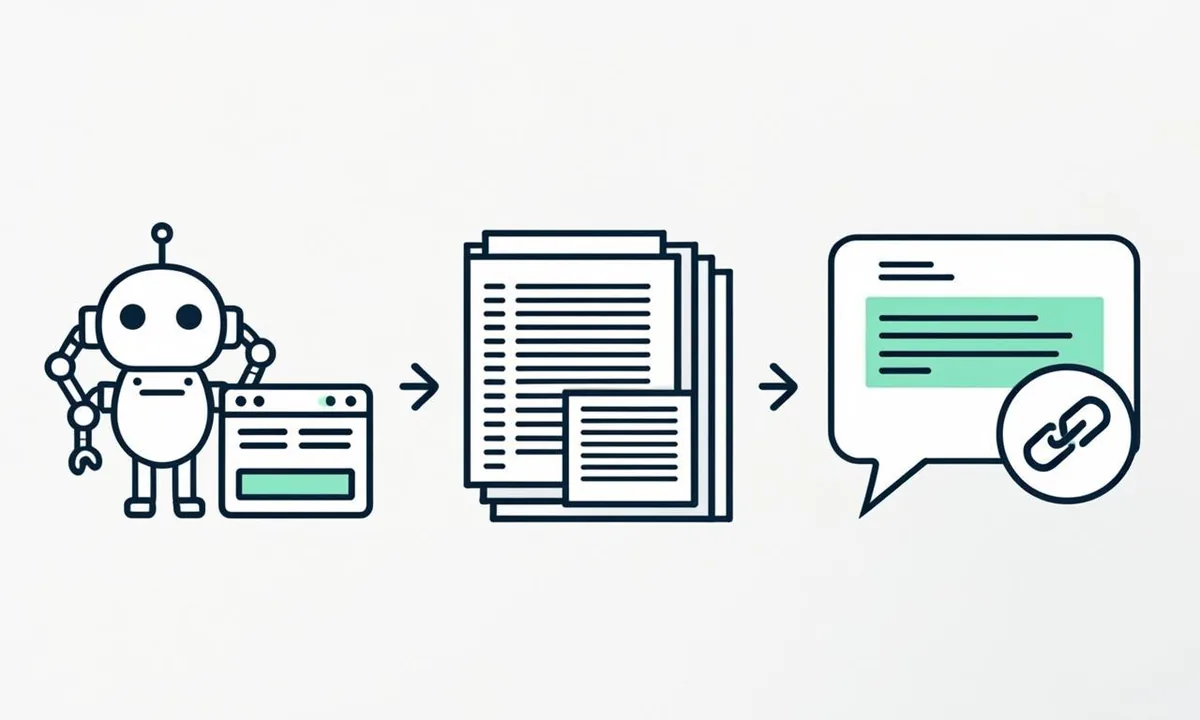
To get content into chatgpt answers, keep pages crawlable, fast, and structured with direct answers on one canonical URL. Steady perplexity indexing follows the same foundations, with internal links and fresh sitemaps helping models find updates sooner.
How ChatGPT discovers and selects sources
ChatGPT answers come from a combination of model knowledge and live information retrieval, depending on the query and the mode the user is in. For stable evergreen topics, the model may answer largely from stored knowledge without browsing. For current events, product details, prices, documentation, and anything where freshness matters, it browses or calls search to pull live sources and then cites them. That split matters for site owners. Evergreen explainers can earn citations over a long period once they are well represented in crawl data. Time sensitive pages only earn citations if they are discovered quickly and state dates and versions clearly.
Discovery for ChatGPT happens through several paths. OpenAI operates crawlers that fetch public web content for search and model improvement, subject to robots.txt and publisher preferences. In browsing mode, ChatGPT can also fetch specific pages and follow links, and it can use a search backend to find candidate URLs for a query. This means your pages can enter through general crawling, through being linked from pages that are already trusted, or through ranking well in the underlying web index that backs live search. No single path is guaranteed, so covering all three gives the best odds. Keep robots access open where you want visibility, earn links from hubs that assistants already consult, and keep classic search presence healthy.
Selection at answer time favors passages that directly address the prompt with minimal ambiguity. In practice, ChatGPT citations tend to go to pages that state the answer in plain language, show their work with steps or data, and carry trust cues such as author names, publication dates, primary sources, and consistent details across the site. For how to queries, numbered steps with preconditions and expected outcomes do well. For comparison queries, tables with defined criteria do well. For factual queries, a short definition followed by key attributes does well. Pages that mix opinion with fact without labeling, or that hide the answer behind several paragraphs of background, get skipped in favor of pages that lead with the answer and then expand.
Site structure influences selection more than most teams expect. ChatGPT retrieval works better when each URL has one clear topic and when headings reflect the questions users actually ask. A page titled with a vague brand phrase and headings such as Overview and Details gives the retriever little to match. A page with a specific H1 and H2s phrased as tasks, such as requirements, limits, errors, and setup steps, gives many match points. Keep URLs stable when you update, because citations point to URLs and frequent moves break the link between stored passages and live pages. When you must move a URL, use a proper redirect and update internal links so the new location quickly inherits context.
Content depth should match the query class. For simple facts, a concise block of 80 to 150 words with the fact, its scope, and its date is enough. For procedures, a full walkthrough with commands, expected output, and error handling is better, because the assistant can cite the step and the user can complete the task. For evaluations, include methods, sample sizes where relevant, and limits, because vague claims such as fast or reliable without numbers are hard to cite. Avoid padding with generic background that could apply to any site. Every extra paragraph that does not add specific information dilutes the passages that do.
Trust cues deserve concrete attention. Show the publication date and the last updated date in visible text, not only in metadata. Name the author or team and link to a short bio or about page that explains why they are qualified to write the piece. Link out to primary documentation for endpoints, quotas, and protocol claims, using the allowlisted docs readers can verify. Keep advertising and sponsored blocks clearly separated from editorial content so the main text reads as a single coherent source. These cues do not guarantee citation, but pages without them lose tie breaks to pages with them when several candidates cover the same facts.
Measurement for ChatGPT is indirect but workable. Track referral traffic from chatgpt.com and related hosts in analytics, watch for branded queries that mention your product alongside problem terms, and run a fixed set of test prompts weekly to record whether your pages appear in citations. Keep the prompt set stable and record the cited URLs, not just whether you appeared. Over time you will see which page shapes earn repeat citations and which only appear once. That history guides rewrites better than guesswork. More on prompt testing appears in the beginners guide to generative engine optimization and the focused playbook for getting cited in ChatGPT answers.
Strong chatgpt source content states the answer first, then supports it with steps, examples, and dates. Good llm indexing starts with clean HTML and accurate metadata so models extract facts with fewer errors.
How Perplexity discovers and selects sources
Perplexity builds almost every answer from live retrieval. When a user asks a question, Perplexity searches the web, opens a small set of candidate pages, and synthesizes an answer with inline citations, usually to a handful of sources. That design makes Perplexity more sensitive than ChatGPT to classic discoverability. If your pages are easy for web search to find and fast to parse, they are more likely to enter the candidate set. If they are slow, blocked, or buried, they rarely make the cut because Perplexity only opens a few pages per query.
Candidate selection favors pages that look directly useful from the search snippet and the opening lines. Titles that name the task and the scope outperform clever titles. Meta descriptions that state what the page covers outperform generic brand text. The first screen of content matters even more, because Perplexity fetches the page and decides quickly whether to keep it. Pages that start with a direct answer, followed by supporting detail, survive that filter. Pages that start with a long story, a newsletter signup, or several screens of navigation before the answer often get dropped in favor of pages that get to the point.
Once pages are opened, Perplexity synthesis prefers passages that can be quoted with little editing. Short paragraphs of 40 to 70 words, each making one claim with its context, are ideal. Tables work well for comparisons, limits, and codes, because the model can cite the row and state the fact exactly. Lists work well for steps and checks, provided each item is self contained and does not rely on a previous item for its meaning. Dense walls of text without headings force the model to summarize rather than quote, and summaries cite less reliably than direct statements. Structure for skimming by humans also helps machines.
Freshness signals carry extra weight on Perplexity for queries where recency matters. Visible updated dates, version notes, changelogs, and dated examples tell the system the page reflects current behavior. For documentation style content, note the version or date you tested and what changed since the previous version. For pricing or limits, state the date you verified and where the reader can recheck. For news style content, keep the original publication date and add an update note rather than silently rewriting. These habits increase the chance Perplexity picks your page over an older competitor when both cover the same facts.
Source diversity also shapes Perplexity answers. Perplexity tends to cite a mix of official docs, established publishers, and focused specialists. A small specialist site can win a slot by being the clearest source for one subquestion, even if larger sites cover the broader topic. To earn that slot, own a narrow task fully. Cover prerequisites, exact steps, expected output, errors, and limits on one URL instead of splitting the task across several thin pages. Link to the official spec for the underlying protocol so the answer can pair your practical steps with an authoritative reference. The focused guide to getting quoted in Perplexity expands these patterns with examples.
Technical behavior matters at fetch time. Perplexity fetchers respect robots.txt and need fast HTML responses. Pages that require login, that block unknown user agents with aggressive bot rules, or that render core text only after several seconds of JavaScript often fail to enter the candidate set. Keep the main answer in server rendered HTML, keep total page weight reasonable, and avoid interstitials that push content down or block text selection. Test with a text only fetch and with mobile emulation, because many assistant fetchers use mobile like rendering with limited patience for heavy scripts.
For reliable perplexity indexing, publish clear opening answers, comparison tables, and visible update dates. Improve ai search discovery by linking new guides from hubs and keeping sitemaps accurate with correct lastmod values.
Crawl access for AI bots and robots rules
AI crawlers identify themselves with distinct user agents and follow robots.txt like other well behaved bots. Common agents include GPTBot and OAI-SearchBot for OpenAI systems, PerplexityBot for Perplexity, ClaudeBot for Anthropic, and CCBot for Common Crawl data that often feeds training sets. Each has its own purpose. Search and browsing agents affect near term citations. Training crawlers affect longer term model knowledge. Blocking one does not block all, and allowing one does not allow all. Audit each agent separately against your goals for visibility, licensing, and server load.
Start by deciding your policy. Many publishers want AI search visibility but have questions about training use. You can allow search and answer retrieval while limiting training crawlers if that matches your policy, but test carefully because overly broad blocks often catch the search agents you want. A common safe starting point is to allow GPTBot, OAI-SearchBot, PerplexityBot, and established search crawlers on public content, while blocking aggressive scrapers that ignore crawl delay or hit origins at high rates. Document the decision, review quarterly, and keep marketing, legal, and engineering aligned so a well meant block does not silently remove you from answers.
A minimal robots.txt that keeps AI search open looks simple. Allow the main content paths, disallow admin, cart, account, and internal search result pages that waste crawl budget, and point to your sitemap. Avoid wildcard disallows that accidentally block article or docs folders. After editing, fetch robots.txt from outside your network, confirm it returns 200 with correct content type, and test with the user agents you care about. Many teams edit robots.txt in a CMS and never verify what crawlers actually receive because of caching or CDN rules. Verification takes minutes and prevents long invisible outages.
User-agent: GPTBot
Allow: /blog/
Allow: /docs/
Disallow: /account/
Disallow: /cart/
Disallow: /search/

User-agent: PerplexityBot
Allow: /blog/
Allow: /docs/
Disallow: /account/
Disallow: /cart/
Disallow: /search/

User-agent: *
Disallow: /account/
Disallow: /cart/
Disallow: /search/

Sitemap: /sitemap.xml
The snippet above is intentionally narrow. It opens blog and docs paths to the two answer focused agents, keeps private paths closed for all bots, and advertises the sitemap. Adapt the paths to your site. If you run a shop, open product and collection guides but keep checkout and faceted filters closed. If you run docs, open versioned guides but close print or preview duplicates. Keep a change log for robots.txt edits with date, author, and reason, because later debugging depends on knowing what changed and when.
Beyond robots.txt, check edge defenses. Bot management rules, web application firewall policies, and CDN challenges sometimes block AI fetchers even when robots.txt allows them. Symptoms include sudden loss of AI referrals, citations that point to cached copies instead of live pages, or fetch errors in logs for PerplexityBot and OAI-SearchBot while Googlebot succeeds. Review firewall events by user agent, allowlist the documented AI search agents on public GET routes if that matches policy, and keep rate limits reasonable for HTML pages. Protect login, POST, and API routes strictly, but keep public article HTML easy to fetch.
Also confirm that your use of llms.txt and related AI discovery files does not conflict with robots.txt. The llms.txt file is a separate proposal that lists key pages for models in Markdown form. It does not replace robots.txt and most crawlers do not treat it as permission. Use robots.txt for permission, llms.txt for guidance, and sitemaps for inventory. When all three agree, crawlers spend less time guessing and more time indexing useful pages. The full syntax and adoption picture is covered in the complete guide to the AI crawler file.
Allow ai engine crawling in robots.txt for agents you want and verify access in server logs by user agent. There is no single ai crawler submission button, so use sitemaps and internal links, then confirm fetches before testing prompts.
Technical foundations that keep pages indexable
AI assistants inherit many classic indexability requirements. A page that fails classic checks will usually fail AI checks too. Start with status and access. Every citable URL should return 200 to anonymous GET, load over HTTPS, and avoid redirect chains. Chains of two or more hops slow fetchers and sometimes cause them to give up before reaching the final HTML. Update internal links to point directly at the final URL and keep redirects only for old external links you cannot edit. Check response headers for accidental x-robots-tag noindex on article paths, which blocks indexing even when the meta tags look correct.
Rendering is the next gate. Many AI fetchers parse server rendered HTML quickly but have limited patience for client side rendering. If your main content appears only after JavaScript runs, assume some AI systems will see a partial page or an empty shell. Prefer server rendering or static generation for article and docs templates. Keep critical text, headings, lists, and tables in the initial HTML. Defer non critical scripts, lazy load below fold media with proper dimensions, and test with JavaScript disabled to confirm the answer still reads coherently. Guidance on rendering delays in classic search applies here too, as explained in resources on JavaScript rendering and crawl timing.
Canonicals and duplicates shape which URL gets cited. AI systems prefer one stable canonical per topic. If the same article exists under several paths, with tracking parameters, print versions, or AMP variants, consolidate with self referencing canonicals and consistent internal links. Avoid submitting parameter variants in sitemaps. For paginated guides, either keep the full guide on one URL where feasible or ensure each page in the series has a clear title and prev next context so a retrieved passage maps to the right step. Inconsistent canonicals split signals and make citations point to alternate URLs that later disappear.
Page experience affects whether a fetched page survives selection. Heavy pages with large hero videos, oversized images, and third party scripts time out more often on fetcher infrastructure. Compress images to modern formats, set explicit widths and heights, limit web fonts on article templates, and keep total blocking time low. Accessibility improvements help machines as well as people. Real heading hierarchy, descriptive link text, alt text for informative images, and sufficient color contrast make parsing more reliable. A page that is calm and fast for a human on a mid range phone is usually also easy for an AI fetcher.
Metadata should be accurate and boring in the best sense. Titles name the task and scope without truncation. Descriptions summarize coverage in plain language. Open Graph tags match the visible title and description. Dates use valid structured data and visible text that agree. Author information is present and consistent. Avoid stuffing keywords into titles or adding dates that do not match the visible article. Retrieval systems compare metadata with body text, and mismatches reduce trust. Keep templates consistent so every new article inherits correct markup without manual fixes.
Finally, protect against silent decay. Templates change, plugins update, and a previously indexable article can become blocked by a new script or header. Schedule monthly technical checks for a sample of high value URLs: status code, robots access for AI agents, canonical target, indexability headers, time to first byte, and text only content presence. Log results and alert on changes. This small routine catches most technical losses before they show up as missing citations weeks later.

Sitemaps internal linking and freshness signals
Discovery for AI systems still starts with knowing your URLs exist. Keep an accurate XML sitemap that lists only indexable canonical URLs, with correct lastmod values that change only when content meaningfully changes. Do not include noindex pages, redirects, 404s, or parameter variants. Split large sites into logical sitemap indexes by section so you can monitor each part separately. Submit sitemaps in Bing Webmaster Tools as well as Google Search Console, because Bing backed retrieval benefits directly. After updates, confirm the sitemap returns 200, validates as XML, and reflects the changed URLs within your deploy pipeline.
Internal linking tells every crawler which pages matter and how they relate. Pages buried five clicks from the home page, with few internal links and no hub references, get crawled rarely and cited rarely. Bring key guides closer to the surface with contextual links from related articles, docs index pages, and topic hubs. Use descriptive anchors that name the task, not generic phrases. Link new pages from at least three relevant existing pages at publish time, and link older pages forward when you publish a better version. The same structure that speeds classic indexing, described in the guide to how internal linking speeds up indexing with examples, also speeds AI discovery.
Freshness signals tell retrieval systems whether a page reflects current behavior. AI answers favor current sources for procedures, limits, pricing, and compatibility. Show publication and update dates in visible text. Add a short version history for guides that change often, noting what changed and when. Keep lastmod honest. Touching lastmod without changing content trains crawlers to ignore your signals. For rapidly changing topics, prefer steady small updates with clear notes over rare large rewrites, because steady updates keep the URL in crawl rotation without breaking passage stability.
Content pruning protects crawl budget for AI agents too. Thin tag pages, duplicate location pages with no unique value, old campaign pages with no links, and auto generated archives consume fetch capacity that should go to citable guides. Audit quarterly. Merge near duplicates into one stronger URL with redirects. Noindex true utilities that users need but assistants should not cite, such as internal search results. Remove dead URLs from sitemaps and internal links. A smaller set of stronger pages gets crawled more often and cited more cleanly than a large set with many weak pages.
For large or frequently updated sites, automate the loop from publish to discovery. On deploy or content publish, update the sitemap, ping IndexNow for Bing side discovery where appropriate, and queue the URL for internal link review. Log each step with timestamp and outcome so you can trace a missing citation back to a missed sitemap update or a blocked fetch. Keep request rates polite and respect retry signals. Bulk submission must respect quotas with queueing and backoff, never hammering endpoints. That discipline keeps classic indexes fresh, which in turn feeds AI retrieval that builds on those indexes.
Content patterns that earn citations
Citations go to pages that make answers easy to build. The most reliable pattern is answer first, then evidence. Open with a direct statement of the conclusion in one or two sentences. Follow with the conditions, steps, or data that support it. Close the section with limits and next actions. This shape lets an assistant quote the opening for the answer and cite the following detail for verification. Pages that open with background and reveal the answer late force the model to compress, which reduces direct quotation.
Paragraph design matters. Keep paragraphs short, 40 to 70 words, each covering one idea with its context included. A paragraph that states a limit should also state what the limit applies to and when it resets. A paragraph that states a step should also state its precondition and expected result. Self contained paragraphs survive retrieval as independent passages. Dependent paragraphs that rely on earlier text for meaning break when retrieved alone. Read each paragraph in isolation and ask whether it still makes sense. If it does not, add the missing context.
Lists and tables earn more than their share of citations because they state facts without extra words. Use ordered lists for sequences where order matters, with each item starting with the action and including inputs and outputs. Use unordered lists for checks and requirements where completeness matters. Use tables for comparisons, limits, codes, and options, with clear column headers and one fact per cell. Keep table cells short so the model can cite a single cell without quoting an entire row. Introduce each list or table with one sentence that states what it covers and its scope.
Definitions and scope notes prevent misquotation. Many AI errors come from pages that state a fact without stating its scope. If a limit applies only to one plan, say so in the same block. If a procedure differs by version, label each variant. If a price excludes tax or add ons, state that next to the price. Explicit scope lets the assistant repeat the fact correctly. Implicit scope forces it to guess, and guesses create wrong answers that users blame on the cited source. Precision here protects both accuracy and your reputation.
Examples should be concrete and verifiable. Show exact paths, field names, menu labels, and sample values that match the current interface. State what the reader should see after each step. Include common errors with their messages and fixes, because error focused passages earn citations for troubleshooting prompts. Avoid placeholder text that looks real but is not, such as invented IDs or codes. If you must redact, use clearly fake values and say they are examples. Assistants repeat examples, so errors in examples propagate into answers.
Tone should stay neutral and specific. State what happens, under what conditions, with what limits. Avoid superlatives and promotional claims that cannot be verified. Claims such as leading or fastest without evidence are hard to cite and easy to skip. Prefer measured language with numbers, dates, and sources. Link key claims to primary docs or to your own test notes with methods. A calm page that shows its work beats a loud page that asserts without support when an assistant chooses among similar candidates.
Practical llm optimization means answer first structure, semantic headings, and tables for comparisons. To index for ai assistants reliably, serve the same full HTML to bots and users and keep scripts from hiding core text.
Structured data and semantic clarity
Structured data helps AI systems interpret your pages consistently. It does not place you into answers by itself, but it reduces ambiguity about dates, authors, products, FAQs, and how to steps. Use valid Schema.org markup that matches visible content. Common useful types for citable content include Article with headline, datePublished, dateModified, and author, FAQPage where the page truly contains questions and answers, HowTo for procedures with steps and tools, Product with offers where prices are current, and Dataset where data downloads are involved. Validate with a schema checker and keep markup in sync when visible text changes. Mismatched markup and text reduce trust.
Semantic HTML carries equal weight. Use one H1 for the page topic, H2s for major tasks or questions, and H3s for steps within each task. Keep heading text specific and parallel so both readers and retrievers can scan. Use paragraph tags for prose, list tags for lists, and table tags with header cells for data. Avoid building headings, lists, or tables out of styled divs, because parsers may miss the structure. Good semantics lets a fetcher extract the same outline a human sees, which improves passage boundaries and citation accuracy.
Entity clarity helps models link your facts to known concepts. Name products, features, protocols, and error codes exactly as the official docs name them, then add the synonyms users type in parentheses once. For example, state the crawler name and its purpose together on first mention, then use the short name after. Define acronyms on first use. Keep names consistent across the site. Inconsistent naming forces the model to decide whether two phrases mean the same thing, and it sometimes chooses wrong. Consistent naming removes that risk.
Dates, versions, and provenance deserve explicit markup and visible text. Show datePublished and dateModified in both metadata and on page copy. For guides tied to software, state the tested version and the change that prompted the update. For data, state collection method, sample period, and limits. For quotes or third party claims, attribute clearly with a link to the source. This provenance lets assistants cite your page for the synthesis while pointing to primary sources for underlying specs, which is the pattern evaluators prefer.
Test interpretation, not just validity. After adding markup, fetch the page as text only and confirm the outline still reads correctly. Check that FAQ questions appear as questions with complete answers nearby. Check that HowTo steps appear in order with their prerequisites. Check that tables retain headers when styles are removed. If the text only version is confusing, fix the HTML structure before adjusting markup. Machines consume the text order, not the visual layout, so source order should match reading order.
A final note on honesty. Do not add markup for content that is not visible, do not mark up reviews you do not have, and do not fake dates to look fresh. Search engines and assistants both penalize mismatched signals over time. The goal is to make true facts easier to reuse, not to make weak pages look stronger than they are. Accurate markup on genuinely useful pages outperforms aggressive markup on thin pages in every durable test.
Measuring AI visibility and referral traffic
You cannot improve AI citations without measuring them. Start with server and analytics data you already have. Segment referrals by host to isolate visits from chatgpt.com, perplexity.ai, copilot, and other assistants. Track landing pages, not just total visits, because AI referrals often land on specific how to or reference pages rather than the home page. Annotate publish and update dates so you can see whether refreshes precede referral changes. Keep UTM discipline for links you control, but expect most AI citations to arrive as plain links without parameters.
Add prompt testing as a second signal. Build a fixed set of 15 to 30 prompts that reflect real user tasks in your niche, covering definitions, procedures, comparisons, troubleshooting, and pricing or limits. Run the set weekly in ChatGPT and Perplexity using consistent settings and locations where possible. Record whether your pages appear, which URLs are cited, what competitors appear, and how the answer phrases the facts. Store results in a simple sheet with date, prompt, assistant, cited URLs, and notes. Changes in citation frequency or in which URL gets cited for a prompt are often more informative than raw traffic.
Include brand and product monitoring. Search your logs and analytics for queries that mention your brand alongside problem terms, because AI answers often shape those queries before users click. Set alerts for sudden drops in referrals to key guides, which can signal a crawl block, a template change, or a competitor page that displaced you. Review cited competitor pages when you lose a slot. Note their structure, freshness, and evidence. Often the gap is concrete, such as a missing table, an outdated screenshot description, or a clearer scope note, and a focused rewrite recovers the citation faster than a full rebuild.
Connect AI visibility to business outcomes without overstating. AI referrals are usually smaller than classic search but often convert well because the visitor arrives with context from the answer. Track assisted conversions, documentation success rates, and support ticket deflection for topics you target in AI answers. For publishers, track citation frequency and branded lift alongside page views. Report with ranges and methods, not single point claims, because prompt testing varies by account, region, and time. Honest measurement builds internal support for continued investment.
Common measurement mistakes waste time. Do not rely on a single prompt run as proof, because answers vary between runs. Do not chase every prompt where you are missing, because some prompts will always favor official docs or larger publishers. Do not change five variables at once, because you will not know what worked. Focus on a small set of high value prompts, change one page element at a time, and wait at least two crawl cycles before judging. Patience plus a stable test set beats frequent rewrites based on anecdotes.
Track ai search visibility by segmenting referrals by host and landing page and testing high value prompts weekly. Better ai search discovery compounds when you keep canonicals stable and refresh dates honest.
Maintenance workflow to stay indexed and cited
AI visibility decays without maintenance. Content drifts as products change, links rot, dates age, and competitors publish clearer versions. A light quarterly workflow prevents slow decline. Review citation and referral data, pick the ten pages with the most AI value, and refresh each with a focused pass. Update steps to match the current interface, reverify numbers and limits, refresh dates and version notes, fix broken links, tighten the opening answer, and add one missing table or checklist that test prompts reveal. Log what changed and watch the next two prompt test cycles for movement.
Keep technical monitoring continuous rather than quarterly. Track robots.txt responses, sitemap validity, canonical stability, page speed for article templates, and fetch success for AI user agents. Alert on changes to headers or templates that affect indexability. After any CMS migration, theme change, or firewall update, run the full eligibility check on a sample of citable URLs before assuming AI visibility will hold. Many losses trace to infrastructure changes that nobody connected to citations until traffic dropped weeks later.
Governance keeps quality steady as teams grow. Define page types with templates for guides, references, comparisons, and troubleshooting. Each template should enforce answer first structure, required metadata, author and date display, structured data, and internal link slots. Require a pre publish checklist that covers crawl access, canonical, sitemap inclusion, text only readability, and scope notes for facts. Require a post publish check one week later for fetch success and early citation signals. These routines take minutes per page and prevent most avoidable misses.
Plan for reuse across assistants. The same well structured page can serve ChatGPT, Perplexity, and classic search without separate versions. Do not fork content per assistant. Maintain one canonical URL per topic, keep it current, and let each system retrieve what it needs. If you maintain an llms.txt file, list these canonical URLs with short descriptions so models can prioritize them, as detailed in the complete guide to the AI crawler file. If you expand into broader answer optimization, coordinate with the beginners guide to generative engine optimization so tactics stay consistent.
Finally, keep expectations honest with stakeholders. No team can guarantee citation for every prompt, because assistants choose sources per query and competition changes. Commit to eligibility, clarity, freshness, and measurement, and report progress in terms of citation share for target prompts plus AI referral quality. Over several quarters, sites that maintain this loop earn durable presence in answers for the tasks they cover best. Sites that publish once and wait see brief spikes followed by drift. The workflow matters more than any single rewrite.
FAQ
How long does it take for a new page to appear in ChatGPT or Perplexity answers?
Most new pages need days to weeks before they earn citations, depending on crawl frequency, site authority, and query competition. Perplexity can surface fresh pages faster when they are linked, sitemapped, and clearly answer a live query. ChatGPT may take longer for evergreen topics that rely more on stored knowledge. Publish, confirm crawl access and sitemap inclusion, add internal links, then test the same prompts weekly rather than daily. Most pages need days to weeks depending on crawl frequency and competition. To get content into chatgpt sooner, confirm crawl access, sitemap inclusion, and internal links, then support llm indexing with clear structure and fast loads. Track ai search visibility weekly with the same prompts rather than daily checks.
Does blocking GPTBot remove my site from ChatGPT answers completely?
Blocking GPTBot limits training and some crawling, but ChatGPT can still cite pages found through live browsing and search backends that use other agents such as OAI-SearchBot. For reliable removal from answers you must address all relevant agents and search indexes, not just one bot name. Conversely, allowing GPTBot alone does not guarantee citations. Keep permissions aligned with your overall policy and verify by user agent in logs. Blocking one bot rarely removes you fully because other agents still crawl. Allow or block ai engine crawling deliberately in robots.txt, verify by user agent in logs, and align policy with goals for ai search discovery and llm optimization across all assistants.
Do I need llms.txt to get cited?
No. Citations depend on crawlable HTML, clear structure, and useful content, not on llms.txt. The file can help models prioritize key pages once they already crawl your site, but it does not grant eligibility by itself. Treat llms.txt as optional guidance after the foundations are solid. If you add one, keep it accurate and in sync with canonical URLs. No, citations come from crawlable HTML and useful structure. An llms file can help priority once crawling works, but focus first on steps that index for ai reliably, such as canonical URLs, semantic headings, and quotable blocks. There is no single ai crawler submission shortcut that replaces these basics.
Why does Perplexity cite competitors instead of my more detailed guide?
Detail alone does not win. Perplexity favors pages that state the answer directly, load fast, and present facts in quotable blocks with current dates. A shorter competitor page with a clear opening answer, a comparison table, and visible update notes often beats a longer guide that buries the answer. Tighten the first screen, add the missing table, and restate scope and dates in the same block as each fact. Perplexity favors direct answers, fast loads, and dated fact blocks. Improve perplexity indexing with a clear opening answer, a comparison table, and current dates in the same block. Strong chatgpt source content habits also help here because quotable structure transfers across engines.
Should I create separate pages for AI assistants and for Google?
No. Maintain one canonical URL per topic that serves humans, classic search, and AI retrieval. Separate versions split signals, create duplicates, and complicate maintenance. Use clean semantic HTML, accurate metadata, and answer first structure on the single canonical page. Use robots.txt for permission and sitemaps for inventory, not content forks, to guide each system. No, keep one canonical URL for humans, classic search, and assistants. Separate forks hurt ai search discovery and split signals. Serve full HTML to support llm indexing, use robots for permission, and use sitemaps for inventory instead of duplicates.
How do I know if AI citations drive business value?
Segment AI referrals in analytics by host and landing page, track assisted actions such as signups, purchases, or docs success after those visits, and compare conversion quality with other channels. Add prompt testing to see citation share for high value tasks. Report with methods and ranges, because prompt results vary. Small but well qualified AI referral streams often justify maintenance even when volume is lower than classic search. Segment referrals by host and landing page and track assisted actions like signups or purchases. Add prompt tests for high value tasks to measure ai search visibility over time. Consistent llm optimization and fresh internal links keep ai search discovery stable while you compare conversion quality.
Sources
- https://developers.google.com/search/docs/crawling-indexing/overview
- https://schema.org/Article