How to Get Cited in ChatGPT Answers

This guide shows how to get cited in ChatGPT answers for teams that already publish useful content but rarely appear as sources. It is for SEOs, writers, and developers who want practical changes at the page level rather than theory. You will learn how ChatGPT selects sources, how to structure pages for quotation, how to handle browsing and freshness, and how to test and maintain citations over time.
Key takeaways
- ChatGPT cites pages that directly answer the prompt with verifiable facts, clear scope, and current dates.
- Browsing and live search favor fast pages with answer first structure, while stored knowledge favors stable canonicals with consistent details.
- Short self contained paragraphs, tables for limits and comparisons, and numbered steps for procedures earn the most citations.
- Robots access for OpenAI search agents, server rendering, and stable canonicals decide eligibility before writing quality matters.
- Test a fixed prompt set weekly, change one element at a time, and track which URLs are cited rather than only whether you appear.
- How ChatGPT picks sources for an answer
- Eligibility checks before you optimize
- Answer first structure that helps you get cited in ChatGPT
- Facts scope and evidence
- Procedures comparisons and troubleshooting
- Freshness versioning and dates
- Authority signals ChatGPT can verify
- Browsing behavior and rendering
- Prompt testing and iteration
- Keeping citations over time
- FAQ
 <!-- IMAGE-PROMPT cover: 1200x630, DependsIt brand, deep charcoal #121212 or clean white background, vibrant mint #22E3B0 accent glow, thin node-network line art, Clash Display style bold heading space on left, General Sans clean labels, subject: ChatGPT answer panel citing a clear web page source with link, flat vector, high contrast, accessible, no photorealistic faces, no text smaller than 24px, no em dash in rendered text, export PNG then cwebp -q 82 to WEBP -->
How ChatGPT picks sources for an answer
ChatGPT combines model knowledge with retrieval depending on the prompt. For stable concepts, it may answer largely from stored knowledge without live sources. For current facts, products, prices, documentation, and anything where accuracy depends on recency, it browses or searches to pull live pages and cites them inline. Most commercial and how to prompts fall in the second group, which is why citable pages matter even when the model already knows the general topic. The system cites when evidence helps, not for every sentence.
When retrieval runs, the pipeline expands the prompt into subquestions and seeks passages for each. A question about setup becomes prerequisites, steps, expected output, errors, and limits. A comparison becomes criteria, options, prices, and conditions. Pages that cover those subquestions explicitly with matching headings earn more retrievals than pages that mention only the main term. After retrieval, passages are ranked for directness, completeness, and trust. Short passages that state the answer plus scope outrank long passages where the answer is implied. Passages with numbers, dates, and named entities outrank vague claims. Pages with consistent metadata outrank similar pages without it.
Generation then synthesizes selected passages into fluent text with citations. Models prefer passages they can quote with little editing, because rewriting increases error risk. A paragraph of 40 to 70 words that makes one claim with its context included survives this step. A paragraph that depends on earlier text for meaning gets summarized or skipped. Tables with one fact per cell and lists where each item stands alone also survive well. Dense walls of text without headings force summarization, which links less reliably than direct quotation. Structure for standalone reuse, not just for reading flow.
Citation placement follows the answer shape. Definitions cite the page with the clearest scope note. Steps cite the page with complete preconditions and expected outputs. Numbers cite the page with units, dates, and methods. When several candidates cover the same facts, tie breaks go to pages that load fast, show current dates, name authors, and link to primary sources. You cannot control weighting directly, but you can supply the signals that win ties. Consistent templates across your site make those signals routine rather than occasional.
Understanding this flow keeps effort focused. Eligibility decides whether your pages can be retrieved at all. Retrievability decides whether the ranker finds your passages among many. Quotability decides whether generation keeps your wording and links it. To improve chatgpt visibility, track which prompts already show your pages and which show competitors with clearer openings. Pages that appear in chatgpt answers consistently share three traits: a direct opening, current dates, and tables that state limits with units. Most teams overinvest in more content and underinvest in making existing strong pages eligible and quotable. Audit one high value page against all three stages before publishing new ones. Fixing a blocking rule or restructuring an opening answer often moves citations more than adding five new posts.
The broader context for how assistants discover pages, including the mix of stored knowledge and live fetch, is covered in the overview of AI search indexing for ChatGPT and Perplexity. That background helps set expectations for speed: new pages need days to weeks for crawl and retrieval to reflect changes, with evergreen topics often slower than time sensitive ones that trigger live search.
Eligibility checks before you optimize
Before rewriting, confirm ChatGPT systems can fetch and trust your pages. Check robots.txt for OpenAI search and crawl agents on public paths. Allow browsing agents on guides and references where you want citations, while keeping admin, account, cart, and internal search results closed for all bots. Fetch robots.txt anonymously and confirm 200 with the exact rules you intend, because CMS or CDN caching often serves stale copies after edits. Log user agents to see whether OpenAI fetchers succeed or face challenges from bot management.
Confirm rendering of main content without JavaScript. Open a candidate guide with scripts disabled and read the text only version. The core answer, steps, tables, and facts should appear in order. If content appears only after interaction, assume browsing retrieval sees a partial page. Prefer server rendering or static generation for article templates. Keep headings, paragraphs, lists, and tables in initial HTML. Defer non critical scripts and verify time to first byte stays reasonable for article URLs. Fast text first pages enter candidate sets more reliably.
Check canonicals, status, and indexability headers. Each citable URL should return 200 over HTTPS, have a self referencing canonical, and avoid chains of redirects. Update internal links to point directly at final URLs. Inspect response headers for accidental noindex on article paths, which blocks use even when meta tags look correct. Ensure each URL appears in your XML sitemap with an honest lastmod that changes only when substance changes. Submit sitemaps where relevant and confirm they validate. These classic checks still gate AI citations.
Review duplicates that split signals. If the same guide exists under several paths, with parameters, print views, or AMP variants, consolidate to one canonical with redirects and consistent internal links. For series that must paginate, give each part a distinct title and step range so citations map to the right URL. Inconsistent canonicals cause citations to point at alternates that later disappear, which erodes trust in your pages for future prompts. Stable canonicals preserve the link between stored passages and live content.
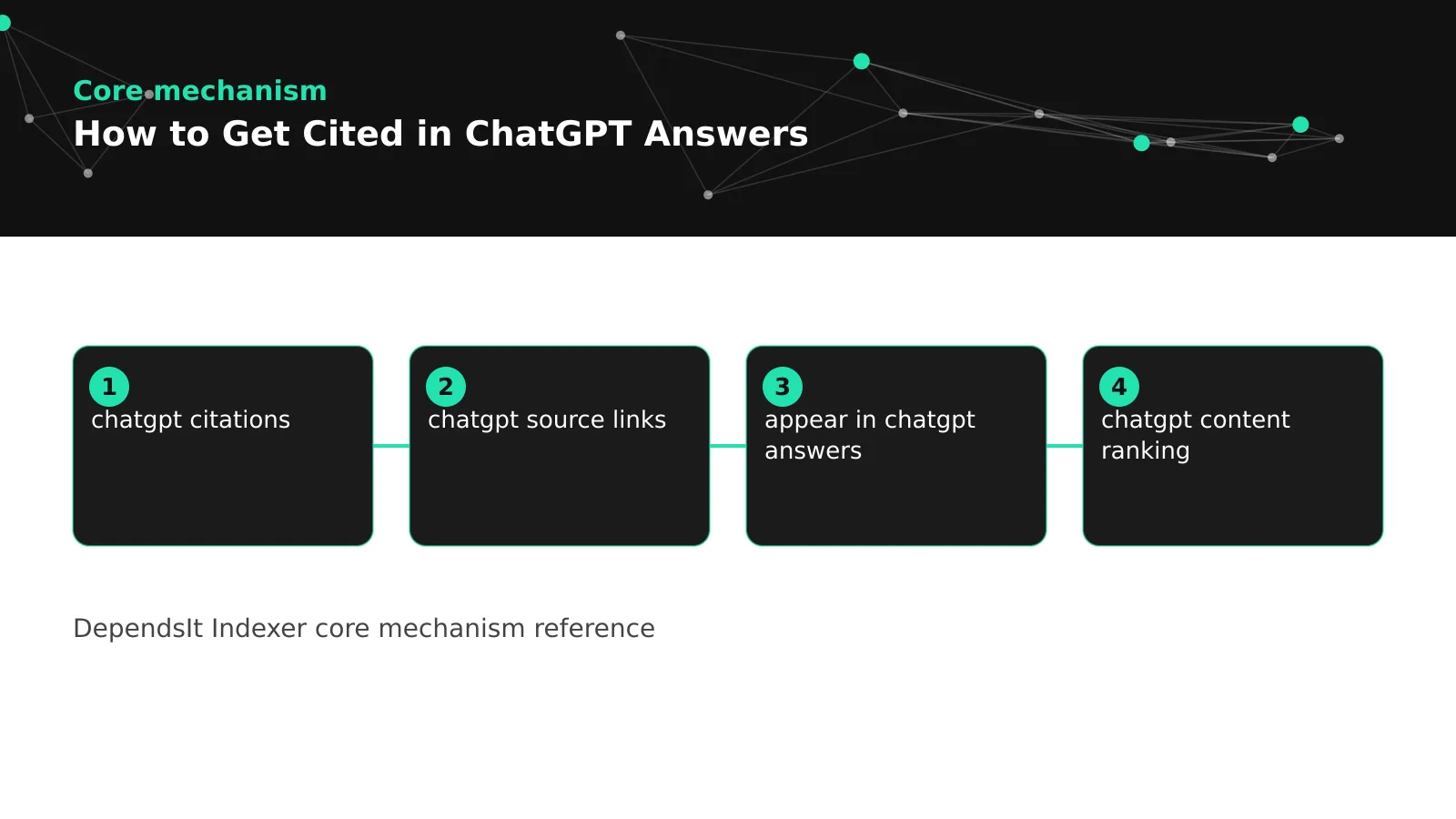
Finally, confirm trust basics on the page itself. Visible publication and update dates that match metadata, named author or team with a short bio, and links to primary docs for specs and quotas all help. Clean eligibility also improves chatgpt source links because browsing fetchers can open the page fully and attribute passages correctly. When chatgpt sources point to fast canonicals with visible authors and dates, those URLs are more likely to be reused for related prompts. Keep advertising clearly separate from editorial steps. A page that looks maintained and attributable passes the quick filter browsing systems apply before deep parsing. Eligibility is not glamorous, but it decides whether later writing work can pay off at all.
Answer first structure that helps you get cited in ChatGPT
Answer first means the first screen states the conclusion plainly, then supports it. Open with one to two sentences that give the direct answer without background. Follow with scope notes that say who or which version it applies to. Then present steps, tables, or criteria in order. Close each section with limits and next actions. This shape lets ChatGPT quote the opening for the answer and cite the following detail for verification. Pages that reveal the answer late force compression and lose direct quotes.
Headings should match the subquestions ChatGPT derives from prompts. Use H2s phrased as tasks such as requirements, setup steps, limits, errors, and verification. Use H3s for steps within each task. Keep wording parallel and specific so both readers and retrievers can scan. Avoid vague headings that give matching nothing to work with. Each heading should make sense out of context, because rankers often score headings alongside candidate paragraphs.
Paragraphs should be short and independent. Aim for 40 to 70 words, one idea per block, with conditions and dates included. A paragraph about a limit should name the target, value, and reset. A paragraph about a step should name its precondition and expected result. Test by reading each paragraph alone. If it needs the previous paragraph to make sense, add the missing context. Independent paragraphs survive retrieval as standalone passages, which is exactly how they get cited.
Lists and tables earn disproportionate citations because they state facts without extra words. Use ordered lists for sequences where order matters, starting each item with the action plus inputs and outputs. Use unordered lists for checks and requirements where completeness matters. Use tables for comparisons, limits, and codes with clear headers and one fact per cell. Introduce each element with one sentence stating coverage and scope. Check the text only version to confirm tables retain headers and lists retain order when styles are removed.
End pages with clear provenance and next steps. Show author, dates, and version notes in visible text. A durable chatgpt content strategy builds one canonical per task and improves openings, tables, and scope notes on a monthly cycle. This routine keeps every new guide citable from day one instead of requiring rescue rewrites after traffic drops. Link contextually to related canonical guides rather than dumping generic related posts. A calm ending helps the model see how your pages relate and helps readers continue without leaving for a competitor for the follow up. Structure compounds: once templates enforce answer first shape, every new page starts citable instead of needing rescue rewrites.
 <!-- IMAGE-PROMPT diagram-01: 1600px max, DependsIt brand mint #22E3B0 on charcoal #121212 or white, node-network line art, subject: article outline with direct answer opening plus tables steps and scope notes for quotation, flat vector, accessible, no em dash -->
Facts scope and evidence
ChatGPT favors facts it can repeat safely. For each important claim, include what was measured or defined, under what conditions, with what units, and when it was verified. State scope in the same block as the fact, not paragraphs away. If a limit applies to one plan, name the plan next to the value. If steps differ by version, label each variant. Explicit scope prevents misquotation where the model applies a narrow fact broadly. Precision here protects accuracy and your reputation when answers quote you.
Evidence should be proportionate to the claim. Simple definitions need a clear sentence plus key attributes. Procedures need expected outputs and error handling. Numbers need methods, sample periods, or links to primary specs. Attribute third party claims with links to stable docs. Separate tested findings from general advice with labels such as tested or observed. This transparency lets the model hedge appropriately and lets readers verify without hunting. Pages that assert without support lose ties to pages that document.
Consistency across the site matters as much as evidence on one page. Keep product names, field names, limits, and prices identical wherever they repeat. Inconsistent details force the model to choose, and it may choose a competitor with cleaner agreement. Run quarterly consistency checks for facts that appear on multiple pages, such as pricing, quotas, and version support. Update all instances together and note verification dates. Agreement across your own pages is a quiet but strong trust signal.
Link out sparingly to primary sources for endpoints, quotas, and protocol definitions. Use stable documentation that readers can verify rather than secondary roundups. Keep outbound links relevant and few so the page reads as a coherent source. For docs heavy topics, pair your practical steps with spec references so answers can cite your procedure alongside the authoritative definition. That pairing appears often in high quality ChatGPT answers with browsing.
Avoid claims that cannot be quoted. Superlatives without evidence, absolute promises without conditions, and broad statements without dates are hard to cite safely and easy to skip. Clear scope notes also help chatgpt content ranking because passage rankers can match subquestions to headings without guessing. Pages that pair each fact with its conditions win more retrievals than pages that state facts without limits. Replace them with measured statements plus context. State what happens, for whom, under what limits, as of what date. Calm specificity beats loud generality when the model chooses among similar candidates. It also reads better for humans who arrive from the citation and decide in seconds whether to trust the page.
Procedures comparisons and troubleshooting
Procedures earn citations when they are complete on one URL. Include prerequisites with versions and roles, exact steps in order with commands or menu paths that match the current interface, expected output after each step, common errors with fixes, and limits. State the tested version and date. Number steps where order matters and start each item with the action. Close with verification and next actions. A guide that requires three more pages to finish loses to a guide that completes the task in one place.
Comparisons earn citations when criteria are explicit and current. Define the use case first, then compare options on the same dimensions such as price, limits, setup effort, and feature support. Use tables with consistent units and short cells. State the check date and where to recheck. Give conditional conclusions tied to needs and limits rather than absolute winners. Conditional guidance lets ChatGPT repeat both the recommendation and its conditions without misleading, which is the pattern evaluators prefer.
Troubleshooting pages earn citations for long tail prompts competitors ignore. Lead with the exact error text or behavior, then list causes in likely order, each with a check and a fix. Include what success looks like after the fix. Group related errors so the model can distinguish them. Use the exact strings users see in interfaces and logs, because prompts often paste those strings verbatim. Precise matching between prompt text and page text strongly influences retrieval for error queries.
Examples should be concrete and current. Show real paths, field names, and sample values that match today interface. Label redacted values as examples so models do not repeat placeholders as facts. Update screenshots descriptions and command output when interfaces change, because stale details cause failed tasks that users blame on the cited source. For rapidly changing products, add version histories that note what changed and when, so the model can prefer the current variant.
Keep each of these page types focused. One procedure per canonical URL, one comparison per decision, one error group per page. Writers who want to get quoted by ai for procedures should keep prerequisites, exact steps, expected outputs, and error fixes on one URL. Complete single task pages earn more citations than fragments spread across thin posts. Splitting a single task across thin pages dilutes signals and forces the model to assemble fragments. Merging related fragments into one stronger URL with redirects concentrates links, crawl attention, and citation odds. Fewer stronger pages outperform many weak ones for GEO in almost every test.
Freshness versioning and dates
Freshness decides many ChatGPT citations for procedures, prices, limits, and compatibility. Show publication and update dates in visible text that match metadata. For versioned topics, state the tested version prominently and summarize changes since the prior version. For prices and quotas, state the verification date and where to recheck. Add update notes for meaningful changes rather than silently rewriting. Only touch dates when substance changes, because crawlers compare snapshots and learn to distrust touched dates without content changes.
Version histories help models choose correctly among similar pages. A short history with date, version, and change summary lets retrieval prefer the current guide over older competitors. Keep histories factual and brief. Link to archived versions where users need them, but keep the canonical current page as the primary target for citations. Ensure structured data dates agree with visible text. Mismatches reduce trust and can cause the model to prefer a competitor with consistent signals.
Lastmod honesty supports the same goal at the sitemap level. Update lastmod only when content meaningfully changes, not on every deploy or cosmetic tweak. Keep sitemaps limited to indexable canonicals and validate after changes. Steady small updates with clear notes keep URLs in crawl rotation without breaking passage stability. Rare large rewrites with silent dates do the opposite, causing sudden shifts in which passages are stored.
For evergreen concepts where dates matter less, still show maintenance. A visible reviewed date with a note that steps were retested signals care without implying false novelty. Avoid adding current year to titles as a freshness trick when content is unchanged. Retrieval systems compare content hashes over time, and cosmetic freshness without substance is easy to detect. Genuine maintenance on a stable URL outperforms novelty tricks for durable citations.
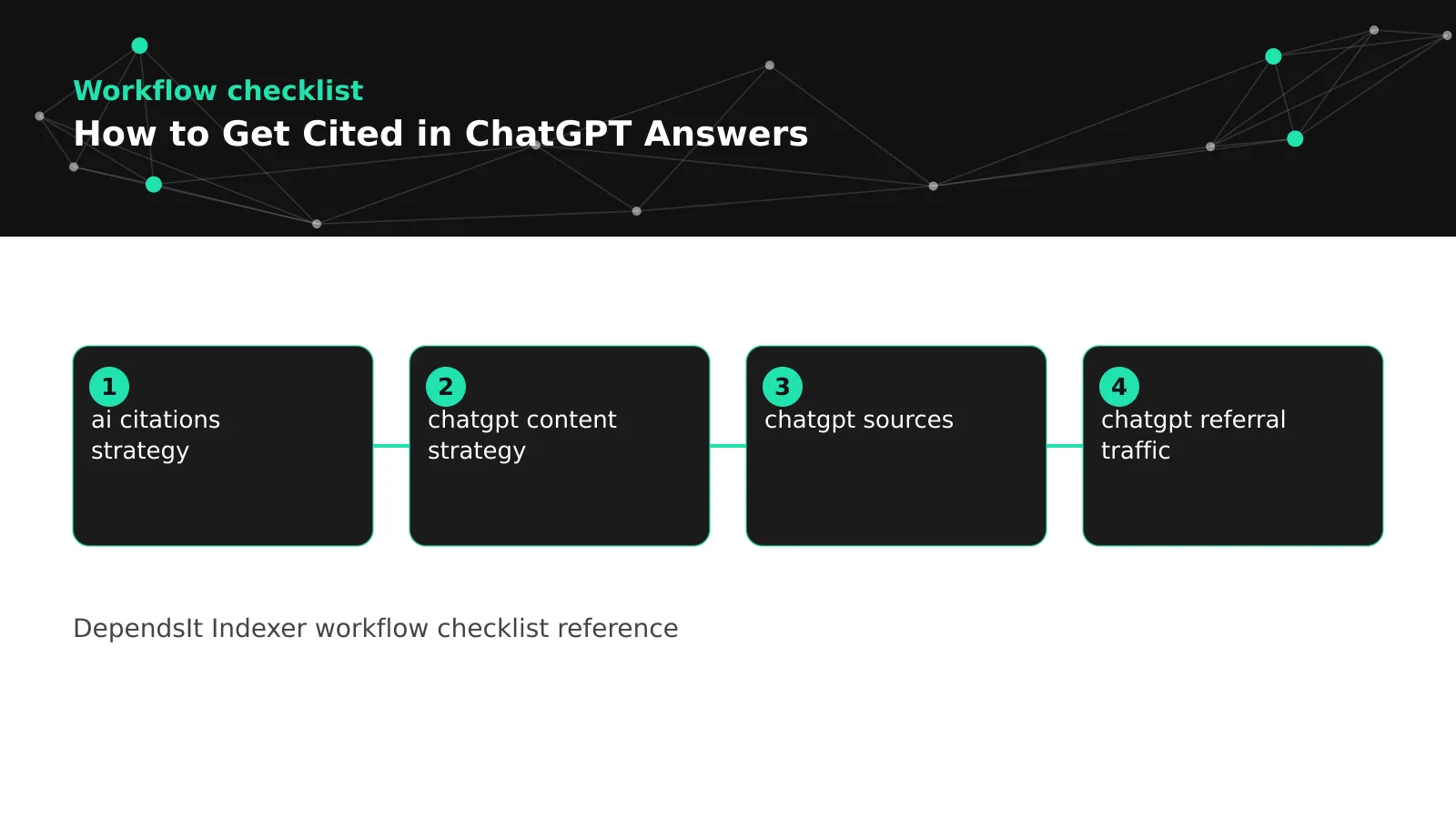
Plan refresh cadence by value and volatility. High value procedures tied to changing interfaces need monthly or quarterly review. Fresh pages protect chatgpt referral traffic because current verification dates keep citations stable when competitors refresh. Stable definitions need annual review. Prices and limits need review whenever vendors announce changes plus a quarterly check. Log each review with date and outcome, even when no change was needed, so the team knows coverage is current. This routine keeps the pages ChatGPT already cites accurate, which is the best defense against displacement.
Authority signals ChatGPT can verify
Authority for citations is practical, not ceremonial. ChatGPT tie breaks favor pages where authorship, sourcing, and consistency can be checked quickly. Name the author or team on the page and link to a short bio or about page that states relevant experience. Keep author names consistent across posts and metadata. For team written docs, name the owning team and link to its scope and contact. Anonymous pages with no provenance lose ties to attributed pages covering the same facts.
Source quality matters in both directions. Link key claims to primary documentation and keep those links fresh. Cite methods for your own tests, including environment, version, and date. Avoid piling on low value outbound links that distract from the main task. A few precise references beat many generic ones. When you rely on third party data, attribute clearly and note limits so the model can repeat the claim with appropriate context rather than as absolute fact.
Site level consistency reinforces page level claims. Keep titles, descriptions, headings, and body facts aligned. Ensure structured data matches visible content for dates, authors, and FAQs where used. Keep about, contact, and policy pages easy to find so evaluators and users can confirm the publisher. Avoid aggressive interstitials and misleading layouts that make the main content hard to identify. A calm, maintained site reads as more citable than a cluttered one with the same words.
Reviews and reputation help indirectly through links and mentions. Earn links from hubs that assistants already consult by being the clearest source for narrow tasks. Participate in docs communities with accurate corrections rather than promotion. Over time, consistent accuracy builds the kind of citation history that makes future citations easier. There is no shortcut here. Pages that prove useful for specific prompts accumulate presence that broad shallow content does not.
Finally, keep promotional language out of citable blocks. Claims about leadership or speed without evidence are skipped in favor of measurable statements. A steady ai citations strategy pairs author bios, primary source links, and quarterly consistency checks with prompt testing. This combination builds the kind of citation history that makes future inclusions easier across related tasks. State what the product does, for whom, under what limits, with what evidence. Neutral specificity is easier to quote and safer to repeat. It also converts better when readers arrive from citations, because they find the same plain facts the answer promised.
Browsing behavior and rendering
Browsing retrieval fetches pages with limited patience for heavy or blocked content. Keep article HTML fast and complete in the first response. Limit render blocking scripts, compress images to modern formats with explicit dimensions, and avoid interstitials that push answers down or block text selection. Test with mobile emulation and throttled networks, because fetcher infrastructure often behaves more like a mid range phone than a fast desktop. Pages that render text quickly enter candidate sets more often.
JavaScript discipline is central. Keep core answers in server rendered HTML. Defer enhancements that do not affect the answer. Avoid loading key tables or steps through client side calls that browsing may not wait for. After changes, verify with JavaScript disabled and with text only fetch that the answer still reads coherently in order. Document which template parts require scripts so future updates do not accidentally hide citable blocks behind new interactivity.
Access rules need review for browsing agents specifically. Confirm robots.txt allows public guides for OpenAI search agents where visibility is wanted. Review firewall and bot management events for challenges or blocks by those agents while classic crawlers succeed. Allowlist documented search agents on public GET routes if that matches policy, while keeping strict protection on login, POST, and API routes. Keep rate limits reasonable for HTML pages. Overly aggressive defenses cause citations to favor cached copies or competitors rather than live pages.
Content order should match reading order in source. Place the direct answer early in HTML, not only visually through CSS. Keep headings, lists, and tables as semantic tags rather than styled divs so parsers extract the same outline humans see. Ensure link text is descriptive and URLs are stable. These details improve passage boundaries, which decide whether the model pulls a complete quotable block or a fragment it cannot use.
Monitor browsing eligibility continuously rather than once. Track fetch success for sample URLs, time to first byte, and text presence after deploys, theme changes, and firewall updates. Alert on header changes that add noindex or alter canonicals. Many citation drops trace to infrastructure edits weeks earlier that nobody connected to answers until referrals fell. Small continuous checks prevent long invisible outages.
 <!-- IMAGE-PROMPT workflow-02: 1600px max, DependsIt brand, deep charcoal #121212 or clean white background, vibrant mint #22E3B0 accent glow, thin node-network line art, Clash Display style bold headings, General Sans clean labels, subject: ChatGPT citation loop from crawl access to quotable rewrite to weekly testing, flat vector, accessible, no em dash -->
Prompt testing and iteration
Fixed prompt sets turn GEO from guesswork into iteration. Build 15 to 30 prompts that reflect real tasks in your niche, covering definitions, procedures, comparisons, troubleshooting, and limits. Include the exact phrases users type, including error strings and version numbers. Run the set weekly in ChatGPT with consistent settings and record whether your pages appear, which URLs are cited, and which competitors appear. Store date, prompt, cited URLs, and notes in a simple sheet. Citation share over four week windows matters more than any single run.
Interpret results by URL, not just by presence. Note which of your pages gets cited for each prompt and whether the citation points to the intended canonical or an alternate. Alternates signal consolidation or canonical issues. Competitor wins reveal structural gaps: a missing table, stale dates, or a clearer opening answer. For each loss, note the concrete difference rather than general quality. Specific gaps lead to focused rewrites that recover citations faster than broad overhauls.
Iterate one change at a time. Tighten the opening answer one week, add the missing table the next, restate scope and dates after that. Rerun the same prompts after each change and wait at least two crawl cycles before judging. Changing five elements at once teaches nothing about what worked. Timebox rewrites to a few hours per page. Most citation movement comes from a small set of structural improvements repeated across pages, not from perfect prose on one page.
Include referral review alongside prompt tests. Segment visits from ChatGPT hosts by landing page and compare with citation data. Pages that earn citations but few visits may need stronger titles or clearer next steps for readers who click through. Pages with visits but no citations in tests may be cited for prompts outside your set, which suggests expanding the set. Pairing behavioral data with citation data keeps optimization tied to value rather than vanity coverage.
Report with methods and ranges. State prompt count, assistants tested, date range, and variance between runs. Show citation share per prompt group and highlight movement after specific changes. Avoid claiming exact attribution without a defined method. Honest reporting with clear methods builds support for continued iteration better than single point wins that do not repeat. Over quarters, the log of prompts, changes, and outcomes becomes the playbook for your niche.
Keeping citations over time
Citations decay as products change, competitors improve, and dates age. Protect them with scheduled maintenance. Quarterly, review the ten pages with the most citation value. Reverify steps against the current interface, update numbers and limits, refresh dates and version notes, fix links, tighten openings, and add the one missing table or checklist that tests reveal. Log changes and watch the next two test cycles. Small steady refreshes preserve presence better than rare rebuilds.
Technical monitoring runs in parallel. Track robots responses, sitemap validity, canonical stability, page speed, and fetch success for AI agents on high value URLs. Alert on template or firewall changes. After migrations, revalidate eligibility on a sample before assuming citations will hold. Many losses trace to infrastructure, not content, and early alerts shorten outages from weeks to hours.
Governance keeps quality steady as authors change. Define templates for guides, references, comparisons, and troubleshooting with required blocks for answers, prerequisites, tables, dates, authors, and sources. Require pre publish checks for crawl access, canonical, sitemap, and text readability. Require post publish review after one week for early signals. These routines take minutes and prevent most avoidable misses. They also keep voice consistent, which helps models learn that your pages reliably provide quotable facts.
Coordinate maintenance with discovery helpers. Keep sitemaps and internal links current as pages evolve, and keep any llms.txt style guidance in sync with canonicals, as detailed in the complete guide to the AI crawler file. For broader answer strategy beyond ChatGPT, align with the beginners guide to generative engine optimization. One canonical per task, kept current and well linked, serves all assistants without forks.
Set honest expectations with stakeholders. No team can guarantee citation for every prompt, because selection varies by query and competition. Commit to eligibility, clarity, freshness, and measurement, and report citation share for target prompts plus referral quality. Sites that maintain this loop earn durable presence for the tasks they cover best. Sites that publish once and wait see brief spikes followed by drift. The routine matters more than any single rewrite.
FAQ
Why does ChatGPT cite competitors instead of my longer guide?
Length alone does not win because chatgpt content ranking favors directness, completeness, and trust over word count. ChatGPT favors pages that state the answer directly, keep facts with their scope and dates, and present tables or steps that can be quoted. Pages that appear in chatgpt answers consistently share a clear opening, a comparison table with current verification, and paragraphs that stand alone. A shorter competitor with those elements often beats a longer guide that buries the answer. Tighten the first screen, add the missing table, and make each paragraph stand alone for better retrieval.
Do I need to allow GPTBot to get cited?
Allowing the right agents helps, but no single agent controls all citations. ChatGPT can retrieve through browsing and search backends that use different agents, so review all relevant OpenAI search and crawl agents in logs rather than one name. Clean chatgpt sources depend on fetch success, so allow public guides where visibility is wanted and verify fetch success with text only tests. Accurate chatgpt source links also require stable canonicals, fast HTML, and visible dates. Blocking one bot while allowing others produces partial and confusing results that are hard to debug.
How long after a rewrite should I wait before judging?
Wait at least two crawl cycles and several weekly prompt test rounds, often three to six weeks. Systems must refetch, reindex passages, and then select them amid competition. Early gains in chatgpt visibility often appear first for troubleshooting prompts with exact error text, while competitive evergreen prompts take longer. Judge citation share over four week windows, not single runs. Stable chatgpt referral traffic follows when citations persist, so monitor both prompt tests and landing page segments. If no movement after six to eight weeks, revisit technical eligibility and page structure before adding more content.
Should I add FAQ schema to win ChatGPT citations?
FAQ markup can clarify question and answer pairing, but it does not guarantee citations. Add it only where the page truly contains questions with complete answers and where visible text matches markup. Strong chatgpt citations come first from answer first copy, tables, dates, and scope notes that all retrieval uses. A sound chatgpt content strategy therefore prioritizes one canonical per task, quotable blocks, and weekly prompt tests over aggressive markup on thin pages. Accurate structure on genuinely useful pages outperforms markup tricks. Focus first on copy that can be quoted alone without losing meaning.
Does keyword repetition help with ChatGPT?
No. Repetition without structure does not improve passage ranking and can harm readability. Writers who want to get quoted by ai should use natural terms, exact error strings where relevant, and consistent names for products and features. Cover subquestions with matching headings rather than repeating the main phrase. A steady ai citations strategy favors clarity and completeness on one canonical URL over density tricks. Clarity and completeness outperform repetition in every durable test, and they also read better for humans who arrive from citations.
How do I keep ChatGPT citations after a site redesign?
Freeze citation critical templates during redesign, keep URLs stable with proper redirects where moves are unavoidable, and revalidate robots access, rendering, canonicals, and sitemaps on a sample of high value pages before launch. Monitor prompt tests and AI referrals closely for four weeks after, watching chatgpt visibility by landing page and cited URL. Keep chatgpt sources stable by avoiding hostname changes and parameter variants that split signals. Most redesign losses come from new scripts hiding content, changed headers, or altered canonicals rather than from copy changes, so test early and often.
Sources
- https://developers.google.com/search/docs/crawling-indexing/overview
- https://schema.org/FAQPage