How Internal Linking Speeds Up Indexing (With Examples)

New pages often sit unindexed not because the content is weak but because crawlers rarely visit them. This guide is for publishers, SEOs, and developers who want to use internal linking for indexing to shorten the path from publish to search. You will learn why link depth controls crawl priority, how to find orphan and buried pages, which hub and contextual patterns move the needle, and how to measure faster indexing with Search Console and logs. The focus keyword internal linking for indexing appears early so the intent is clear, and every section includes examples you can copy to blogs, stores, and docs sites without a full rebuild.
Key takeaways
- Internal links set crawl priority and shorten time from publish to index.
- Keep priority pages within three clicks and clear zero inlink cases first.
- Use contextual hub links with descriptive anchors over boilerplate blocks.
- Measure with last crawl dates and valid trends against an unchanged control.
- Why internal linking for indexing controls crawl priority
- Link depth, click depth, and how buried pages wait longer
- Orphan pages and how to find pages with zero internal inlinks
- Hub pages, contextual links, and anchor text that guides crawlers
- Examples: blog, ecommerce, and docs structures that index faster
- How to audit and fix internal linking for priority URLs
- Measuring faster indexing after internal link changes
- FAQ
- Sources
- Further reading
 <!-- IMAGE-PROMPT cover: 1200x630, DependsIt brand, deep charcoal #121212 background, vibrant mint #22E3B0 accent glow, thin node-network line art, Clash Display style bold heading space on left, General Sans clean labels, subject: internal linking for indexing cover for site owners, flat vector, high contrast, accessible, no photorealistic faces, no text smaller than 24px, no em dash in rendered text, export PNG then cwebp -q 82 to WEBP -->
Why internal linking for indexing controls crawl priority
Googlebot follows links to find pages and uses link patterns to decide what to crawl first. For internal linking for indexing, each internal link is both a path and a vote of importance. Pages with many relevant inlinks from strong hubs are fetched often and evaluated for the index quickly. Teams that use internal links faster indexing patterns link new posts from homepage modules and category hubs within minutes of publish. A steady internal linking crawl habit, where bots find fresh hubs on every visit, shortens discovery more than extra sitemap pings. Pages with few or weak inlinks wait in the discovery queue. This section explains how crawl priority forms, why homepage distance matters, and how link equity and topical context combine to move priority URLs from discovered to indexed faster than isolated URLs.
To make progress on why internal links control crawl priority and index speed, start with live evidence rather than assumptions. Open the URL in a clean browser session, view source, and compare it with the rendered DOM. Note the title, meta robots, canonical link, headings, and main body length in both views. Then fetch response headers to confirm status code, content type, X Robots Tag, cache directives, and redirect chain length. For internal linking for indexing, these first facts decide whether deeper work is needed or whether a single header or tag explains the symptom. Record the date, template name, and test URLs so later changes can be tied to outcomes without guesswork.
Practical checks for why internal links control crawl priority and index speed work best as a short checklist with owners and dates. Confirm crawl access in robots.txt for the exact path and user agent, confirm index permission in meta and headers, confirm the canonical target returns 200 and allows indexing, confirm sitemap inclusion only for preferred URLs, and confirm at least a few relevant internal inlinks from indexed hubs. For internal linking for indexing, each check takes minutes but together they catch most blocks. Log which check failed for each sample so the repair targets the true source instead of applying broad changes that risk new issues.
Checklist for why internal links control crawl priority and index speed:
- Confirm live status, headers, and rendered output on two samples from this template.
- Compare Search Console samples with crawl exports grouped by template and path.
- Align sitemap entries, internal anchors, and canonical targets to one preferred URL form.
- Fix the template or setting once, then retest across post types and archives.
- Purge page cache and edge cache, then recheck logged out HTML and headers.
- Log the change with dates and watch valid indexed counts for two weeks.
| Check for internal linking for indexing | What to look for | Next step |
|---|---|---|
| --- | --- | --- |
| Crawl access | robots result and log fetch rate | Narrow the exact disallow or allow pattern |
|---|---|---|
| Index permission | meta robots and X Robots Tag | Remove noindex from the true source layer |
| Canonical clarity | declared versus selected URL | Point all cues to one 200 indexable target |
|---|---|---|
| Internal support | inlink count and click depth | Add hub and contextual links with clear anchors |
Example: a site working on internal linking for indexing found that why internal links control crawl priority and index speed affected one template more than others. The team listed fifty sample URLs, added template and inlink columns, and saw that archive pages carried the same canonical as single posts while receiving almost no internal links. They updated the template so archives self reference only when they add unique value, added three contextual links from related hubs to priority singles, cleaned the sitemap to preferred URLs only, and purged cache. Live tests then showed consistent canonicals, logs showed steadier fetching of the priority section, and the valid indexed trend rose without bulk resubmits. For more context on adjacent coverage states, see Discovered, Currently Not Indexed: Why It Happens and How to Fix It which explains how discovery and crawl states connect to this fix.
Next, widen the lens from one URL to its template group. For internal linking for indexing, single page fixes rarely move coverage because the same include, plugin, or layout rule affects hundreds of pages. Export Search Console samples for the relevant status, add columns for template, word count, inlink count, canonical target, and sitemap presence, then sort by template. When why internal links control crawl priority and index speed clusters on one layout, the fix belongs in code or settings, not in the editor. When it spreads across layouts, look at sitewide signals such as navigation depth, crawl budget pressure, or recent deploy dates that shifted many pages at once.
Do not overlook rendering and performance. For internal linking for indexing, JavaScript that injects main content late, lazy loads critical links, or blocks CSS and scripts can make a healthy page look thin to crawlers. Test raw versus rendered word counts, list blocked resources reported in live tests, and confirm that canonicals, hreflang, and structured data appear in rendered HTML as well as source. Compress images, stabilize response times, and ensure the edge cache serves bots the same HTML as browsers. Faster stable rendering helps every other fix for why internal links control crawl priority and index speed get noticed sooner.
curl -I https://example.com/blog/sample-postLink depth, click depth, and how buried pages wait longer
Click depth measures how many clicks a page sits from the homepage. For internal linking for indexing, depth predicts crawl delay. A product or article at depth one or two is seen within days. The same page at depth six or seven may wait weeks, especially on large sites with limited crawl budget. Depth grows through pagination, nested categories, filter chains, and orphaned archives. To improve crawling internal links at scale, audit inlink counts and click depth together rather than fixing single URLs. Tracking link depth seo in the same sheet helps prioritize buried sections that need hub support first. This section shows how to measure depth with a crawler, which thresholds to watch, and how flattening navigation, adding hubs, and linking from recent posts can cut depth without redesigning the whole site.
Next, widen the lens from one URL to its template group. For internal linking for indexing, single page fixes rarely move coverage because the same include, plugin, or layout rule affects hundreds of pages. Export Search Console samples for the relevant status, add columns for template, word count, inlink count, canonical target, and sitemap presence, then sort by template. When link depth, click depth, and how buried pages wait longer clusters on one layout, the fix belongs in code or settings, not in the editor. When it spreads across layouts, look at sitewide signals such as navigation depth, crawl budget pressure, or recent deploy dates that shifted many pages at once.
Content quality still decides many close calls. For internal linking for indexing, compare the thin or duplicated page against indexed competitors on specificity, steps, examples, data, and intent fit. Add concrete details that a crawler can distinguish, such as exact procedures, error strings, thresholds, timelines, and follow up actions. Keep titles and H1s distinct across the section, tighten intros that repeat the same boilerplate, and remove auto generated archives that compete with priority pages. When link depth, click depth, and how buried pages wait longer improves uniqueness and intent match, Google has a clearer reason to keep the preferred URL in the index.
Checklist for link depth, click depth, and how buried pages wait longer:
- Confirm live status, headers, and rendered output on two samples from this template.
- Compare Search Console samples with crawl exports grouped by template and path.
- Align sitemap entries, internal anchors, and canonical targets to one preferred URL form.
- Fix the template or setting once, then retest across post types and archives.
- Purge page cache and edge cache, then recheck logged out HTML and headers.
- Log the change with dates and watch valid indexed counts for two weeks.
| Check for internal linking for indexing | What to look for | Next step |
|---|---|---|
| --- | --- | --- |
| Crawl access | robots result and log fetch rate | Narrow the exact disallow or allow pattern |
|---|---|---|
| Index permission | meta robots and X Robots Tag | Remove noindex from the true source layer |
| Canonical clarity | declared versus selected URL | Point all cues to one 200 indexable target |
|---|---|---|
| Internal support | inlink count and click depth | Add hub and contextual links with clear anchors |
Example: a site working on internal linking for indexing found that link depth, click depth, and how buried pages wait longer affected one template more than others. The team listed fifty sample URLs, added template and inlink columns, and saw that archive pages carried the same canonical as single posts while receiving almost no internal links. They updated the template so archives self reference only when they add unique value, added three contextual links from related hubs to priority singles, cleaned the sitemap to preferred URLs only, and purged cache. Live tests then showed consistent canonicals, logs showed steadier fetching of the priority section, and the valid indexed trend rose without bulk resubmits. For more context on adjacent coverage states, see our guide on Discovered, Currently Not Indexed: Why It Happens and How to Fix It which explains how discovery and crawl states connect to this fix.
Then align the supporting signals that Google weighs alongside the main tag or directive. For internal linking for indexing, sitemaps should list only canonical 200 URLs with accurate lastmod, internal links should point to the same canonical variant with descriptive anchors, and alternate cues such as hreflang, pagination, or feed links should agree rather than compete. Mixed cues force Google to choose, which delays indexing. Pick one preferred URL form with consistent protocol, host, trailing slash, and parameter handling, update templates and feeds to emit it, and remove stale variants from sitemaps so crawlers spend time on pages that can actually be indexed.
Rollout discipline protects gains. For internal linking for indexing, back up templates and settings, change one layer at a time, and keep a simple log with template, change, date, and sample URLs. After deploy, clear caches, retest live output, and compare before and after exports rather than relying on memory. Share the log with editors and developers so no one reintroduces the old pattern during the next theme update. When link depth, click depth, and how buried pages wait longer is fixed at the template level with monitoring in place, coverage usually stays stable through future releases.
 <!-- IMAGE-PROMPT diagram-01: 1600px max, DependsIt brand mint #22E3B0 on charcoal #121212, node-network line art, Clash Display style headings, General Sans clean labels, subject: internal linking for indexing pipeline diagram from discovery through crawl to index, flat vector, accessible, no em dash -->
curl -I https://example.com/blog/sample-postOrphan pages and how to find pages with zero internal inlinks
Orphan pages have no internal links pointing to them, so crawlers can only find them through sitemaps or external links. Solving orphan pages indexing starts by exporting sitemap URLs with zero referring internal pages and assigning each a hub. Strong crawl path optimization then connects those hubs with contextual body links instead of footer bloat. For internal linking for indexing, orphans are the slowest group to index and the first to drop when quality thresholds tighten. They often come from CSV imports, scheduled posts with no category links, PDF uploads, or campaign pages built outside the CMS menu. This section explains how to export inlink counts, cross check sitemap URLs against crawl graphs, and build a simple orphan report that lists every sitemap URL with zero referring internal pages plus a suggested hub for each.
Then align the supporting signals that Google weighs alongside the main tag or directive. For internal linking for indexing, sitemaps should list only canonical 200 URLs with accurate lastmod, internal links should point to the same canonical variant with descriptive anchors, and alternate cues such as hreflang, pagination, or feed links should agree rather than compete. Mixed cues force Google to choose, which delays indexing. Pick one preferred URL form with consistent protocol, host, trailing slash, and parameter handling, update templates and feeds to emit it, and remove stale variants from sitemaps so crawlers spend time on pages that can actually be indexed.
Do not overlook rendering and performance. For internal linking for indexing, JavaScript that injects main content late, lazy loads critical links, or blocks CSS and scripts can make a healthy page look thin to crawlers. Test raw versus rendered word counts, list blocked resources reported in live tests, and confirm that canonicals, hreflang, and structured data appear in rendered HTML as well as source. Compress images, stabilize response times, and ensure the edge cache serves bots the same HTML as browsers. Faster stable rendering helps every other fix for orphan pages and how to find pages with zero internal inlinks get noticed sooner.
Checklist for orphan pages and how to find pages with zero internal inlinks:
- Confirm live status, headers, and rendered output on two samples from this template.
- Compare Search Console samples with crawl exports grouped by template and path.
- Align sitemap entries, internal anchors, and canonical targets to one preferred URL form.
- Fix the template or setting once, then retest across post types and archives.
- Purge page cache and edge cache, then recheck logged out HTML and headers.
- Log the change with dates and watch valid indexed counts for two weeks.
| Check for internal linking for indexing | What to look for | Next step |
|---|---|---|
| --- | --- | --- |
| Crawl access | robots result and log fetch rate | Narrow the exact disallow or allow pattern |
|---|---|---|
| Index permission | meta robots and X Robots Tag | Remove noindex from the true source layer |
| Canonical clarity | declared versus selected URL | Point all cues to one 200 indexable target |
|---|---|---|
| Internal support | inlink count and click depth | Add hub and contextual links with clear anchors |
Example: a site working on internal linking for indexing found that orphan pages and how to find pages with zero internal inlinks affected one template more than others. The team listed fifty sample URLs, added template and inlink columns, and saw that archive pages carried the same canonical as single posts while receiving almost no internal links. They updated the template so archives self reference only when they add unique value, added three contextual links from related hubs to priority singles, cleaned the sitemap to preferred URLs only, and purged cache. Live tests then showed consistent canonicals, logs showed steadier fetching of the priority section, and the valid indexed trend rose without bulk resubmits. For more context on adjacent coverage states, see our guide on Discovered, Currently Not Indexed: Why It Happens and How to Fix It which explains how discovery and crawl states connect to this fix.
Finally, validate in small loops and track trends. For internal linking for indexing, fix staging first, deploy to production, purge page and edge caches, and retest headers and source on live URLs while logged out. Run URL Inspection live tests on two to three samples per template, not on thousands of URLs. Note last crawl dates and canonical selection, then watch the Pages report for the section over one to two weeks. Stable templates plus steady internal links usually move the valid count before any single URL is manually resubmitted. If movement stalls, revisit rendering, duplication, and depth before adding more requests.
Practical checks for orphan pages and how to find pages with zero internal inlinks work best as a short checklist with owners and dates. Confirm crawl access in robots.txt for the exact path and user agent, confirm index permission in meta and headers, confirm the canonical target returns 200 and allows indexing, confirm sitemap inclusion only for preferred URLs, and confirm at least a few relevant internal inlinks from indexed hubs. For internal linking for indexing, each check takes minutes but together they catch most blocks. Log which check failed for each sample so the repair targets the true source instead of applying broad changes that risk new issues.
curl -I https://example.com/blog/sample-postHub pages, contextual links, and anchor text that guides crawlers
Not all internal links carry the same weight. For internal linking for indexing, contextual links inside article bodies outperform footer or sidebar boilerplate because they carry topical relevance and user intent. A practical internal link strategy favors three to five contextual links from related hubs over hundreds of sitewide boilerplate links. Clean site structure indexing follows when hubs, breadcrumbs, and related modules all point to the same canonical variant. Hub pages that collect and organize a topic pass concentrated relevance to members. Descriptive anchors tell crawlers what the target covers. This section compares navigation, breadcrumb, related post, and in content links, shows how to write anchors that describe the target without stuffing, and explains how to build hubs that both users and crawlers can follow.
Finally, validate in small loops and track trends. For internal linking for indexing, fix staging first, deploy to production, purge page and edge caches, and retest headers and source on live URLs while logged out. Run URL Inspection live tests on two to three samples per template, not on thousands of URLs. Note last crawl dates and canonical selection, then watch the Pages report for the section over one to two weeks. Stable templates plus steady internal links usually move the valid count before any single URL is manually resubmitted. If movement stalls, revisit rendering, duplication, and depth before adding more requests.
Rollout discipline protects gains. For internal linking for indexing, back up templates and settings, change one layer at a time, and keep a simple log with template, change, date, and sample URLs. After deploy, clear caches, retest live output, and compare before and after exports rather than relying on memory. Share the log with editors and developers so no one reintroduces the old pattern during the next theme update. When hub pages, contextual links, and anchor text that guides crawlers is fixed at the template level with monitoring in place, coverage usually stays stable through future releases.
Checklist for hub pages, contextual links, and anchor text that guides crawlers:
- Confirm live status, headers, and rendered output on two samples from this template.
- Compare Search Console samples with crawl exports grouped by template and path.
- Align sitemap entries, internal anchors, and canonical targets to one preferred URL form.
- Fix the template or setting once, then retest across post types and archives.
- Purge page cache and edge cache, then recheck logged out HTML and headers.
- Log the change with dates and watch valid indexed counts for two weeks.
| Check for internal linking for indexing | What to look for | Next step |
|---|---|---|
| --- | --- | --- |
| Crawl access | robots result and log fetch rate | Narrow the exact disallow or allow pattern |
|---|---|---|
| Index permission | meta robots and X Robots Tag | Remove noindex from the true source layer |
| Canonical clarity | declared versus selected URL | Point all cues to one 200 indexable target |
|---|---|---|
| Internal support | inlink count and click depth | Add hub and contextual links with clear anchors |
Example: a site working on internal linking for indexing found that hub pages, contextual links, and anchor text that guides crawlers affected one template more than others. The team listed fifty sample URLs, added template and inlink columns, and saw that archive pages carried the same canonical as single posts while receiving almost no internal links. They updated the template so archives self reference only when they add unique value, added three contextual links from related hubs to priority singles, cleaned the sitemap to preferred URLs only, and purged cache. Live tests then showed consistent canonicals, logs showed steadier fetching of the priority section, and the valid indexed trend rose without bulk resubmits. For more context on adjacent coverage states, see our guide on Discovered, Currently Not Indexed: Why It Happens and How to Fix It which explains how discovery and crawl states connect to this fix.
To make progress on hub pages, contextual links, and anchor text that guides crawlers, start with live evidence rather than assumptions. Open the URL in a clean browser session, view source, and compare it with the rendered DOM. Note the title, meta robots, canonical link, headings, and main body length in both views. Then fetch response headers to confirm status code, content type, X Robots Tag, cache directives, and redirect chain length. For internal linking for indexing, these first facts decide whether deeper work is needed or whether a single header or tag explains the symptom. Record the date, template name, and test URLs so later changes can be tied to outcomes without guesswork.
Content quality still decides many close calls. For internal linking for indexing, compare the thin or duplicated page against indexed competitors on specificity, steps, examples, data, and intent fit. Add concrete details that a crawler can distinguish, such as exact procedures, error strings, thresholds, timelines, and follow up actions. Keep titles and H1s distinct across the section, tighten intros that repeat the same boilerplate, and remove auto generated archives that compete with priority pages. When hub pages, contextual links, and anchor text that guides crawlers improves uniqueness and intent match, Google has a clearer reason to keep the preferred URL in the index.
curl -I https://example.com/blog/sample-postExamples: blog, ecommerce, and docs structures that index faster
Concrete patterns help more than theory. For internal linking for indexing, blogs index faster when every post links to two related posts and one category hub, ecommerce catalogs move faster when categories link to subcategories and best sellers link across, and docs sites improve when tutorials link sequentially and reference pages link back to guides. This section walks through three before and after examples with depth numbers, inlink counts, and hub placements. Each example shows the starting structure, the specific links added, and how crawl logs and Search Console coverage shifted after the change.
To make progress on examples: blog, ecommerce, and docs structures that index faster, start with live evidence rather than assumptions. Open the URL in a clean browser session, view source, and compare it with the rendered DOM. Note the title, meta robots, canonical link, headings, and main body length in both views. Then fetch response headers to confirm status code, content type, X Robots Tag, cache directives, and redirect chain length. For internal linking for indexing, these first facts decide whether deeper work is needed or whether a single header or tag explains the symptom. Record the date, template name, and test URLs so later changes can be tied to outcomes without guesswork.
Practical checks for examples: blog, ecommerce, and docs structures that index faster work best as a short checklist with owners and dates. Confirm crawl access in robots.txt for the exact path and user agent, confirm index permission in meta and headers, confirm the canonical target returns 200 and allows indexing, confirm sitemap inclusion only for preferred URLs, and confirm at least a few relevant internal inlinks from indexed hubs. For internal linking for indexing, each check takes minutes but together they catch most blocks. Log which check failed for each sample so the repair targets the true source instead of applying broad changes that risk new issues.
Checklist for examples: blog, ecommerce, and docs structures that index faster:
- Confirm live status, headers, and rendered output on two samples from this template.
- Compare Search Console samples with crawl exports grouped by template and path.
- Align sitemap entries, internal anchors, and canonical targets to one preferred URL form.
- Fix the template or setting once, then retest across post types and archives.
- Purge page cache and edge cache, then recheck logged out HTML and headers.
- Log the change with dates and watch valid indexed counts for two weeks.
| Check for internal linking for indexing | What to look for | Next step |
|---|---|---|
| --- | --- | --- |
| Crawl access | robots result and log fetch rate | Narrow the exact disallow or allow pattern |
|---|---|---|
| Index permission | meta robots and X Robots Tag | Remove noindex from the true source layer |
| Canonical clarity | declared versus selected URL | Point all cues to one 200 indexable target |
|---|---|---|
| Internal support | inlink count and click depth | Add hub and contextual links with clear anchors |
Example: a site working on internal linking for indexing found that examples: blog, ecommerce, and docs structures that index faster affected one template more than others. The team listed fifty sample URLs, added template and inlink columns, and saw that archive pages carried the same canonical as single posts while receiving almost no internal links. They updated the template so archives self reference only when they add unique value, added three contextual links from related hubs to priority singles, cleaned the sitemap to preferred URLs only, and purged cache. Live tests then showed consistent canonicals, logs showed steadier fetching of the priority section, and the valid indexed trend rose without bulk resubmits. For more context on adjacent coverage states, see our guide on Discovered, Currently Not Indexed: Why It Happens and How to Fix It which explains how discovery and crawl states connect to this fix.
Next, widen the lens from one URL to its template group. For internal linking for indexing, single page fixes rarely move coverage because the same include, plugin, or layout rule affects hundreds of pages. Export Search Console samples for the relevant status, add columns for template, word count, inlink count, canonical target, and sitemap presence, then sort by template. When examples: blog, ecommerce, and docs structures that index faster clusters on one layout, the fix belongs in code or settings, not in the editor. When it spreads across layouts, look at sitewide signals such as navigation depth, crawl budget pressure, or recent deploy dates that shifted many pages at once.
Do not overlook rendering and performance. For internal linking for indexing, JavaScript that injects main content late, lazy loads critical links, or blocks CSS and scripts can make a healthy page look thin to crawlers. Test raw versus rendered word counts, list blocked resources reported in live tests, and confirm that canonicals, hreflang, and structured data appear in rendered HTML as well as source. Compress images, stabilize response times, and ensure the edge cache serves bots the same HTML as browsers. Faster stable rendering helps every other fix for examples: blog, ecommerce, and docs structures that index faster get noticed sooner.
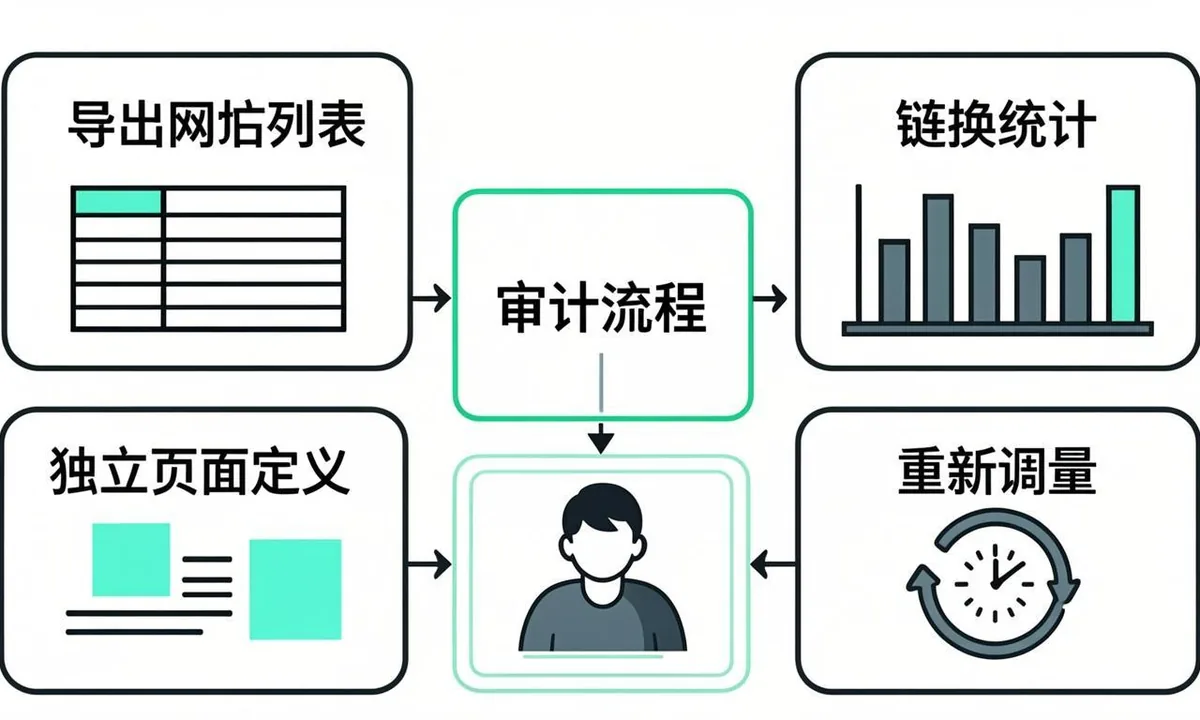 <!-- IMAGE-PROMPT workflow-02: 1600px max, DependsIt brand mint #22E3B0 on charcoal #121212 or white, node-network line art, Clash Display style headings, General Sans clean labels, subject: internal linking for indexing remediation workflow from audit to fix to monitoring, flat vector, accessible, no em dash -->
curl -I https://example.com/blog/sample-postHow to audit and fix internal linking for priority URLs
A focused audit beats a sitewide redesign. For internal linking for indexing, start from the list of priority URLs that are discovered but not indexed or crawled but not indexed, then trace their inlink paths. To reduce crawl depth for priority URLs, add category hubs and recent post blocks that keep heroes within three clicks of the homepage. Well placed indexing links in article bodies carry more topical weight than sidebar lists and guide bots to fresh pages faster. Add columns for click depth, referring pages, anchor text, nofollow status, and JavaScript dependence. Fixes go to templates first so hundreds of pages improve at once. This section gives a step by step audit sheet, rules for how many links to add per hub, how to avoid sidebar bloat, and how to keep navigation fast and accessible while strengthening crawl paths.
Next, widen the lens from one URL to its template group. For internal linking for indexing, single page fixes rarely move coverage because the same include, plugin, or layout rule affects hundreds of pages. Export Search Console samples for the relevant status, add columns for template, word count, inlink count, canonical target, and sitemap presence, then sort by template. When how to audit and fix internal linking for priority urls clusters on one layout, the fix belongs in code or settings, not in the editor. When it spreads across layouts, look at sitewide signals such as navigation depth, crawl budget pressure, or recent deploy dates that shifted many pages at once.
Content quality still decides many close calls. For internal linking for indexing, compare the thin or duplicated page against indexed competitors on specificity, steps, examples, data, and intent fit. Add concrete details that a crawler can distinguish, such as exact procedures, error strings, thresholds, timelines, and follow up actions. Keep titles and H1s distinct across the section, tighten intros that repeat the same boilerplate, and remove auto generated archives that compete with priority pages. When how to audit and fix internal linking for priority urls improves uniqueness and intent match, Google has a clearer reason to keep the preferred URL in the index.
Checklist for how to audit and fix internal linking for priority urls:
- Confirm live status, headers, and rendered output on two samples from this template.
- Compare Search Console samples with crawl exports grouped by template and path.
- Align sitemap entries, internal anchors, and canonical targets to one preferred URL form.
- Fix the template or setting once, then retest across post types and archives.
- Purge page cache and edge cache, then recheck logged out HTML and headers.
- Log the change with dates and watch valid indexed counts for two weeks.
| Check for internal linking for indexing | What to look for | Next step |
|---|---|---|
| --- | --- | --- |
| Crawl access | robots result and log fetch rate | Narrow the exact disallow or allow pattern |
|---|---|---|
| Index permission | meta robots and X Robots Tag | Remove noindex from the true source layer |
| Canonical clarity | declared versus selected URL | Point all cues to one 200 indexable target |
|---|---|---|
| Internal support | inlink count and click depth | Add hub and contextual links with clear anchors |
Example: a site working on internal linking for indexing found that how to audit and fix internal linking for priority urls affected one template more than others. The team listed fifty sample URLs, added template and inlink columns, and saw that archive pages carried the same canonical as single posts while receiving almost no internal links. They updated the template so archives self reference only when they add unique value, added three contextual links from related hubs to priority singles, cleaned the sitemap to preferred URLs only, and purged cache. Live tests then showed consistent canonicals, logs showed steadier fetching of the priority section, and the valid indexed trend rose without bulk resubmits. For more context on adjacent coverage states, see our guide on Discovered, Currently Not Indexed: Why It Happens and How to Fix It which explains how discovery and crawl states connect to this fix.
Then align the supporting signals that Google weighs alongside the main tag or directive. For internal linking for indexing, sitemaps should list only canonical 200 URLs with accurate lastmod, internal links should point to the same canonical variant with descriptive anchors, and alternate cues such as hreflang, pagination, or feed links should agree rather than compete. Mixed cues force Google to choose, which delays indexing. Pick one preferred URL form with consistent protocol, host, trailing slash, and parameter handling, update templates and feeds to emit it, and remove stale variants from sitemaps so crawlers spend time on pages that can actually be indexed.
Rollout discipline protects gains. For internal linking for indexing, back up templates and settings, change one layer at a time, and keep a simple log with template, change, date, and sample URLs. After deploy, clear caches, retest live output, and compare before and after exports rather than relying on memory. Share the log with editors and developers so no one reintroduces the old pattern during the next theme update. When how to audit and fix internal linking for priority urls is fixed at the template level with monitoring in place, coverage usually stays stable through future releases.
curl -I https://example.com/blog/sample-postMeasuring faster indexing after internal link changes
Link changes need measurement or they become guesswork. For internal linking for indexing, the right metrics are time from publish to first crawl, time to index, valid page trend in Search Console, and log based crawl frequency for the changed section. This section explains how to set a baseline before edits, how to tag deploys with dates, how to compare a changed section against an unchanged control, and how to read URL Inspection timestamps. It also covers when to hold steady and let crawlers catch up versus when to add more links or prune low value pages that dilute attention.
Then align the supporting signals that Google weighs alongside the main tag or directive. For internal linking for indexing, sitemaps should list only canonical 200 URLs with accurate lastmod, internal links should point to the same canonical variant with descriptive anchors, and alternate cues such as hreflang, pagination, or feed links should agree rather than compete. Mixed cues force Google to choose, which delays indexing. Pick one preferred URL form with consistent protocol, host, trailing slash, and parameter handling, update templates and feeds to emit it, and remove stale variants from sitemaps so crawlers spend time on pages that can actually be indexed.
Do not overlook rendering and performance. For internal linking for indexing, JavaScript that injects main content late, lazy loads critical links, or blocks CSS and scripts can make a healthy page look thin to crawlers. Test raw versus rendered word counts, list blocked resources reported in live tests, and confirm that canonicals, hreflang, and structured data appear in rendered HTML as well as source. Compress images, stabilize response times, and ensure the edge cache serves bots the same HTML as browsers. Faster stable rendering helps every other fix for measuring faster indexing after internal link changes get noticed sooner.
Checklist for measuring faster indexing after internal link changes:
- Confirm live status, headers, and rendered output on two samples from this template.
- Compare Search Console samples with crawl exports grouped by template and path.
- Align sitemap entries, internal anchors, and canonical targets to one preferred URL form.
- Fix the template or setting once, then retest across post types and archives.
- Purge page cache and edge cache, then recheck logged out HTML and headers.
- Log the change with dates and watch valid indexed counts for two weeks.
| Check for internal linking for indexing | What to look for | Next step |
|---|---|---|
| --- | --- | --- |
| Crawl access | robots result and log fetch rate | Narrow the exact disallow or allow pattern |
|---|---|---|
| Index permission | meta robots and X Robots Tag | Remove noindex from the true source layer |
| Canonical clarity | declared versus selected URL | Point all cues to one 200 indexable target |
|---|---|---|
| Internal support | inlink count and click depth | Add hub and contextual links with clear anchors |
Example: a site working on internal linking for indexing found that measuring faster indexing after internal link changes affected one template more than others. The team listed fifty sample URLs, added template and inlink columns, and saw that archive pages carried the same canonical as single posts while receiving almost no internal links. They updated the template so archives self reference only when they add unique value, added three contextual links from related hubs to priority singles, cleaned the sitemap to preferred URLs only, and purged cache. Live tests then showed consistent canonicals, logs showed steadier fetching of the priority section, and the valid indexed trend rose without bulk resubmits. For more context on adjacent coverage states, see our guide on Discovered, Currently Not Indexed: Why It Happens and How to Fix It which explains how discovery and crawl states connect to this fix.
Finally, validate in small loops and track trends. For internal linking for indexing, fix staging first, deploy to production, purge page and edge caches, and retest headers and source on live URLs while logged out. Run URL Inspection live tests on two to three samples per template, not on thousands of URLs. Note last crawl dates and canonical selection, then watch the Pages report for the section over one to two weeks. Stable templates plus steady internal links usually move the valid count before any single URL is manually resubmitted. If movement stalls, revisit rendering, duplication, and depth before adding more requests.
Practical checks for measuring faster indexing after internal link changes work best as a short checklist with owners and dates. Confirm crawl access in robots.txt for the exact path and user agent, confirm index permission in meta and headers, confirm the canonical target returns 200 and allows indexing, confirm sitemap inclusion only for preferred URLs, and confirm at least a few relevant internal inlinks from indexed hubs. For internal linking for indexing, each check takes minutes but together they catch most blocks. Log which check failed for each sample so the repair targets the true source instead of applying broad changes that risk new issues.
curl -I https://example.com/blog/sample-postFAQ
Do internal links faster indexing really work for new pages?
Yes, internal links faster indexing patterns work because each relevant inlink is both a discovery path and a priority vote. Pages with three to five inlinks from indexed hubs get fetched and evaluated much sooner than isolated pages with zero. Place one link from the homepage or a strong category hub plus two contextual links from related articles for priority content. Keep anchors descriptive and vary phrasing naturally. Check inlink counts in your crawler, clear zero inlink cases first, and compare last crawl dates against an unchanged control section over two to four weeks.
How does internal linking crawl behavior improve crawling internal links at scale?
Healthy internal linking crawl behavior means bots find fresh hubs on every visit and traverse to new members within days. To improve crawling internal links at scale, audit click depth, referring pages, anchor text, and JavaScript dependence together rather than fixing single URLs. Add category hubs, related modules with limits, and breadcrumb paths that shorten routes without stuffing templates. Keep global navigation lean, reserve body links for priority targets, and ensure links render in HTML without late scripts. Monitor crawl stats to confirm bots spend more time on priority sections after pruning.
How do I solve orphan pages indexing problems after imports?
Fix orphan pages indexing by exporting sitemap URLs with zero referring internal pages, then assigning each a relevant hub for support. Imports, scheduled posts without categories, PDF uploads, and campaign pages built outside menus are common sources. Add two to three contextual body links from related hubs with descriptive anchors, ensure the targets return 200 with self referencing canonicals, and keep them in sitemaps with accurate lastmod. Validate with crawl exports showing inlink counts above zero, then watch valid indexed trends for the section over two to four weeks without frequent menu changes.
What link depth seo threshold keeps pages indexable, and how do I reduce crawl depth?
For link depth seo, keep priority pages within three clicks of the homepage, with depth one to two ideal for flagships and launches. Depth four and beyond often delays indexing on large sites with limited budget. To reduce crawl depth, add category hubs, recent post blocks with limits, related modules, and breadcrumb paths that shorten routes without stuffing hundreds of links. Measure depth with a crawler set to follow navigation like a bot. After changes, confirm last crawl dates improve for the changed section versus an unchanged control before adding more links.
How does crawl path optimization shape an internal link strategy?
Good crawl path optimization connects homepage to category hubs to priority members with short, topical routes that bots can follow without filter chains. A practical internal link strategy favors three to five contextual links from related hubs over hundreds of sitewide boilerplate links. Write anchors that describe the target without stuffing, vary phrasing naturally, and keep titles and H1s reinforcing the same topic. Prune auto generated archives, cap related modules to truly related targets, and reserve body links for pages that deserve indexation. Review crawl frequency for the changed section to confirm impact.
How does site structure indexing affect crawl budget?
Clean site structure indexing helps bots allocate budget to priority sections instead of wasting time on filter combinations and deep archives. Blogs move faster when every post links to two related posts and one category hub, stores improve when categories link to subcategories and best sellers cross link, and docs benefit when tutorials link sequentially. Keep sitemaps to canonical 200 URLs, align internal anchors to the same variant, and remove stale helpers that dilute attention. Compare submitted versus indexed counts by section and log based crawl frequency before and after edits to prove the shift.
Where should indexing links appear for maximum crawl benefit?
Place indexing links in article bodies with descriptive anchors rather than relying on footers and sidebars that appear everywhere. Body links carry topical relevance and user intent, while global blocks help discovery but convey less about the target. Add hubs that collect a topic, link members contextually, and keep navigation fast and accessible. Avoid paginated modules without limits or scaled injections with thin anchors that bloat HTML and dilute relevance. After edits, use Search Console inspection on samples to confirm last crawl dates, then watch valid indexed trends for the section over two to four weeks.