How News Sites Get Indexed in Minutes

News site fast indexing looks like magic from the outside. A story breaks, the publisher hits publish, and the article appears in search results within minutes while ordinary sites wait days for the same treatment. The mechanism is not favoritism. It is a repeatable stack of news sitemaps with fresh lastmod values, rapid hub linking from homepages and section fronts, lean article templates that render completely on first byte, structured data that confirms the story identity, and crawl trust earned through years of consistent freshness signals. This guide is for publishers, editors, and developers who want that stack running on their own newsroom.
You will learn why news content earns special crawl treatment, how to configure news sitemaps and Publisher Center presence correctly, how event driven Indexing API workflows fit breaking news operations, which article structures crawl fastest, how to update developing stories without resetting index state, how to measure minutes to index with logs and reports, and how to execute a thirty day speed plan that lifts the whole newsroom. The focus keyword is news site fast indexing, and every section ends with an action your team can ship. For the publisher API angle in depth, pair this guide with our companion on how news sites use the Google Indexing API for instant indexing.
Key takeaways
- Top publishers index in minutes because fresh news sitemaps, homepage hub links, lean server rendered templates, and consistent publishing cadence train schedulers to check back constantly.
- News sitemaps listing only the last two days of stories with accurate publication times plus event driven updates form the discovery backbone for breaking news.
- Article pages need complete first byte HTML with distinct titles, visible timestamps, structured data, and fast media so the first crawl captures the full story.
- Minutes to index is measurable from publish timestamps, sitemap updates, log first visits, and index appearance, and the trend guides every later optimization.
- News site fast indexing: why news gets special crawl treatment
- News sitemaps and Publisher Center setup
- Indexing API for BroadcastEvent and news workflows
- Article structure that crawls in minutes
- Updating breaking stories without losing index state
- Measuring time to index for publishers
- A thirty day speed plan for a newsroom
- FAQ
 <!-- IMAGE-PROMPT cover: 1200x630, DependsIt brand, deep charcoal #121212 or clean white background, vibrant mint #22E3B0 accent glow, thin node-network line art, Clash Display style bold heading space on left, General Sans clean labels, subject: breaking news article flowing from newsroom publish desk through sitemap into search index stopwatch, flat vector, high contrast, accessible, no photorealistic faces, no text smaller than 24px, no em dash in rendered text, export PNG then cwebp -q 82 to WEBP -->
News site fast indexing: why news gets special crawl treatment
Search engines treat fresh news differently because seekers demand it. When a major event breaks, query volume for names, places, and facts spikes within minutes, and results that are hours old read as failures. Crawlers adapt by revisiting known news hubs far more often than ordinary pages: homepages, section fronts, and news sitemaps get checked constantly while evergreen archives wait their turn. Publishers earn a place in that fast lane through sustained behavior, not registration alone. Sites that publish accurate stories on a steady cadence, keep templates fast and stable, correct errors transparently, and retire stale URLs cleanly teach schedulers that each revisit pays off. Sites that publish sporadically, serve slow error prone templates, or leave dead story URLs in feeds train the opposite lesson.
Cadence is the first trust signal. A newsroom publishing dozens of stories daily with accurate timestamps gives schedulers a reason to return hourly. A site publishing three stories a week with identical timestamps gives no such reason, even when one story is genuinely urgent. New publications should build cadence deliberately with several weeks of consistent daily output before expecting minute level treatment, because trust accumulates from history rather than from launch announcements. Keep the publishing rhythm visible in machine readable form: accurate publication times in article markup, lastmod values in sitemaps that match real edits, and hub feeds ordered by true recency. Google documents how freshness signals interact with crawling in its search developer guidance, and the practical takeaway is simple. Every timestamp your site emits should agree with every other timestamp for the same story. Publication time in markup, lastmod in sitemaps, visible byline time, and feed ordering must tell one consistent story about when news broke and when it changed.
Template reliability is the second signal. Breaking news spikes bring traffic floods exactly when crawler interest peaks, and templates that collapse under load return 500 errors during the most valuable crawl window of the month. Run game day exercises before predictable events such as elections and major finals, with traffic replay against staging plus crawler profile requests mixed in. Serve article HTML from edge caches with short lifetimes, isolate live blogs and result widgets so their polling cannot stall the story body, and load test the exact article template under traffic multiples of your biggest recent spike. Monitor error rates per template during major events with separate alerts for crawler user agents, because a two percent overall error rate can hide a thirty percent failure rate on the live blog URLs everyone requests at once. For background on how schedulers spend limited attention, read how Google decides what to crawl and index and apply its hub and freshness logic to your section fronts.
Authority and accuracy close the loop. Newsrooms that correct errors with visible update notes, maintain author and organization transparency, and avoid sensational retracted claims accumulate the quality history that keeps fast crawling stable through controversies. Retraction discipline matters operationally too. Stories that are fully withdrawn need explicit handling with correct codes and sitemap removal rather than silent edits that leave the index holding a different story than the URL now shows. Build an accuracy checklist into the publish flow with source confirmation, quote verification, and image rights checks, because the speed of the fast lane punishes sloppy publishing as quickly as it rewards solid reporting. Desks with the cleanest correction records typically enjoy the most stable crawl rates during sensitive cycles, which compounds into faster indexing exactly when audience demand peaks. Fast crawling amplifies both good and bad publishing habits within minutes, which is why the sections that follow treat speed and correctness as one system rather than competing priorities. Publishers studying instant news indexing should benchmark news index speed weekly from publish to first crawl, since that gap reveals crawl trust more honestly than rankings. When breaking news google surfaces a story within minutes, it is usually because the outlet combined steady cadence, fast hubs, and clean feeds for months beforehand.
News sitemaps and Publisher Center setup
News sitemaps are the discovery backbone for fast indexing, and they follow stricter freshness rules than general sitemaps. Google's news sitemap guidance asks for URLs from only the last two days with accurate publication dates, titles, and language annotations, refreshed as stories publish rather than on overnight batches. Generate the news sitemap from the publishing system itself so every publish, update, and withdrawal event touches the feed within minutes. Include only original news reporting URLs that return 200 with complete article HTML and indexable directives, cap the file at one thousand URLs, and keep stories in the feed for the full two day window even after they leave the homepage, since crawlers check the feed long after hub attention moves on.
Publication metadata must be exact. Each entry needs the story title as published, the true first publication timestamp with correct timezone handling, and language codes that match the article HTML. Daylight saving transitions, CMS migrations, and multi region publishing desks are the classic sources of timestamp bugs that make noon stories claim midnight and confuse freshness scoring. Wire agencies and syndicated copies need consistent handling too: the original reporting URL carries the earliest true timestamp while licensed copies reference it without claiming earlier publication. Standardize on UTC storage with localized display, validate timestamps in the publishing pipeline with assertions that reject future dates and ancient defaults, and audit a weekly sample comparing sitemap times against markup times and visible bylines. When all three agree across every sample, freshness signals compound. When they disagree, schedulers learn to distrust the feed and discovery slows for every story, not only the broken ones.
Publisher Center presence and general sitemaps support the news feed rather than replacing it. Claim and verify the publication, keep branding and section information current, and maintain accurate general sitemaps segmented by content type with true lastmod values for evergreen and archive content. Add a dedicated sitemap monitoring check that runs every fifteen minutes during breaking events and hourly otherwise, asserting the feed parses, carries recent timestamps, and stays under size caps. Alert the web desk directly when the feed stalls, because a feed that stops updating during a major event costs more in lost minutes than any template optimization can recover. Keep the news sitemap referenced in robots.txt and submitted in Search Console with its own indexation tracking, separate from general sitemap metrics, so the team sees breaking news discovery independently from archive performance. Our XML sitemap best practices guide shows segmentation and lastmod patterns that map directly to newsroom desks. Review feed health weekly with one row per desk showing stories published, feed inclusion latency, and timestamp mismatch counts, because desk level numbers reveal workflow problems that site wide averages hide. A mature publisher indexing workflow pairs news sitemap speed checks with news crawl frequency reviews from logs, so editors see whether delays come from feed generation or from crawl revisits. That pairing keeps the feed honest during busy cycles.
Indexing API for BroadcastEvent and news workflows
The Google Indexing API covers BroadcastEvent pages for livestreams alongside JobPosting pages, which gives newsrooms an official fast lane for live event coverage such as live blogs of major events, election night streams, and press conference pages with structured event markup. The key boundary is scope honesty that the complete Indexing API setup guide documents in full: standard article URLs are not in the documented scope, while eligible live event pages with valid BroadcastEvent markup are. Newsrooms that respect that boundary get quick processing for the pages that qualify. Newsrooms that push every article through the endpoint dilute their quota and risk throttling that slows the qualified pages they care about most.
Wire the qualified workflow as an event driven pipeline, not a manual button. When a live event page publishes with valid BroadcastEvent markup, confirm it returns 200 with a self referencing canonical tag, then send URL_UPDATED through an authorized service account and log the response with event ID, URL, and outcome. Build the trigger into the live production tool so producers never file separate tickets for notifications, and add a pre send gate that validates markup presence, open event status, and property ownership before any call leaves the building. When the event ends and the page transitions to a recap or recording, update the markup and page state together and send a matching update notification so the index reflects the new reality within hours. When event pages are removed, send URL_DELETED and clean sitemaps plus hub links the same day. Queue all three notification types with prioritization for live starts over recap edits, back off exponentially on 429 quota responses, and spread bulk operations so one busy news day cannot exhaust the allowance before the evening events begin.
Standard articles still index in minutes without API submission when the rest of the stack works, because news sitemaps plus hub links plus crawl trust already drive rapid revisits. Treat the general news sitemap as the freshness path for articles: publish event updates the sitemap within minutes, homepage and section fronts link the story within minutes, and edge caches purge for the affected URLs so crawlers receive the latest HTML on first fetch. Test this path quarterly with synthetic story publishes that measure each stage independently, so the team knows the baseline speed before the next real crisis. Reserve API quota strictly for eligible event pages, and measure both paths separately so the team sees minutes to index for articles alongside notification outcomes for events. That separation keeps planning honest about which mechanism produces which result, and it protects the newsroom when API quotas tighten during the busiest weeks of the year.
 <!-- IMAGE-PROMPT diagram-01: 1600px max, DependsIt brand mint #22E3B0 on charcoal #121212 or white, node-network line art, Clash Display and General Sans feel, subject: live event workflow diagram showing publish then API notification then indexed live coverage page, flat vector, accessible, no em dash, export PNG then cwebp -q 82 to WEBP -->
Article structure that crawls in minutes
Article templates decide whether the first crawl captures a complete story or a skeleton that needs days of recrawls to fill in. Serve the full story body, headline, byline, timestamps, hero image, and key links in the first server HTML response with no dependence on client side API calls. Defer live comment widgets, personalized recommendation rails, market data tickers, and A B test variations outside the critical content path so they cannot delay or alter the indexable core. Keep the document title distinct per story with the news hook first, write a specific summary for the description, and generate canonical tags from a single URL helper that strips tracking parameters and enforces one form per story across AMP era leftovers, print views, and app deep link variants.
Timestamps and structured data confirm story identity for both crawlers and readers. Show visible publication and update times with timezone clarity, keep them consistent with markup values and sitemap entries, and add update notes on developing stories so corrections read as transparency rather than stealth edits. Train night and weekend desks on the same timestamp standards as weekday staff, because off hours breaking news is exactly when inconsistent manual entries spike. Add NewsArticle structured data with headline, dates, author, and organization details that match the visible page exactly, plus image markup for the hero visual following Google's article structured data guidance in its article structured data docs. Validate markup in the publishing pipeline before stories go live, and revalidate the golden sample of recent stories after every template release. Mismatches where markup claims different dates or authors than the visible byline are exactly what quality reviews flag first during sensitive news cycles.
Media and performance need news specific handling because images and video carry much of the story value. Preload hero images with explicit dimensions to avoid layout shift, serve responsive sizes with modern formats, and keep video embeds lazy loaded below the story core so they cannot block first byte content. For stories where images drive discovery, maintain image sitemaps as described in our guide on image and video sitemaps for faster discovery, with accurate captions and landing page links that survive redesigns. Test article templates under breaking news load with parallel requests from multiple regions, since crawler visits spike alongside reader traffic and cold caches punish both. When first byte stays fast, content arrives complete, timestamps agree everywhere, and media loads without shifting the story, the first crawl is usually enough for indexation within minutes.
Updating breaking stories without losing index state
Developing stories update constantly, and each update risks resetting the index signals that made the first version rank. The rule is continuity: one URL per story with stable canonical tags, visible update history, and markup that evolves instead of restarting. Publish the continuity rule in the newsroom style guide with examples of correct in place updates and incorrect forks, so producers under deadline pressure default to the index safe choice. When a story grows from alert to full report, update the same URL in place, refresh the body with new confirmed facts, adjust the headline only when the news hook genuinely changes, and record update times alongside the original publication time. Keep the canonical tag self referencing through every revision, and never fork the story into second and third URLs for each development, since forks split the authority and freshness history that the original URL accumulated in its first hours.
Headline and timestamp changes need restraint. Minor headline tweaks for clarity are normal, but rewriting the headline into a different story confuses both readers and index signals. Establish desk rules for when an update merits a headline change versus a new story: same event with new facts stays on the URL, while a genuinely separate event with its own reporting gets its own URL with links between the two. Keep a headline change log with before and after text plus rationale for significant revisions, because headline history explains ranking shifts that otherwise look mysterious in post mortems. Update the description and structured data dates with every material revision, and keep the original publication date intact alongside the latest modification time so the full history stays machine readable. Sitemap lastmod values must move with each meaningful edit, because static lastmod on a rapidly changing story teaches schedulers that the feed cannot be trusted for freshness.
Corrections and retractions need explicit workflows with index consequences in mind. Fix errors with visible correction notes that state what changed and when, update markup dates to match, and keep the URL live so the corrected record replaces the flawed version in the index. Assign correction authority clearly so reporters, editors, and standards desks know who approves wording changes on sensitive stories without delaying the fix through unclear chains. For stories withdrawn entirely, remove the URL from news sitemaps and hub links immediately, serve 404 or 410 depending on whether a successor exists, and confirm markup no longer claims a live story. Never silently rewrite a story into unrelated content, since the index holds the original version and the mismatch reads as manipulation during quality review. Log every material update with story ID, editor, timestamp, and sitemap refresh confirmation, because that log is the evidence that ties editorial decisions to crawl outcomes when post mortems ask why one update propagated in minutes while another took hours. Review the update log alongside the minutes dashboard in the weekly speed meeting so the team connects specific workflow choices with measured index outcomes instead of debating impressions.
Measuring time to index for publishers
Minutes to index is the metric that proves the stack works, and publishers can measure it precisely with data they already own. For each story, record four timestamps: CMS publish time, news sitemap inclusion time, first crawler visit from server logs, and first index appearance from Search Console or search checks. The gaps between them diagnose the pipeline stage by stage. Long publish to sitemap gaps point at feed generation delays. Long sitemap to first visit gaps point at crawl trust or hub linking weakness. Long visit to index gaps point at thin rendering, slow responses, or markup problems on the template. Track medians and 95th percentiles per desk weekly, because averages hide the slow tail of important stories that missed their moment.
Log analysis gives the ground truth behind the medians. Parse edge and origin logs for crawler requests to story URLs with response times, status codes, and cache hit ratios, then compare breaking stories against evergreen baselines. Breaking templates should show faster first visits and higher cache hit rates than archives, since hubs and feeds prioritize them. Segment log analysis by traffic source signature so newsletter bursts, social spikes, and aggregator referrals get their own latency baselines instead of polluting the crawler numbers. When logs show crawlers hitting story URLs with multi second responses while users see fast pages, investigate cache bypass rules for query parameters from newsletters and social shares, because crawlers often follow shared URLs with tracking strings that skip the cached variants. Normalize tracking handling with canonical tags and cache key rules so shared links resolve to fast cached HTML. Keep a weekly log summary with one row per desk so editors see their own numbers without waiting for engineering reports. Celebrate desks that hold fast medians through difficult news cycles, and offer hands on help to desks whose numbers slip, because speed culture spreads through recognition and support rather than mandates alone.
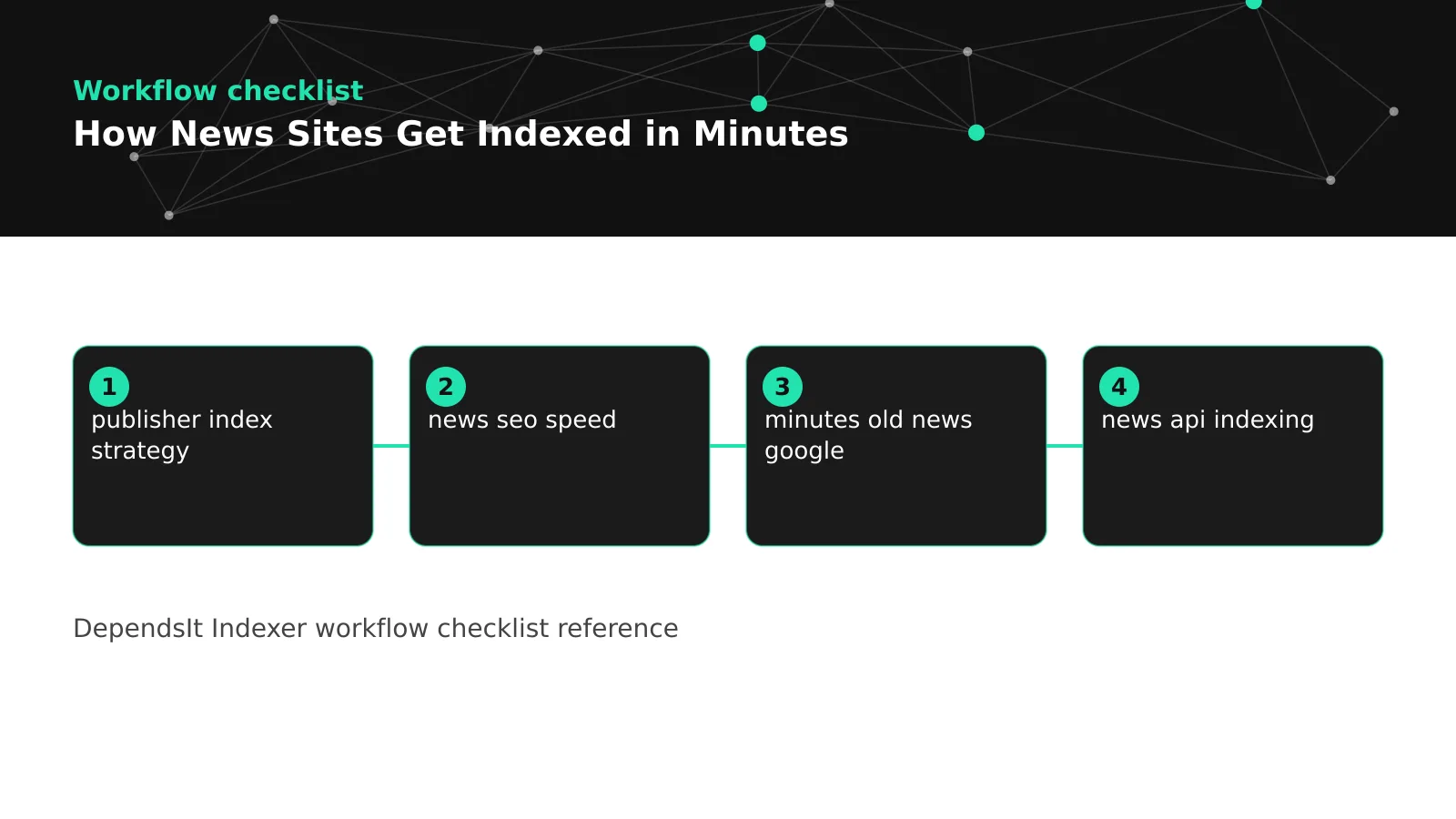
Search Console completes the picture with index outcome data. Monitor page indexing reports for news segments with valid indexed counts plus crawled but not indexed and discovered but not indexed trends, and review rich result reports for article markup validity after every template change. Set up automated exports of coverage data into the newsroom dashboard so editors see index outcomes beside their publish volumes without learning new tools. Cross check inspection results for sample breaking stories against your log timestamps to confirm the full path from publish to index in minutes. For persistent discovery gaps where stories are found but never prioritized, our diagnostic on why discovered pages stay unindexed orders the fixes from hub placement to template repair. Share the minutes to index dashboard in the newsroom where editors and engineers both see it, because shared visibility turns speed into a joint habit rather than an SEO request queue. Teams tracking news api indexing alongside news seo speed should keep a publisher index strategy note per desk, so API eligible live pages and standard articles are measured separately. Tracking whether minutes old news google surfaces in Top Stories within ten minutes gives editors a concrete freshness target tied to reader demand.
 <!-- IMAGE-PROMPT workflow-02: 1600px max, DependsIt brand mint #22E3B0 on charcoal #121212, node-network line art, Clash Display and General Sans feel, subject: publisher measurement workflow showing publish time then sitemap then crawl then indexed confirmation, flat vector, accessible, no em dash, export PNG then cwebp -q 82 to WEBP -->
A thirty day speed plan for a newsroom
A focused month moves most newsrooms from hours to minutes with sequenced weekly wins. Week one fixes serving truth without touching publishing workflows. Audit ten recent breaking stories for raw fetch completeness against rendered DOM, confirm self referencing canonical tags from one URL helper, verify timestamps agree across markup, sitemaps, and visible bylines, and load test article templates under spike traffic with crawler specific error alerting. Include image and video handling in the audit, since broken hero images and unplayable embeds on otherwise solid stories create quality flags that slow the whole desk. Fix status codes for withdrawn stories, canonicalize AMP and print variants, and purge stale edge caches that serve yesterday HTML to fresh crawls. These serving fixes alone often halve time to index because they remove the errors that made schedulers cautious.
Week two rebuilds discovery paths. Regenerate news sitemaps from publish events with minute level latency, validate the two day window with one thousand URL caps and accurate publication metadata, and submit the feed with independent tracking in Search Console. Refresh homepage and section front logic so breaking stories gain hub links within minutes of publish with server rendered anchors, and confirm pagination keeps older stories reachable without orphaning them when the front rotates. Test the full rotation cycle with a staged story that moves from homepage to section front to archive, verifying links, sitemap presence, and cache freshness at each step before trusting the automation on real breaking news. Document feed ownership per desk with inclusion latency targets, because unowned feeds regress within weeks. Guidance for webmaster side verification lives in Bing Webmaster help, which is worth bookmarking even for Google first newsrooms since IndexNow era hub discipline transfers across engines.
Week three hardens templates and event workflows. Ship complete first byte article HTML with deferred widgets outside the critical path, validate NewsArticle markup in the publishing pipeline with golden sample rechecks after every release, and wire eligible live event pages to the Indexing API with scoped validation plus quota monitoring. Rehearse producer roles for notification triggers during the drill so live day execution needs no heroics. Run a breaking news drill with a test story through the full path from publish to sitemap to hub to cached HTML to log first visit, and record the minutes per stage. Fix whatever stage lags before the next real event rather than during it. Document drill findings with assigned follow ups and deadlines so preparation converts into lasting system improvements. Repeat the drill quarterly and after every major template or CDN change, because publishing systems drift and only rehearsal keeps minute level readiness honest across staff rotations. Week four institutionalizes measurement with the minutes to index dashboard per desk, weekly reviews of coverage and markup validity, and quarterly load tests before predictable spike seasons. Add a post mortem ritual after every major event where the team reviews minutes per stage for the ten biggest stories, names the slowest stage, and commits one fix before the next event. Publish the results internally so editors see how publishing discipline translates into index speed. Newsrooms that complete all four weeks typically hold minute level indexing through the next major event, which is when the investment visibly pays for itself.
FAQ
How fast can a news site realistically get indexed?
Established publishers with fresh news sitemaps, fast hub links, lean server rendered templates, and consistent cadence commonly see breaking stories indexed within minutes of publish. New or inconsistent sites start in hours and compress toward minutes as trust builds over months of steady output. Track your own medians per desk from publish to index appearance and improve the slowest pipeline stage first, because the bottleneck stage decides the outcome for every story regardless of how fast the other stages run.
Do I need news api indexing for standard news articles?
Standard articles index in minutes through news sitemaps plus hub links plus crawl trust without API submission, which is not in the documented scope for normal articles. The Indexing API fits eligible live event pages with valid BroadcastEvent markup, where notifications accelerate processing of starts, updates, and removals. Run both paths with separate measurement so each mechanism gets credit for the results it actually produces, and never let article submission experiments consume the quota that live events need on busy days. Teams focused on instant news indexing keep news api indexing scoped to live events only, which protects quota for the pages that truly qualify.
What belongs in a news sitemap for better news sitemap speed?
Original news reporting URLs from the last two days with accurate titles, publication timestamps, and language annotations, capped at one thousand URLs and refreshed on publish events within minutes. Exclude evergreen explainers, opinion archives, and tag pages from the news feed even when they relate to current events, since non news URLs dilute the freshness signal the feed exists to provide. Keep general evergreen content in standard sitemaps with true lastmod values instead, and track news feed health separately per desk. A documented publisher indexing workflow with per desk ownership keeps news sitemap speed stable, because unowned feeds regress within weeks.
Why do my timestamps disagree across markup, sitemap, and byline?
CMS timezone misconfiguration, desk level manual entry, daylight saving transitions, and migration defaults are the usual causes. Standardize on UTC storage with localized display, validate timestamps in the publishing pipeline with range assertions that reject future dates, and audit weekly samples across all three surfaces until mismatches reach zero. Hold the line during CMS upgrades with before and after timestamp comparisons on the golden sample, because serialization library changes reintroduce offset bugs that teams thought they fixed years earlier.
Should developing stories use one URL or many?
One URL per story with in place updates, stable canonical tags, visible update notes, and evolving markup preserves the freshness history the first version earned in its critical first hours. Fork new URLs only for genuinely separate events, and link related stories bidirectionally so readers and crawlers traverse the coverage as a coherent cluster. When in doubt during fast moving events, keep the update on the original URL and create the live blog as a linked companion rather than splitting the story across competing addresses.
How do I prove news seo speed improvements worked?
Record publish, sitemap inclusion, first crawler visit, and index appearance timestamps for every breaking story before and after each change, then compare medians and 95th percentiles per desk across at least twenty stories per period. Small samples mislead during quiet news weeks, so include at least one major event in each comparison window before declaring victory. When all four stages shorten and coverage reports stay clean through the next major event, the improvement is proven rather than anecdotal. Include publisher index strategy review in the same postmortem, so news seo speed gains are tied to ownership and next fixes rather than treated as one time wins.
Sources
- https://developers.google.com/search/docs/appearance/structured-data/article
- https://www.bing.com/webmasters/help