Enterprise Indexing Solutions: When You Outgrow Scripts

An enterprise indexing solution becomes necessary when cron scripts, shared keys, and chat based coordination stop keeping up with publish volume. This guide is for SEO leads, platform engineers, and content operations managers who run many properties, many locales, or many daily changes. You will learn what breaks at scale, what shared infrastructure should include, and how to plan quotas, roles, and logs so every business unit submits cleanly without blocking the others.
The protocol facts stay the same at any size. IndexNow is an open protocol co-developed by Microsoft Bing and Yandex that reaches Bing, Yandex, Naver, Seznam, and related supporters. The Google Indexing API is a separate Google only endpoint for JobPosting and BroadcastEvent pages that uses URL_UPDATED and URL_DELETED notices. Enterprise work adds intake discipline, per unit pacing, and auditability on top of those primitives. If your team still submits by hand, review the Google Indexing API setup guide first, then use this guide to scale that pattern safely.
Key takeaways
- Scripts break on ownership, not on code, when many teams share keys, quotas, and deploy triggers.
- Enterprise indexing means one intake, separate per engine queues, and per unit pacing with clear logs.
- Google and IndexNow tracks stay separate because auth, quotas, and eligible content differ.
- Roles, audit trails, and key rotation schedules matter as much as submission speed.
- Sitemaps, canonical discipline, and internal linking decide whether scale produces coverage or noise.
Table of contents
- Why scripts break at enterprise scale
- What an enterprise indexing solution includes at scale
- Governance roles and audit trails for large teams
- Multi domain and multi region submission design
- Quota planning and pacing across business units
- Observability from publish to impression at scale
- Security and key lifecycle in large organizations
- Buying or building enterprise indexing without waste
- FAQ
- Sources
- Further reading
 <!-- IMAGE-PROMPT cover: 1200x630, DependsIt brand, deep charcoal #121212 background with vibrant mint #22E3B0 accent glow, thin node-network line art, Clash Display style bold heading space on left, General Sans clean labels, subject: enterprise indexing platform with shared queues and audit trails across teams, flat vector, high contrast, accessible, no photorealistic faces, no text smaller than 24px, no em dash in rendered text, export PNG then cwebp -q 82 to WEBP -->
Why scripts break at enterprise scale
Most enterprise indexing starts as a helpful script. One developer wires a CMS hook to the Google endpoint, another adds an IndexNow POST on deploy, and editors get faster discovery for a while. Then the company adds three more brands, two more languages, a mobile subdomain, and a daily product feed. The script still runs, but nobody knows which key it uses, which properties it covers, or what happens when it hits a 429 at 2 AM. Failures surface as quiet gaps in coverage, not as alerts, and each team builds its own workaround.
Ownership is the first fracture. The original author moves teams, the service account lives in a personal Cloud project, and the IndexNow key file sits unmonitored on one property. A redesign removes the key file, a Search Console cleanup revokes the grant, and submissions fail for weeks before anyone connects the flat traffic to auth. At small scale one owner can hold all of this in memory. At enterprise scale the same setup needs named owners, a key inventory, and health checks that page a rotation, not a person.
The second fracture is shared quota without allocation. Ten teams submitting through one identity mean one launch can consume the daily budget for everyone else. Product imports, translation backfills, and template changes create bursts that look like attacks to rate limiters. Without per unit pacing and per unit dashboards, teams blame the engines when the real cause is internal contention. A short incident review usually shows overlapping bulk jobs, duplicate submissions of the same canonicals, and retries without backoff compounding the spike.
The third fracture is URL hygiene at volume. Staging hosts, parameter variants, paginated archives, faceted filters, and locale duplicates multiply quickly across brands. A script that submits every saved URL will ping drafts, noindexed pages, soft 404s, and non canonicals alongside real changes. Engines accept the pings and then ignore the noise, which wastes quota and muddies logs. Enterprise intake must filter to published canonicals with 200 status before any send, and it must do so consistently across every CMS and feed.
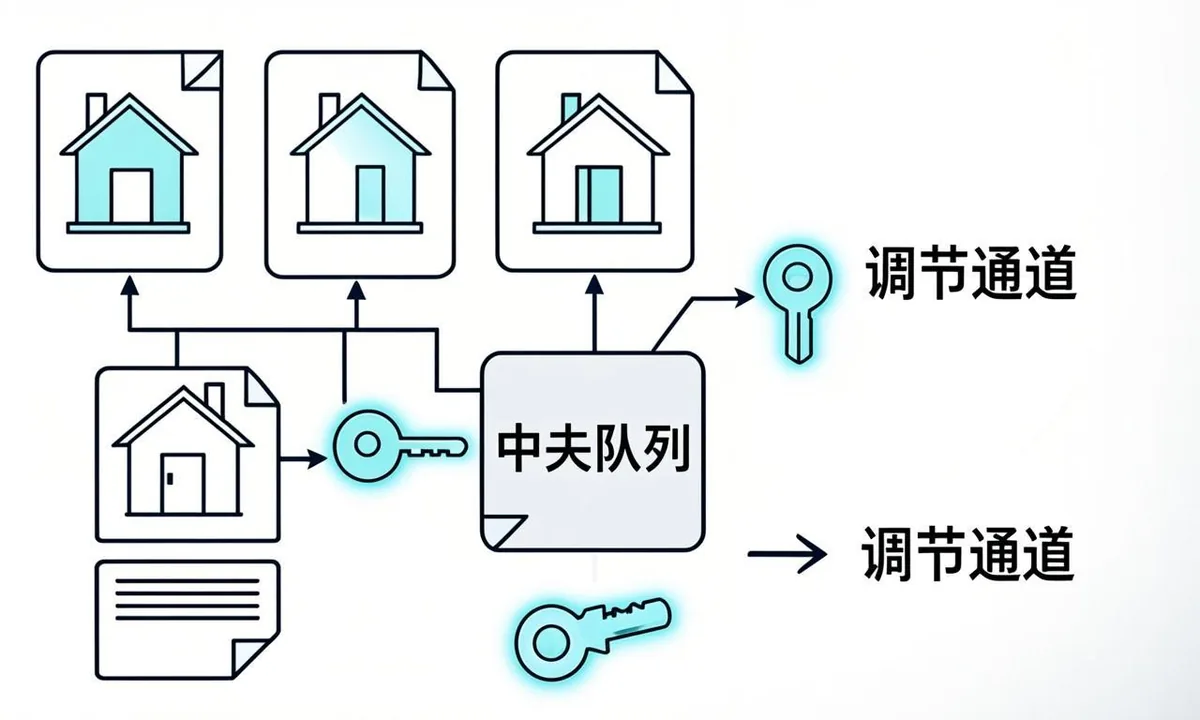
The fix is not a bigger script. It is shared intake with per engine queues, per unit limits, and per URL logs that any team can read. Publish events from every CMS, feed, and deploy pipeline enter one queue with content type, locale, brand, and change reason. Normalization collapses duplicates. Routing assigns Google or IndexNow or both with a reason code. Pacing spreads sends per track and per unit. Logging records outcomes for weekly review. That structure turns indexing from tribal knowledge into operable infrastructure.
For indexing at scale, large scale indexing programs treat this shared intake as indexing infrastructure with named owners, per unit budgets, and weekly reviews rather than background automation.
A practical test is to ask three people where indexing runs and compare answers. If platform engineering points to a deploy hook, SEO points to a plugin, and a brand owner points to a spreadsheet of pasted URLs, the estate already runs three systems with three identities. Consolidation starts by listing every sender, key, and trigger in one inventory, then retiring duplicates after the shared intake proves it handles each source. Keep the inventory public to the teams involved so new work connects to intake by default instead of adding a fourth sender.
What an enterprise indexing solution includes at scale
Enterprise infrastructure has five layers that stay boring on purpose. Intake accepts publish events from CMS webhooks, product feeds, translation systems, and deploy pipelines, with authentication and schema validation. Normalization canonicalizes URLs, strips tracking parameters, drops non 200 and non indexable entries, and deduplicates within a window. Routing applies the content type table so jobs and livestreams use the Google track where eligible while general changed canonicals use IndexNow plus sitemap refresh. Pacing enforces per minute and per day limits per track and per business unit, with backoff on 429. Observability joins send logs with fetch and impression data for review. Together these layers form the indexing infrastructure that keeps every brand consistent.
Track separation is non negotiable. Google submissions go one URL per request with URL_UPDATED or URL_DELETED semantics for documented eligible types. IndexNow submissions batch up to the documented maximum per POST with host, key, and URL list fields. Credentials differ, quotas differ, retry rules differ, and eligible content differs. A platform that merges both tracks into one credit counter hides the exact signal operators need during incidents. Keep dashboards, alerts, and runbooks per track, with one rollup view for leadership that sums accepted sends and error rates without mixing auth details. The IndexNow documentation defines payload and response behavior for the IndexNow side.
Sitemap and feed hygiene belongs inside the platform, not beside it. The system should read sitemaps nightly, flag 404s, redirects, non canonicals, and noindexed entries, and block those URLs from submission until fixed. It should reconcile feed counts with submitted counts so a product catalog of 400,000 SKUs does not silently submit 12,000 duplicates. It should also watch robots rules and key file reachability per host, because one bad deploy can break verification for an entire brand. These checks feel slow during setup and save weeks of debugging later.
Environments need strict separation. Production keys submit production canonicals only. Staging, preview, and QA environments run in dry run mode that validates payloads without sending. This single rule prevents the classic incident where a staging refresh submits thousands of non canonicals under a production identity. promotion from staging to production moves configuration, not credentials, and each environment carries its own verification tests.
Staging discipline deserves emphasis because it causes a large share of enterprise noise. Preview branches, translation staging, and feed QA often mirror production templates with full navigation, which tempts broad submission during testing. Dry run mode should validate canonicalization, filters, batching, and logging with identical code paths while blocking network sends. Promote configuration through environments with versioned changes and require a ten URL live test after each promotion before opening bulk lanes.
Intake contract that scales
Require five fields on every event: canonical URL, content type, brand and locale, change reason, and event timestamp. Optional but useful: template version, actor, and source system. Reject events missing canonical or content type with a clear error to the source owner. This contract lets central operators set policy once while source teams integrate independently. It also makes audits readable, because every send traces to a typed event rather than an anonymous script run.
Governance roles and audit trails for large teams
Enterprise indexing fails without clear roles even when the code is correct. Define four responsibilities and name a primary and a backup for each. Platform engineering owns intake, queues, pacing, and uptime. SEO owns submission policy, meaning which content types submit to which tracks and at what priority. Brand and locale owners own URL quality for their properties, including canonicals, sitemaps, and key file presence. Security owns credential lifecycle, access reviews, and incident sign off. One page holds these names, review dates, and escalation paths.
Access control follows least privilege. Key managers can add and rotate credentials but cannot bulk send. Senders can trigger batches within their brand scope but cannot view private key material. Viewers can read logs and dashboards for their units but cannot change pacing. Every key add, rotation, send, pause, and resume writes an audit entry with actor, timestamp, scope, and reason. Quarterly reviews confirm that leavers lost access, that service accounts map to current properties, and that no personal Cloud project still carries production traffic.
Change management keeps launches calm. Bulk imports, migrations, locale launches, and template changes get a submission plan before the deploy: estimated changed canonicals, track assignment, daily staging over how many days, owner on call, and rollback criteria. A dry run validates filters and counts. A ten URL live test confirms auth and logging. Only then does the staged rollout begin with daily quota checks. Teams that skip this plan discover during the incident that three business units scheduled backfills on the same day.
Reporting serves two audiences. Operators need per URL rows with canonical, track, notification type or batch ID, send time, response code, and next action, plus queue age and error rate by code. Leadership needs weekly rollups per brand: changed canonicals, accepted sends per track, fetch movement, impression movement, and exceptions with owners. Keep both views from the same data so numbers never diverge in meetings. Archive monthly exports with the site records so knowledge survives vendor and staff changes. Include a short readme with field definitions and join keys so future analysts read the history correctly.
For teams comparing protocol coverage during governance design, the overview of how IndexNow and the Google API compare helps set correct expectations with stakeholders who assume one ping covers every engine. Google does not support IndexNow, so governance must fund both tracks and explain why in plain terms.
Multi domain and multi region submission design
Multi domain estates need per host verification and per host pacing, not one global switch. Each apex and subdomain that submits to IndexNow needs its own reachable key file and its own host value in payloads, with www and apex kept consistent with canonical. Each Search Console property that uses the Google track needs its own service account grant on the exact property string. Central intake fans events out per host, and per host queues enforce limits independently so a sale on one brand never starves newsroom publishes on another.
Locale design adds hreflang and canonical discipline. Each locale canonical submits under its own verified host with correct language annotations in place. Do not submit locale variants that canonicalize to another locale. Do not submit parameter based locale switchers. Translation backfills should stage over days in priority order, starting with updated hubs and revenue templates, then supporting pages. Log locale alongside URL so weekly review can spot a single market with elevated 422 or 403 rates pointing to a template or hosting issue.
Regional engine coverage shapes track assignment. IndexNow reaches Bing, Yandex, Naver, Seznam, and related supporters through shared endpoints, while Google flows stay separate through the Indexing API, sitemaps, and Search Console. Country level blocking, CDN edge rules, and firewall policies can break key file fetches in specific regions even when the origin looks healthy. Verify key files from external vantage points that match engine fetch paths, not only from inside the corporate network. Record per region fetch results during onboarding and after every edge change.
Brand separation protects launches and limits blast radius. Use separate service accounts or at least separate keys per brand group so revoking one does not halt the whole estate. Scope tool workspaces per brand with isolated quotas and logs. Share only the intake contract, routing table, and runbooks centrally. This balance gives local teams autonomy within guardrails and gives central operators a clean kill switch per brand during incidents without stopping every submission company wide.
Migrations deserve their own lane. Domain moves, protocol switches, and CMS replatforms create large volumes of redirects and new canonicals that should not compete with daily publishing. Stage migration URLs separately, in priority order, with daily caps and explicit redirect validation before each batch. Submit new canonicals through the normal tracks, prune old URLs from sitemaps promptly, and keep redirect chains short. Measure fetch and impression movement per stage before increasing daily volume.
Quota planning and pacing across business units
Quota planning starts with honest volume math per brand and content type. Count monthly new pages, updated pages, removed pages, and feed driven changes such as price or availability updates. Exclude faceted filters, internal search results, paginated archives beyond canonical, and parameter variants. Assign each remaining type to tracks with reasons: jobs and livestreams to Google where eligible plus IndexNow where appropriate, general changed canonicals to IndexNow plus sitemap, removals to URL_DELETED where eligible plus redirect and sitemap pruning. Sum per track per day, add a 20 percent buffer for launches, and compare to documented and observed limits. The Google usage notes in the Google Indexing API usage guide help frame the Google side of the model.
Allocation turns math into fairness. Give each business unit a daily send budget per track based on its change volume and revenue priority, with a shared burst pool for breaking news or flash sales. Enforce budgets in the queue, not in spreadsheets. When a unit hits 70 percent of its budget, alert its owner and queue the remainder for the next window. When the shared pool drains, require SEO approval for more. This prevents the familiar pattern where one bulk import consumes the day and every other team files tickets.
Pacing implementation stays simple and strict. Space Google notices across minutes with low concurrency, batch IndexNow sends up to the documented maximum, and separate bulk lanes from editorial lanes so daily publishing never waits behind a migration. On 429, pause only the affected track and unit, apply exponential backoff with jitter, honor any wait hint, and resume with smaller concurrency. Log every pause and resume with timestamps so reviews show calm handling rather than retry storms. Never advise hammering endpoints to catch up, because that extends the penalty window.
Calendar discipline beats clever retries. Stagger large jobs across days and across tracks. Run product feed updates overnight in small batches, newsroom publishes in real time with deduplication, and translation backfills on weekends with daily caps. Publish the shared calendar where every unit can see it. Require a submission plan for any job over a threshold, such as 5,000 URLs in a day, with owner, staging schedule, and rollback criteria. Most quota incidents trace to uncoordinated timing, not to engine strictness.
Observability from publish to impression at scale
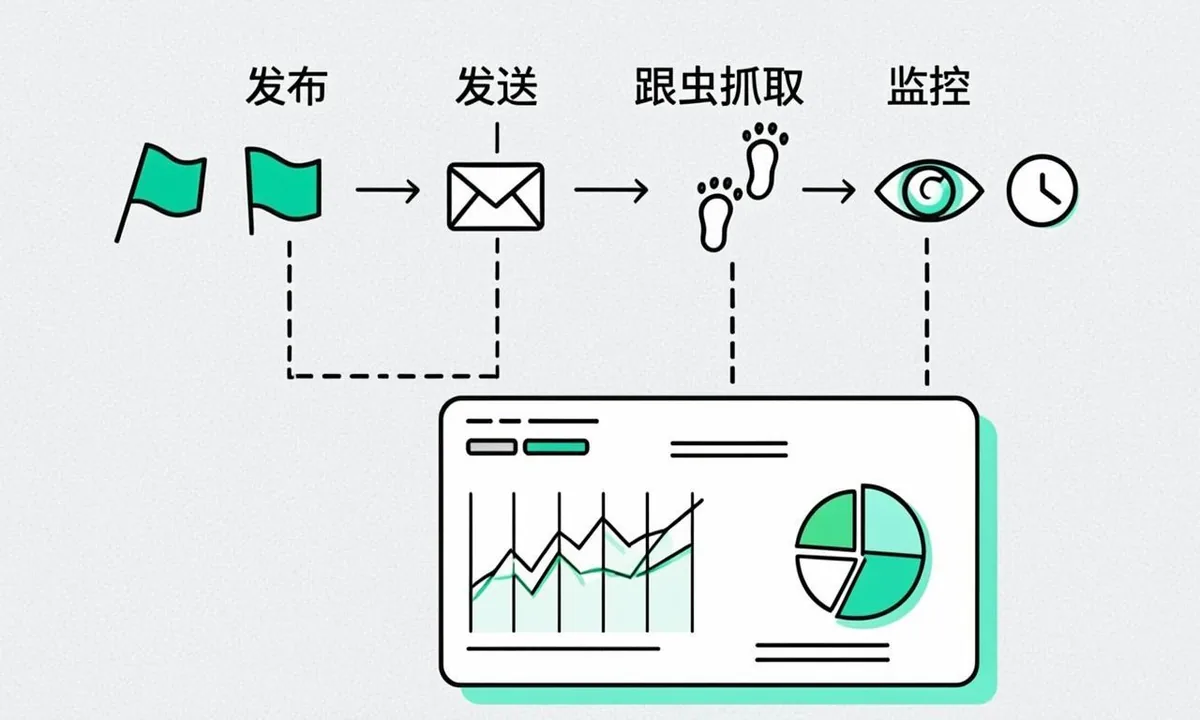
Observability connects four timestamps per URL: publish or change time, send time per track, first bot fetch from server logs, and first impression from Search Console or Bing Webmaster Tools. At enterprise scale this join must be automatic, not spreadsheet based. Intake records the first timestamp. Queues record the second with response codes. Log pipelines record the third by matching bot user agents and verified fetch paths. Search console exports record the fourth. A nightly job joins these into one row per canonical per track, which powers every dashboard and review.
Control sets keep reads honest. For each major content type, hold back a small matched sample of changed URLs from submission and compare fetch and impression movement against submitted peers. If submitted URLs fetch consistently sooner without extra errors, pacing and routing are working. If both groups move together, normal crawling already covers that type and effort should shift to sitemaps, internal links, and content quality. Report control comparisons monthly so stakeholders see evidence rather than send counts alone.
Dashboards need layers. Operators watch queue age, per unit send counts, error rate by code, oldest unprocessed event, key file status, and delegation health. Brand owners watch accepted sends, fetch movement within three days, impression movement within fourteen days, and quarantine reasons for their properties. Leadership watches coverage trends, incident counts, and time to fetch medians per content type. All three layers read from the same joined table so definitions never drift between teams.
Review cadence matters as much as dashboard design. Operators triage queue age and error spikes daily, brand owners review quarantine and fetch movement weekly, and leadership reviews coverage and incident trends monthly. Each review writes one decision line with owner and date, which builds a history that survives reorgs. When a metric moves unexpectedly, the team reads the joined rows for affected canonicals first, then checks deploy and feed history, before changing pacing or policy.
Alerting should fire on symptoms with owners attached. Queue age over threshold pages platform engineering. Auth error spikes page security plus the brand owner. Quarantine growth pages SEO policy plus the source system owner. Key file fetch failures page hosting plus the brand owner. Each alert links to the runbook section with exact fix steps and to the filtered log view for the affected scope. Alert fatigue drops when thresholds reflect per unit budgets rather than global totals.
Retention and exports close the loop. Keep ninety days of per URL history online for incident review and trend reads, then archive monthly CSV or warehouse tables with the site records. Include canonical, track, batch or notification identifiers, response codes, and joined fetch markers. This archive proves diligence during audits and preserves learning across vendor changes and staff turnover.
 <!-- IMAGE-PROMPT diagram-01: 1600px max, DependsIt brand mint #22E3B0 on charcoal #121212, node-network line art, Clash Display style headings, General Sans clean labels, subject: enterprise intake fanning to per brand queues with separate Google and IndexNow lanes diagram, flat vector, accessible, high contrast, no em dash in rendered text -->
Security and key lifecycle in large organizations
Security at scale is inventory plus routine. Maintain one registry with every credential: engine, scope, service account email or key name, properties covered, storage location, creation date, rotation due date, and named owner. Review it quarterly with security, SEO, and platform engineering in the same session. Remove leavers, revoke orphaned keys, and confirm that no production traffic still uses a personal project. A registry page prevents the slow drift where old keys accumulate silently.
Storage and access follow standard secrets practice. Service account JSON lives in a vault or managed secrets store, never in repos, tickets, screenshots, or chat. Tools receive credentials through secure upload or vault reference, display only masked identifiers, and log every add, use scope change, and rotation. Search Console grants use group managed addresses where possible so staff moves do not orphan ownership. IndexNow keys use generated random strings stored alongside their host mapping and file deployment notes.
Rotation runs on a calendar with overlap. Rotate Google service account keys every 90 to 180 days and IndexNow keys at least yearly or after reorgs and hosting moves. Add the new credential, test ten sends across representative brands, monitor for a day, then disable the old one. Keep both IndexNow files live during overlap so in flight batches verify cleanly. After rotation, update the vault, the platform record, and the registry in one pass, then note operator and timestamp in the audit log. Never rotate during a major launch unless the current key is compromised.
Incident response needs a written page that teams can follow without improvising. If a key leaks, revoke or replace it immediately, identify sends after the leak timestamp, and confirm no unauthorized scope expansion. If submissions spike, pause the affected unit lane, inspect feed and CMS import logs, and quarantine the trigger. If 403 errors rise, check delegation and key file reachability before changing code. Keep console links, vendor contacts, and rollback steps on the same page so response takes minutes. Practice the flow once per half year with a tabletop review of a simulated leak and a simulated quota flood.
Vendor and tool review belongs in the security cycle. Confirm encrypted storage, region and retention for URL logs, role separation, and clean revoke that stops future sends while leaving Cloud projects and key files intact. Confirm subprocessors and data handling for log pipelines that carry URLs, because URL lists can reveal unannounced launches. If answers stay vague after two asks, treat that as a finding and either mitigate with shorter retention or choose a corporate indexing platform with clearer controls. A mature corporate indexing platform should document enterprise crawl management duties and scaled submission systems for every brand it serves. Practical checks for small teams also appear in the BYOK security checklist before you paste your key anywhere, which scales well as a pre rotation worksheet.
Buying or building enterprise indexing without waste
Build versus buy starts from headcount reality, not ideology. Building central intake, pacing, and observability in house takes platform time for initial delivery plus ongoing maintenance for auth changes, engine behavior shifts, and CMS updates. Buying a platform trades that engineering cost for subscription, seat, and workspace fees plus integration time. Most enterprises land in the middle: buy or adopt a shared submission service for queues and logs, keep routing policy and URL hygiene in house, and integrate every CMS and feed to one contract. Model three year totals for both paths including rotation labor and incident time before committing.
Evaluate vendors with a live failure script, not slideware. Ask for a revoked grant producing a 403 with a clear fix path, a bad URL inside a large IndexNow batch producing a contained 422, and an intentional over pace producing a 429 with automatic backoff and resume. Ask how staging is blocked, how bulk imports are staged, and how per unit budgets are enforced. Ask for audit exports, retention controls, and revoke behavior. Score credential transparency, track separation, hygiene, pacing, observability, access control, data handling, and exit path from one to five. Weight security and audit double for regulated work. The walkthrough of the two API workflow covering Google and IndexNow together gives a useful reference model to compare vendor stories against.
Pilots should prove operations, not just sends. Run one brand for two weeks with the full intake contract, per unit budget, and weekly review. Week one connects tracks, verifies key files and grants, and sends a small live set with control peers. Week two enables CMS and feed triggers under normal publishing plus one planned bulk job. Require zero auth surprises, calm 429 handling, quarantine with reasons, and logs that join to fetches. If the pilot needs constant vendor help for basics, expect heavier dependency later across forty properties.
Rollout proceeds brand by brand with a checklist. Verify key files externally, confirm grants on exact property strings, set per unit budgets, enable triggers, run ten live URLs, then open bulk lanes. Train brand owners on quarantine review and on reading fetch movement rather than send counts. Publish the shared submission calendar and the incident page on day one. After each brand, record setup time, issues found, and policy exceptions so the next onboarding gets faster. Slow, legible rollout beats a big bang that floods quotas and erodes trust.
Training completes the rollout because tools alone do not change habits. Brand owners learn to read quarantine reasons and fix template patterns at the source instead of resubmitting the same bad URLs. Editors learn that publish means canonical and indexable, while save draft means no signal. Developers learn to send typed events with content type and change reason rather than raw URL lists. A one hour workshop per brand plus a two page runbook usually covers these habits, and quarterly refreshers keep them steady as staff changes.
 <!-- IMAGE-PROMPT workflow-02: 1600px max, DependsIt brand mint #22E3B0 on charcoal #121212, node-network line art, Clash Display style headings, General Sans clean labels, subject: enterprise rollout from pilot brand to full estate with budgets and reviews workflow, flat vector, accessible, high contrast, no em dash in rendered text -->
FAQ
When does a company need enterprise indexing instead of scripts?
When more than two teams publish to shared quotas, when locales and brands multiply hosts and grants, or when bulk feeds and migrations compete with daily publishing. Signals include unknown key owners, recurring 429 spikes during launches, staging URLs in logs, and coverage gaps nobody can explain. A shared company indexing workflow with per unit pacing and audit trails fixes ownership and contention that scripts cannot, and it gives enterprise seo indexing teams one place to review progress.
How should Google and IndexNow tracks be split at scale?
Keep auth, queues, pacing, logs, and runbooks separate per track. Route jobs and livestreams to the Google track where eligible, general changed canonicals to IndexNow plus sitemaps, and removals to URL_DELETED where eligible plus redirects and sitemap pruning. Central policy sets the routing table once, source systems send typed events, and per host queues enforce the split.
How do large teams avoid one launch consuming all quota?
Per unit daily budgets per track with a shared burst pool, enforced in the queue. Alert owners at 70 percent, carry remainder to the next window, and require approval for burst access. Stage bulk jobs over days in priority order and publish a shared calendar so backfills never collide silently.
What belongs in an indexing audit trail?
Actor, timestamp, scope, and reason for every key add, rotation, send, pause, and resume, plus per URL rows with canonical, track, batch or notification identifiers, response codes, and joined fetch markers. Keep ninety days online and archive monthly exports. Quarterly access reviews confirm leavers lost rights and no personal projects carry production traffic.
How do migrations fit without blocking daily publishing?
Separate migration lanes with daily caps, redirect validation before each batch, and priority order starting with revenue templates and updated hubs. Submit new canonicals through normal tracks, prune old URLs from sitemaps promptly, and measure fetch movement per stage before raising volume. Daily editorial lanes stay independent so newsroom speed never waits behind backfills.
Should enterprises build intake in house or buy a platform?
Most choose a hybrid with shared submission services for queues and logs plus in house policy, hygiene, and integrations. Model three year totals including engineering, subscription, seats, rotation labor, and incident time. A clear enterprise index strategy favors big site indexing tools with per brand budgets for this hybrid, then pilots one brand for two weeks with failure tests and control peers before rolling out brand by brand.
Sources
- https://www.indexnow.org/documentation
- https://developers.google.com/search/apis/indexing-api/v3/using-api
- https://www.bing.com/webmasters/help