Comparing Indexing Speeds: Which Method Actually Wins?

Site owners often ask which submission path gets pages found fastest, yet answers mix discovery, crawl and ranking into one vague promise. This guide breaks down indexing speed comparison with clear definitions and practical tests you can repeat. It is written for SEO owners, developers and content teams who must choose between sitemaps, manual inspection, IndexNow and APIs. You will learn how each method moves URLs from publish to discovery to index, what typical timelines look like, which site types benefit most, and how to build the fastest honest stack without spamming endpoints.
Key takeaways
- Indexing speed has three stages: discovery, crawl and index decision, and each method affects mainly the first stage.
- IndexNow is fastest for Bing, Yandex, Naver and Seznam, while Google needs sitemaps plus inspection and linking work.
- Sitemaps and internal links remain the most reliable baseline, with APIs and pings as accelerators for changed URLs.
- Measure first crawl and first index dates per URL type, then pick the smallest stack that moves those dates earlier.
- What indexing speed actually means for site owners
- How to measure indexing speed without fooling yourself
- XML sitemaps: baseline speed and limits
- Request indexing in Search Console: when manual wins
- IndexNow: speed on Bing and Yandex ecosystems
- Google Indexing API: speed for eligible types and off label reality
- Internal linking and sitemap automation: the quiet winners
- Indexing speed comparison by site type and change type
- Why faster ping does not always mean faster ranking
- Choosing the fastest practical stack for your site
- Monitoring and improving your indexing time over weeks
 <!-- IMAGE-PROMPT cover: 1200x630, DependsIt brand, deep charcoal #121212 background, vibrant mint #22E3B0 accent glow, thin node-network line art, Clash Display style bold heading space on left, General Sans clean labels, subject: Bar chart comparing indexing method speeds with network nodes, flat vector, high contrast, accessible, no photorealistic faces, no text smaller than 24px, no em dash in rendered text, export PNG then cwebp -q 82 to WEBP -->
What indexing speed actually means for site owners
Discovery is the moment an engine learns a URL exists, crawl is the moment it fetches the page, and indexing is the decision to store the page for retrieval. Most submission methods accelerate discovery only. After a sitemap update, manual request, IndexNow ping or API call, the engine still schedules a fetch based on load and trust, then evaluates content, canonicals, duplicates and site signals before indexing. Teams that conflate these stages expect instant ranking from a fast ping and miss the real bottleneck.
For planning, define speed as hours from publish to first crawl plus hours from first crawl to index decision, tracked per URL type. New blog posts, updated product pages, paginated archives and redirected URLs each move at different paces. A docs site may see discovery in minutes but indexing in days for thin pages. An established shop may see recrawls in hours for linked products but weeks for orphan variants. Clear stage definitions make head to head tests fair and prevent method marketing from setting false expectations.
Speed claims are useful only when discovery, crawl and index decision are tracked separately. A ping can be accepted in seconds, the crawl can follow hours later, and the index decision can take days depending on quality, duplicates and site authority. Teams that log publish time, submission time, first crawl and first index for the same URL set can see exactly where each method helps. That separation prevents disappointment when a fast ping does not produce instant visibility.
Checklist for this step:
- Separate discovery, crawl and index dates in every test
- Track new versus updated versus redirected URLs apart
- Note content quality and linking for each sample
- Use live URLs with 200 status and self referencing canonicals
- Record engine separately for Google and IndexNow engines
| Item | What to do | Why it matters |
|---|---|---|
| Discovery | Log when engine first learns URL | Shows ping effect |
| Crawl | Log first fetch time | Shows scheduling |
| Index | Log first appearance in index | Shows quality decision |
| Ranking | Track separately from indexing | Speed does not equal position |
Keep notes on what you tested and what changed so later sections can compare fairly rather than mixing different URL types or time windows.
How to measure indexing speed without fooling yourself
A fair test starts with matched URL sets published at known times with similar quality and linking. To compare index speeds fairly, pick ten to twenty new pages with unique but useful content, similar word count, internal links from the same hub, and clean canonicals. Submit half through method A and half through method B, or run methods in sequence with a washout period. Log publish timestamp, submission timestamp and response code, then check crawl and index status daily at the same hour using Webmaster logs and inspection tools.
Avoid common traps such as testing with a single URL, mixing new and updated pages, changing content mid test, or checking only one engine. This indexing method comparison stays fair only when every index speed test in the series uses the same sample size, timing, and reporting window. Single URL tests swing wildly with crawl load. Mixed types hide whether a method helps discovery or recrawl. Mid test edits reset the clock. Single engine checks miss the split between Google and IndexNow ecosystems. Run for at least two to three weeks, keep sitemaps and robots stable during the window, and report median plus range rather than the single fastest case.
In practice the fastest stacks combine a trustworthy baseline with a timely nudge. Accurate sitemaps with correct lastmod plus clear internal links give every engine a complete inventory to work from. IndexNow or API calls then highlight the small subset that just changed. When both layers are healthy, participating engines often recrawl priority URLs within hours instead of days. When the baseline is broken, even instant pings stall at the quality check.
Checklist for this step:
- Use matched sets with similar quality and links
- Log publish, submit, crawl and index timestamps
- Test both Google and IndexNow engines in parallel
- Hold sitemaps and templates stable during tests
- Report median and range, not one lucky URL
| Item | What to do | Why it matters |
|---|---|---|
| Sample | 10 to 20 similar URLs per method | Smooths variance |
| Timing | Daily checks at same hour | Comparable series |
| Tools | Logs plus Webmaster plus inspection | Confirms each stage |
| Window | Two to three weeks minimum | Captures scheduling cycles |
Keep notes on what you tested and what changed so later sections can compare fairly rather than mixing different URL types or time windows.
 <!-- IMAGE-PROMPT diagram-01: 1600px max, DependsIt brand mint #22E3B0 on charcoal #121212, node-network line art, subject: Funnel diagram from publish to discovery to crawl to index for each method, flat vector, accessible, Clash Display headings General Sans labels feel, no em dash -->
XML sitemaps: baseline speed and limits
Sitemaps remain the universal baseline because every major engine consumes them and they describe the full inventory in one place. A clean sitemap index with accurate lastmod, correct canonical URLs, 200 status and sensible segmentation helps engines schedule efficiently. For small sites with steady publishing, sitemap discovery alone often brings new pages to crawl within a day or two. For large or frequently updated sites, sitemaps prevent orphaning and give engines a fallback when pings are throttled or ignored.
Limits appear when sitemaps go stale, bloated or inaccurate. Dead URLs, redirect chains, non canonical entries, wrong lastmod and 50,000 URL dumps without segmentation waste crawl budget and slow scheduling. Engines learn to poll sluggish sitemaps less often, which lengthens discovery even after fixes until trust rebuilds. Treat sitemaps as the inventory of record: validate XML in CI, update lastmod only on real change, split by type and priority, submit in Webmaster Tools, and keep them fast to fetch. Every speed comparison should use this healthy baseline before judging accelerators.
Measurement over several weeks beats single day anecdotes because crawl scheduling varies with load, site history and change frequency. A new section may be discovered quickly during launch attention then settle into a slower rhythm. A large refactor may temporarily slow discovery while engines reprocess canonicals. By comparing the same URL types before and after a method change, teams isolate the real effect from normal variance.
Checklist for this step:
- Keep sitemap index segmented by content type
- Update lastmod only on material change
- List canonical https URLs with 200 status
- Submit sitemaps in Bing, Yandex and Search Console
- Validate XML and fetch speed in CI
| Item | What to do | Why it matters |
|---|---|---|
| Strength | Universal coverage plus fallback | All engines consume |
| Typical | Hours to days for new URLs | Depends on trust and size |
| Risk | Stale entries slow polling | Accuracy drives frequency |
| Fix | Clean plus segment plus validate | Restores scheduling |
Keep notes on what you tested and what changed so later sections can compare fairly rather than mixing different URL types or time windows.
Request indexing in Search Console: when manual wins
Manual request through URL Inspection is the most direct Google signal for a single critical URL. It is useful for launches, fixes and high value updates where waiting a day matters, such as corrected pricing, legal updates or breaking announcements. The flow inspects live URL, confirms status and canonical, then queues the page for priority consideration. For a handful of URLs per week, it is precise and easy to audit without code or keys.
It does not scale and it does not guarantee timing. Daily quotas are small, repeated requests for the same URL without material change add little, and bulk needs quickly exceed what manual clicks can cover. For broader Google coverage, pair selective manual requests with accurate sitemaps, strong internal links and fast pages that earn natural recrawls. For context on limits, see why sitemaps still matter alongside pings before relying on manual clicks alone. Use manual requests as a scalpel for priority pages while the baseline handles the catalog.
Quotas and signal quality shape long term speed more than any single fast response. Small precise batches of changed canonical URLs teach engines to trust future hints and return sooner. Large dumps of unchanged URLs, frequent resubmission without edits, and mismatched hosts or keys teach the opposite. The methods that win over months are the ones that stay accurate, throttled and well logged rather than merely fast once.
Checklist for this step:
- Reserve manual requests for priority URLs only
- Fix content and canonicals before requesting
- Avoid repeat requests without real edits
- Pair with sitemap and internal link support
- Log request date and outcome per URL
| Item | What to do | Why it matters |
|---|---|---|
| Best for | Few critical URLs per week | Precise and auditable |
| Limit | Small daily quota | Not a bulk path |
| Signal | Priority consideration, not promise | Scheduling still applies |
| Pair with | Sitemap plus links plus speed | Scales beyond manual |
Keep notes on what you tested and what changed so later sections can compare fairly rather than mixing different URL types or time windows.
IndexNow: speed on Bing and Yandex ecosystems
IndexNow is the fastest practical discovery path for participating engines because it pushes a direct hint instead of waiting for polling. A single POST with host, key, keyLocation and a short urlList of changed canonicals is typically accepted in seconds with 200 or 202. Bing, Yandex, Naver, Seznam and others that consume the protocol can then schedule fetches within minutes to hours for trusted senders. Sites with frequent edits often see Bing discovery move from days to hours once batches stay small and accurate.
Speed depends on trust built over weeks. The speed of IndexNow for your host reflects weeks of accurate batches, so senders that submit only real changes with consistent hosts and reachable key files earn faster revisits. Senders that dump unchanged URLs, mix hosts, or trigger 400, 403 and 422 errors see slower handling and more 429 throttling. Keep batches to changed canonicals, cap well below the 10,000 URL maximum, space requests minutes apart, back off on 429, and log every response. IndexNow does not reach Google, so measure Bing and Yandex separately and maintain Google work in parallel.
Google and IndexNow ecosystems must be measured separately because they use different inputs. IndexNow covers Bing, Yandex, Naver, Seznam and others that poll the shared protocol, while Google relies on sitemaps, Search Console flows and its own crawl scheduling plus the narrow Indexing API scope. A stack that looks fastest on Bing may show no change on Google until sitemap and linking work improves. Reporting the two tracks apart keeps decisions honest.
Checklist for this step:
- Submit only changed canonicals in small batches
- Keep host, key and keyLocation consistent
- Expect 200 or 202 as accepted, not indexed
- Back off on 429 and fix 400, 403, 422 fast
- Track Bing and Yandex crawl dates apart from Google
| Item | What to do | Why it matters |
|---|---|---|
| Typical | Minutes to hours to crawl | For trusted precise senders |
| Auth | Key file at root plus secret | Mismatch slows everything |
| Quota | Throttle and backoff required | Protects trust |
| Scope | No Google coverage | Pair with Google paths |
Keep notes on what you tested and what changed so later sections can compare fairly rather than mixing different URL types or time windows.
Google Indexing API: speed for eligible types and off label reality
The Google Indexing API can be very fast for its documented scope, which is JobPosting and BroadcastEvent pages for livestreams. Eligible URLs with proper service account auth, Search Console ownership and URL_UPDATED or URL_DELETED notifications often see prompt attention because the API is designed for time sensitive structured content. The request returns notification metadata that can be logged alongside publish time to confirm the hint was received. For job boards and live video, it is the correct accelerator to test first.
For normal blog posts, product pages and docs, the API is not documented as a general accelerator, and off label bulk use risks quota errors without reliable gains. Run one index API speed test on eligible job pages with matched controls before judging value, then keep general Google speed work on sitemaps, inspection, linking, and templates. Quotas are small, 403 signals permission gaps, and 429 signals overuse that needs queueing and backoff. The honest stack for general Google speed is accurate sitemaps, URL Inspection for priority URLs, strong internal linking, clean canonicals and fast accessible templates. For method fit, compare IndexNow and the Google Indexing API side by side to keep each protocol in its lane.
Reliability work often beats method switching once basics are covered. Fixing 404 chains in sitemaps, restoring self referencing canonicals, allowing critical paths in robots, speeding templates and linking new pages from high value hubs usually moves index dates more than adding another submission tool. Use speed tests to confirm the bottleneck first, then invest where the delay actually lives.
Checklist for this step:
- Reserve API for JobPosting and BroadcastEvent URLs
- Use service account with Search Console ownership
- Queue and throttle inside small quotas
- Cover general pages with sitemaps and inspection
- Log notification metadata with timestamps
| Item | What to do | Why it matters |
|---|---|---|
| Eligible | Jobs and livestreams | Fast documented path |
| Other pages | Undocumented for bulk use | Unreliable and risky |
| Errors | 403 auth plus 429 quota | Fix access and pace |
| Baseline | Sitemap plus links plus speed | General Google wins |
Keep notes on what you tested and what changed so later sections can compare fairly rather than mixing different URL types or time windows.
Internal linking and sitemap automation: the quiet winners
Internal links often move index dates more than any ping because they guide crawl priority and pass context. A new page linked from the homepage, a popular category and a recent hub is found quickly through normal crawling even without manual submission. A new page buried five clicks deep with no hub links may wait weeks despite instant pings. The pattern holds across engines: link equity and click depth predict crawl frequency, while pings only highlight that something changed.
Sitemap automation compounds the effect by keeping lastmod honest and segmentation clean on every deploy. When builds regenerate sitemaps, update lastmod only on real edits, split large catalogs by type, and validate XML before publishing, engines learn to trust the inventory and poll more often. Pair automated sitemaps with a simple rule that every new URL gets at least two internal links from relevant hubs within the same release. That quiet work usually beats adding another submission tool and shows up clearly in before and after crawl stats.
Speed claims are useful only when discovery, crawl and index decision are tracked separately. A ping can be accepted in seconds, the crawl can follow hours later, and the index decision can take days depending on quality, duplicates and site authority. Teams that log publish time, submission time, first crawl and first index for the same URL set can see exactly where each method helps. That separation prevents disappointment when a fast ping does not produce instant visibility.
Checklist for this step:
- Link every new URL from two relevant hubs
- Keep click depth shallow for priority types
- Automate sitemap rebuilds with accurate lastmod
- Segment sitemaps by type and priority
- Validate links and sitemaps in CI
| Item | What to do | Why it matters |
|---|---|---|
| Links | Guide priority and context | Strongest crawl signal |
| Sitemaps | Accurate inventory plus fallback | All engines use |
| Automation | Rebuild plus validate each deploy | Builds trust |
| Result | Faster natural discovery | Compounds over weeks |
Keep notes on what you tested and what changed so later sections can compare fairly rather than mixing different URL types or time windows.
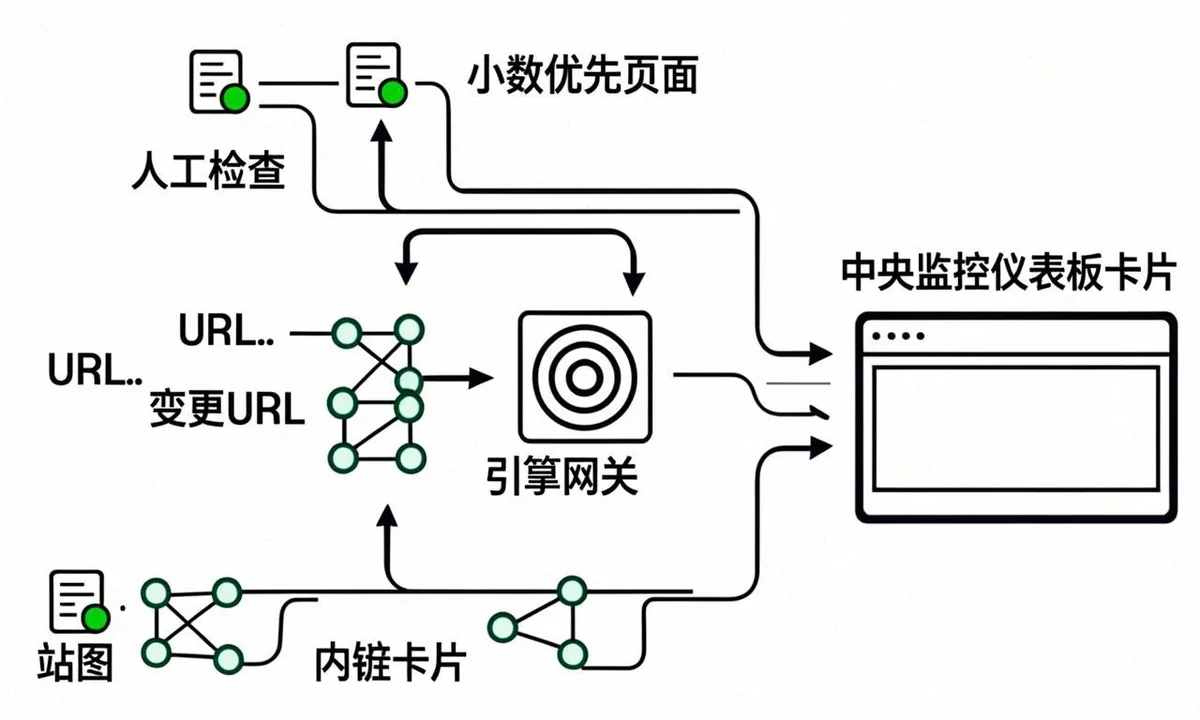 <!-- IMAGE-PROMPT workflow-02: 1600px max, DependsIt brand mint #22E3B0 on charcoal #121212, node-network line art, subject: Test setup to measurement to decision workflow for indexing speed, flat vector, accessible, Clash Display headings General Sans labels feel, no em dash -->
Indexing speed comparison by site type and change type
Different sites feel different winners because bottlenecks differ. Publish one indexing benchmark per quarter on your own inventory to see how fast each method moves new, updated, and redirected URLs on your stack. Small blogs with clean sitemaps often see little gap between methods, since crawl load is light and discovery is already quick. News and docs sites with time sensitive updates gain most from IndexNow on participating engines plus selective inspection on Google. Large shops with variant bloat gain most from sitemap cleanup and internal linking before any accelerator shows value. Matching method to bottleneck avoids paying for speed where accuracy is the real problem.
Change type matters as much as site type. New URLs need discovery from zero, so precise pings plus hub links help most. Materially updated URLs need recrawl signals, so accurate lastmod plus small batches work well. Redirected and removed URLs need canonical and status correctness first, otherwise pings waste quota. The table below summarizes typical patterns to test on your own inventory rather than adopting generic speed rankings that ignore context.
In practice the fastest stacks combine a trustworthy baseline with a timely nudge. Accurate sitemaps with correct lastmod plus clear internal links give every engine a complete inventory to work from. IndexNow or API calls then highlight the small subset that just changed. When both layers are healthy, participating engines often recrawl priority URLs within hours instead of days. When the baseline is broken, even instant pings stall at the quality check.
Checklist for this step:
- Compare within the same site and URL type
- Test new, updated and redirected URLs separately
- Fix sitemap and linking before judging pings
- Run each method for two to three weeks
- Record median plus range per method
| Item | What to do | Why it matters |
|---|---|---|
| Small blog | Sitemap often enough | Pings add little |
| News and docs | IndexNow plus inspection | Time sensitive wins |
| Large shop | Cleanup plus links first | Then accelerators |
| Redirects | Status plus canonical first | Pings last |
Keep notes on what you tested and what changed so later sections can compare fairly rather than mixing different URL types or time windows.
Why faster ping does not always mean faster ranking
A fast ping shortens discovery, but ranking depends on relevance, quality, links and intent match that no submission can shortcut. An accepted 200 or 202 means the hint arrived, not that the page passed quality checks or earned a position. Thin duplicates, weak titles, slow templates and missing hub links keep accepted pages unindexed or indexed without visibility. Teams that chase ping speed while ignoring content depth see accepted counts rise while traffic stays flat.
The healthier goal is faster feedback on quality work. Publish a useful page with clear intent, link it well, keep it fast and canonical clean, then use timely hints so engines evaluate the good version sooner. If accepted URLs stay unindexed, treat the delay as a quality or architecture signal: deepen content, consolidate duplicates, fix canonicals, improve speed and strengthen internal support before increasing ping volume. Speed amplifies quality in both directions, so make the page deserve the crawl you just requested.
Measurement over several weeks beats single day anecdotes because crawl scheduling varies with load, site history and change frequency. A new section may be discovered quickly during launch attention then settle into a slower rhythm. A large refactor may temporarily slow discovery while engines reprocess canonicals. By comparing the same URL types before and after a method change, teams isolate the real effect from normal variance.
Checklist for this step:
- Treat accepted as hint received, not indexed
- Deepen thin pages before resubmitting
- Consolidate duplicates with clear canonicals
- Strengthen hub links and titles for intent
- Increase quality before increasing volume
| Item | What to do | Why it matters |
|---|---|---|
| Ping | Discovery hint | Fast but narrow |
| Crawl | Fetch decision | Trust plus load |
| Index | Quality decision | Content plus signals |
| Rank | Relevance plus authority | Separate from speed |
Keep notes on what you tested and what changed so later sections can compare fairly rather than mixing different URL types or time windows.
Choosing the fastest practical stack for your site
The practical stack has three layers: a trusted baseline, a timely nudge and a manual scalpel. Baseline is automated sitemaps with accurate lastmod plus shallow internal links from relevant hubs. Nudge is IndexNow for participating engines and narrow API use where eligible, both in small batches with logging and backoff. Scalpel is selective URL Inspection for a handful of Google priority URLs per week. Most sites need all three in small doses rather than a single winner at high volume.
Choose by measuring your bottleneck. If discovery lags but quality is strong, add precise pings. If crawls arrive but indexing stalls, fix content, canonicals and speed before adding volume. Treat every method speed SEO claim as marketing until your own logs confirm it on matched URL sets, then invest where the delay actually lives. If Google lags while Bing moves, strengthen sitemap and linking work rather than assuming IndexNow will cross over. For dual coverage design, the two API workflow covering Google and IndexNow together shows how to run both lanes from one release process. Keep the stack small enough to log, audit and sustain weekly.
Quotas and signal quality shape long term speed more than any single fast response. Small precise batches of changed canonical URLs teach engines to trust future hints and return sooner. Large dumps of unchanged URLs, frequent resubmission without edits, and mismatched hosts or keys teach the opposite. The methods that win over months are the ones that stay accurate, throttled and well logged rather than merely fast once.
Checklist for this step:
- Baseline: automated sitemaps plus hub links
- Nudge: IndexNow plus narrow API in small batches
- Scalpel: inspection for few Google priorities
- Log and throttle every automated step
- Review bottleneck monthly and adjust one layer
| Item | What to do | Why it matters |
|---|---|---|
| Baseline | Always on | Reliable for all engines |
| Nudge | On change only | Speeds trusted senders |
| Scalpel | Few URLs weekly | Priority Google pages |
| Review | Monthly bottleneck check | Keeps stack lean |
Keep notes on what you tested and what changed so later sections can compare fairly rather than mixing different URL types or time windows.
Monitoring and improving your indexing time over weeks
Set up a simple dashboard that joins publish time to first crawl and first index per URL with method labels. Sources include deploy logs with submission timestamps and response codes, Bing Webmaster submission and crawl stats, Yandex Webmaster trends, and Search Console inspection plus coverage for Google. Review weekly medians by URL type rather than daily spikes, since scheduling varies with load. A steady drop in median hours to crawl for new posts after adding precise pings is a real win, while a single fast URL is noise.
Improve one variable at a time: first clean sitemaps and canonicals, then tighten internal linking, then tune batch size and pacing, then revisit quotas and error rates. If 429 rises, slow down and deduplicate. If 422 rises, fix mapping and host consistency. If accepted but unindexed grows, invest in content depth and hub support rather than more pings. Over a quarter, this loop usually moves discovery from days to hours on participating engines and trims Google recrawl times through stronger basics, which is the durable form of speed.
Google and IndexNow ecosystems must be measured separately because they use different inputs. IndexNow covers Bing, Yandex, Naver, Seznam and others that poll the shared protocol, while Google relies on sitemaps, Search Console flows and its own crawl scheduling plus the narrow Indexing API scope. A stack that looks fastest on Bing may show no change on Google until sitemap and linking work improves. Reporting the two tracks apart keeps decisions honest.
Checklist for this step:
- Dashboard publish to crawl to index per URL
- Review weekly medians by URL type
- Change one variable per cycle
- Watch 429, 422 and accepted but unindexed
- Report Google and IndexNow tracks separately
| Item | What to do | Why it matters |
|---|---|---|
| Inputs | Logs plus Webmaster plus Console | Joined timeline |
| Cadence | Weekly medians | Smooths variance |
| Tuning | One change at a time | Isolates effect |
| Goal | Durable hours not one off minutes | Sustained trust |
Keep notes on what you tested and what changed so later sections can compare fairly rather than mixing different URL types or time windows.
FAQ
Which method is fastest overall?
There is no single fastest indexing method for all sites because Google and IndexNow engines use different inputs. For Bing, Yandex, Naver and Seznam, small precise IndexNow batches are usually fastest for discovery. For Google, accurate sitemaps plus strong internal links plus selective inspection for priority URLs is the fastest honest combination, with the narrow Indexing API reserved for eligible job and livestream pages. The overall winner is the smallest stack that moves your own median hours to crawl and index earlier on both tracks.
How long should indexing take after submission?
Timelines vary by trust, size and quality. Trusted small sites often see recrawls within hours and new page indexing within a day or two after clean submission. Large or new sites with bloat may take days to weeks even with correct pings while engines work through queues and quality checks. If accepted pings show no crawl after a week, check sitemap accuracy, robots, canonicals and internal links. If crawls arrive but indexing stalls, focus on content depth and duplicates rather than resubmitting the same URLs.
Do sitemaps still matter if I use IndexNow?
Yes. Sitemaps are the complete inventory that all engines use, including Google which does not consume IndexNow. IndexNow is a timely nudge about recent changes for participating engines, not a replacement for discovery, lastmod scheduling or fallback when pings are throttled. Keep sitemaps segmented, accurate and fast, submit them in Webmaster Tools, and use IndexNow only for changed canonicals. Sites that drop sitemaps usually see more variance, not more speed.
Will IndexNow help my Google indexing?
No. Google does not support IndexNow, so pings are processed by Bing, Yandex, Naver, Seznam and other participants only. For Google, rely on accurate sitemaps, Search Console inspection for a few priority URLs, strong internal linking, clean canonicals and fast accessible pages. Track Google progress in Search Console separately from Bing and Yandex Webmaster data. Claiming IndexNow reaches Google overstates coverage and confuses reporting.
How many URLs should I submit per test?
Use small matched sets of ten to twenty similar URLs per method so results reflect method differences rather than outliers. Include only canonical https URLs with 200 status, similar quality and similar hub links. Log publish and submit times plus response codes, then check crawl and index daily for two to three weeks. Avoid single URL tests and avoid mixing new, updated and redirected URLs in one sample, since each type moves at its own pace.
What is the most common speed mistake?
Submitting large unchanged batches on every deploy. Full sitemap dumps, daily resubmission without edits and mixed host lists teach engines to deprioritize your signals, which slows future discovery and triggers more 429 throttling. The fix is precise batches of changed canonicals, deduplication against recent submissions, throttling with backoff, and fixing sitemap, canonical and linking basics first. Speed follows trust, and trust comes from accuracy over weeks.