Image and Video Sitemaps for Faster Discovery

Pages can rank while their photos and clips stay invisible. This guide is for publishers, stores, and course teams who need an image video sitemap setup that surfaces visuals in image and video results. You will learn image and video tag rules, when to merge tags inline and when to split into media children, which WordPress outputs to trust, and how to validate without breaking the main feed. It also covers size control for large libraries, Search Console checks, and a maintenance rhythm that keeps thumbnails and durations accurate. By the end your media gets discovered in days rather than months.
Key takeaways
- An image video sitemap pairs media URLs with parent pages so galleries and embeds get crawled sooner.
- Use accurate titles, stable loc values, fetchable thumbnails, and honest durations for video.
- Split large libraries into media children and prune icons and duplicate crops that bloat files.
- Validate namespaces, check parent indexation, and track image and video impressions by template.
- What image and video sitemaps actually do
- When text sitemaps miss your media
- Image sitemap tags and rules that matter
- Video sitemap tags and rules that matter
- Merging media tags into your main sitemap
- Separate media sitemaps versus inline extensions
- WordPress plugins that output media sitemaps
- Large media libraries without bloating the file
- Image Video Sitemap Validation and Search Console Checks
- Measuring image and video discovery gains
- Maintenance workflow that keeps media fresh
- FAQ
- Sources
- Further reading
 <!-- IMAGE-PROMPT cover: 1200x630, DependsIt brand, deep charcoal #121212 background, vibrant mint #22E3B0 accent glow, thin node-network line art, Clash Display style bold heading space on left, General Sans clean labels, subject: image video sitemap explanatory cover for site owners, flat vector, high contrast, accessible, no photorealistic faces, no text smaller than 24px, no em dash in rendered text, export PNG then cwebp -q 82 to WEBP -->
What image and video sitemaps actually do
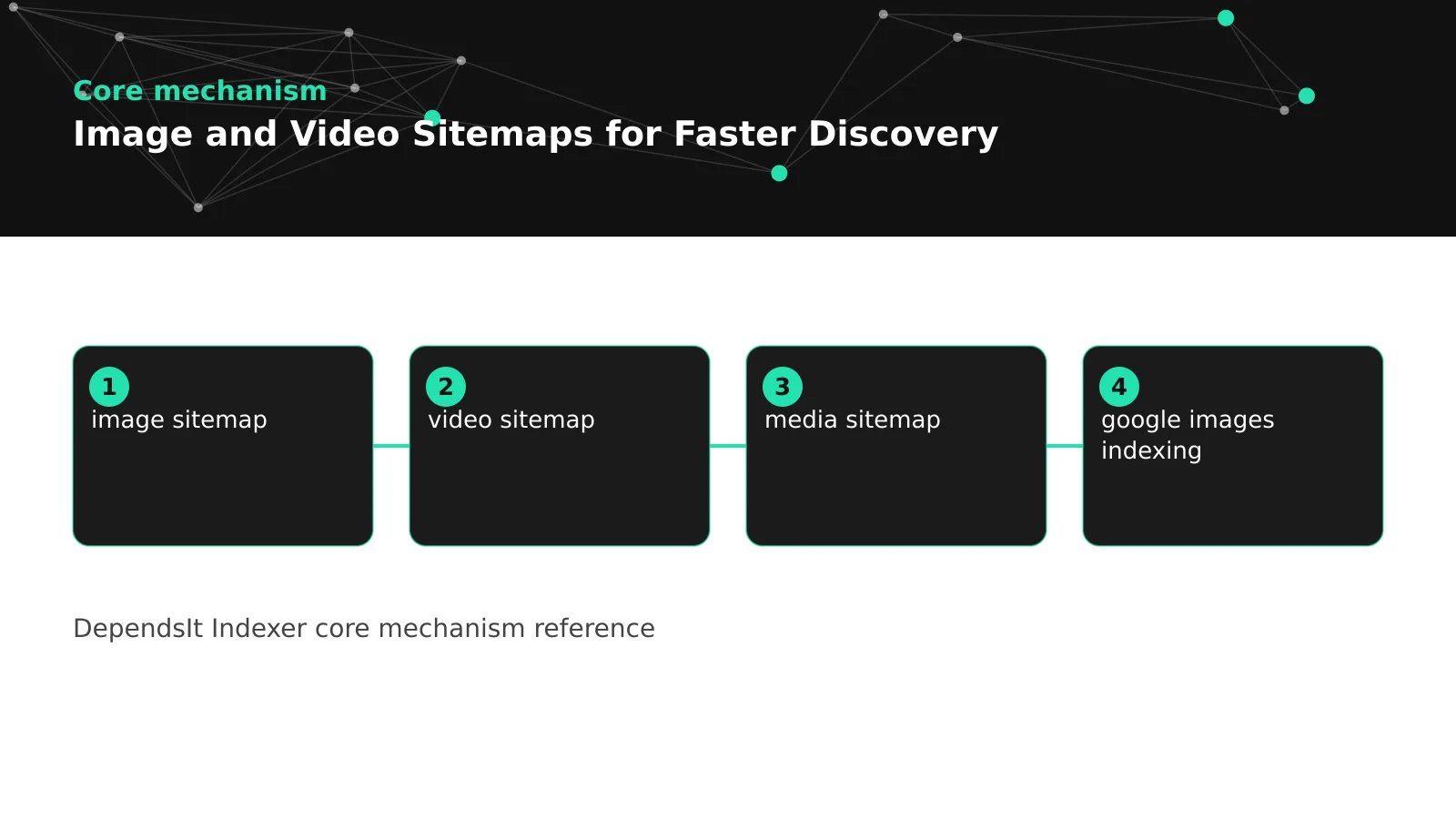
An image video sitemap lists media URLs alongside their parent pages so crawlers find visuals without rendering every gallery. Image entries carry loc, caption, and license hints. Video entries carry title, thumbnail, duration, and embed details. Engines use these feeds to schedule image and video crawls and to match media to queries. Clean feeds improve media discovery because google images indexing matches loc values to rendered visuals before ranking. Text only feeds leave this matching to chance, which delays media visibility by weeks on large libraries.
In practical terms, this relates directly to image video sitemap. Site owners often fix single URLs, but search systems evaluate patterns across templates and link graphs. Understanding the pattern saves time because one template rule can move hundreds of entries at once. Search engines decide crawl frequency from past fetch success, file size, and signal trust. A focused feed that returns quickly with honest timestamps earns more frequent checks than a bloated file with stale dates. That is why small structural choices compound over weeks. Teams that measure fetch latency and Valid growth per template see the link between feed hygiene and pickup speed more clearly than teams that only count total URLs.
Key checks for this stage:
- Audit templates first because issues cluster by post type and archive rule.
- Compare raw HTML to rendered HTML for JavaScript hidden content.
- Trace canonical chains to catch redirects and noindex targets.
- Remove variants, session IDs, and filtered views from XML.
- Add contextual internal links from indexed hubs to priority pages.
Implementation works best in small batches. Pick one section, apply the change, clear caches, fetch the affected child sitemap as a bot, and confirm headers and XML validity. Watch coverage for that section across ten to fourteen days. If Valid rises without new errors, roll the pattern to the next section. Batching isolates cause and effect when Search Console numbers move. Applied to what image and video sitemaps actually do, the same discipline pays off: image video sitemap improves when eligibility, duplication, and freshness are handled in order. Record baseline Valid and Excluded counts before the change, then confirm live samples after the deploy. Expect movement across one to two crawl cycles rather than overnight. Keep a simple log with date, template, action, sample URLs, and before and after counts so the next review starts from evidence.
Use this quick reference while working through this section.
| Check | What to confirm | Tool |
|---|---|---|
| Status and robots | 200 response, allowed by robots, no noindex in headers | View source, headers, live inspection |
| Canonical intent | Single absolute canonical to preferred 200 URL | Crawl export, inspection |
| Discovery path | Sitemap entry plus contextual internal link | Sitemap index, inlink report |
| Freshness | lastmod from real edit time, stable across rebuilds | CMS history, file diff |
| Stability | Fast fetch, valid XML, no 5xx spikes | Crawl stats, server logs |
To finish, pick one cluster related to image video sitemap, apply the checks above, and document the result before expanding. Small batches reduce risk and make cause and effect visible. Share the sheet with developers when code changes are needed and with editors when content work is needed. Clear ownership keeps what image and video sitemaps actually do from drifting back after temporary gains.
When text sitemaps miss your media
Galleries loaded by JavaScript, lazy loaded thumbnails, and videos inside iframes often stay invisible to basic crawls. Product swatches, portfolio grids, and lesson thumbnails fall in this group. If image impressions lag behind page impressions, the text feed likely misses media URLs. A dedicated media check compares rendered page images against sitemap image loc values. Gaps point to templates that need feed fixes rather than more backlinks.
In practical terms, this relates directly to image video sitemap. Site owners often fix single URLs, but search systems evaluate patterns across templates and link graphs. Understanding the pattern saves time because one template rule can move hundreds of entries at once. Indexing pipelines weigh discovery against quality and duplication. When a feed mixes canonical 200 pages with redirects, parameter variants, and thin archives, schedulers must verify each entry before spending render budget. Clean separation by type or date reduces that verification cost. Over two crawl cycles the result shows as steadier Valid counts and fewer Excluded rows for duplicate or soft 404 reasons.
Key checks for this stage:
- Confirm 200 status, allowed robots, and clean canonical per URL.
- Check sitemap inclusion plus at least one topical internal link.
- Compare uniqueness against site siblings and top competitors.
- Verify speed and stability across two fetch samples.
- Document dates and samples so later monitoring ties to causes.
Maintenance decides whether gains hold. Assign an owner, set a monthly check for counts, latency, and errors, and log every structural change with date and reason. Alert on build failures, size jumps, and fetch errors the same day. Quarterly, revalidate against current docs because engine guidance on sitemaps and submission evolves. Steady ownership beats one time cleanup projects. Applied to when text sitemaps miss your media, the same discipline pays off: image video sitemap improves when eligibility, duplication, and freshness are handled in order. Record baseline Valid and Excluded counts before the change, then confirm live samples after the deploy. Expect movement across one to two crawl cycles rather than overnight. Keep a simple log with date, template, action, sample URLs, and before and after counts so the next review starts from evidence.
Use this quick reference while working through this section.
| Check | What to confirm | Tool |
|---|---|---|
| Status and robots | 200 response, allowed by robots, no noindex in headers | View source, headers, live inspection |
| Canonical intent | Single absolute canonical to preferred 200 URL | Crawl export, inspection |
| Discovery path | Sitemap entry plus contextual internal link | Sitemap index, inlink report |
| Freshness | lastmod from real edit time, stable across rebuilds | CMS history, file diff |
| Stability | Fast fetch, valid XML, no 5xx spikes | Crawl stats, server logs |
To finish, pick one cluster related to image video sitemap, apply the checks above, and document the result before expanding. Small batches reduce risk and make cause and effect visible. Share the sheet with developers when code changes are needed and with editors when content work is needed. Clear ownership keeps when text sitemaps miss your media from drifting back after temporary gains.
Image sitemap tags and rules that matter
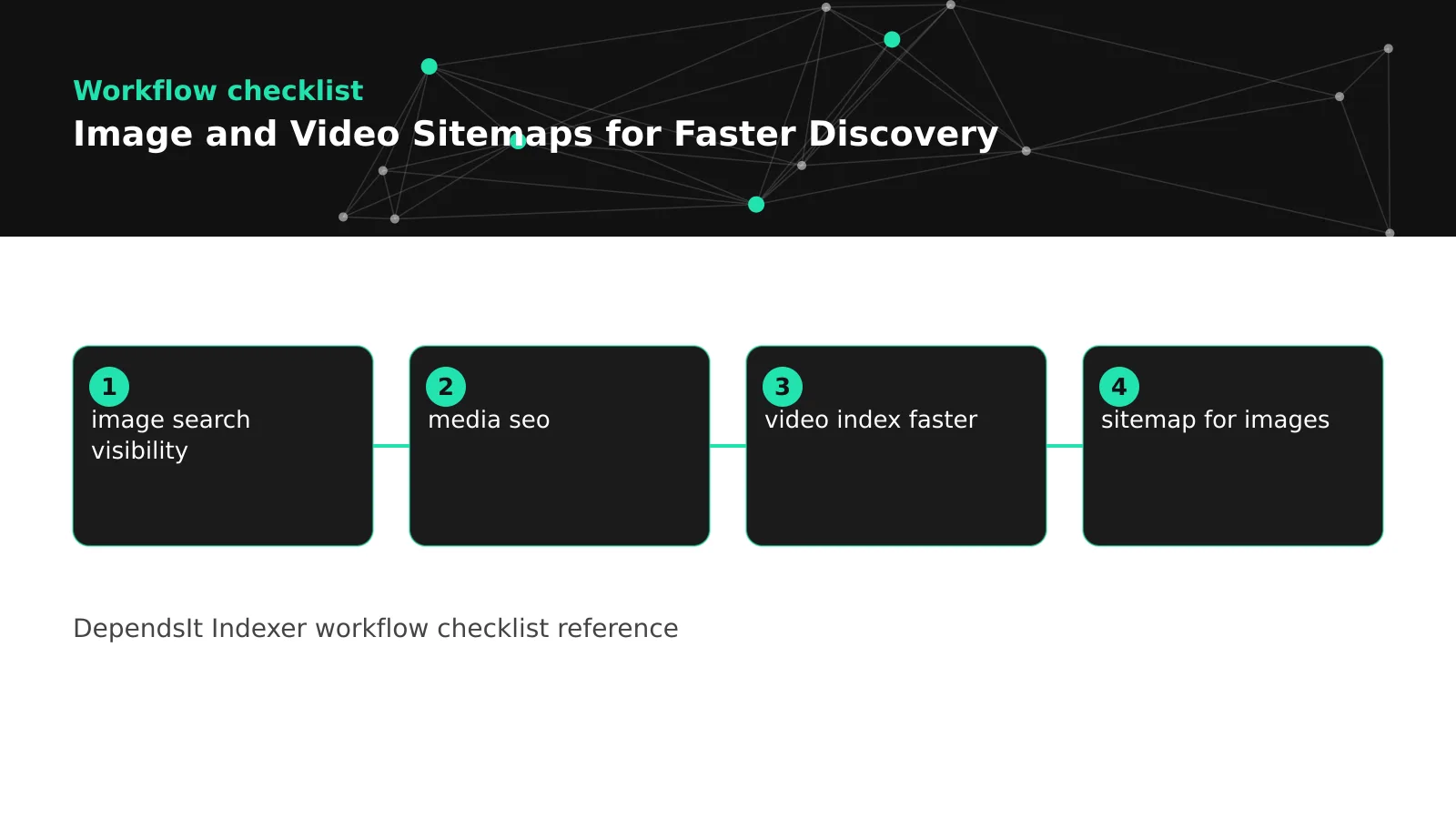
Each image entry needs an absolute loc that returns 200 with stable caching. Captions should describe the visible content in plain words without keyword stuffing. License and geo tags help only when accurate; omit them when unsure. List up to 1000 images per page entry, but prioritize unique helpful visuals over icons and spacers. A correct sitemap for images lists only unique visuals, which lifts image search visibility without inflating file size. Keep thumbnails fast and accessible because slow media URLs get deprioritized during crawls.
In practical terms, this relates directly to image video sitemap. Site owners often fix single URLs, but search systems evaluate patterns across templates and link graphs. Understanding the pattern saves time because one template rule can move hundreds of entries at once. Crawl budget is not infinite even on mid size sites. Internal links, sitemaps, and update pings all compete for attention. A tidy feed amplifies good internal linking because both point to the same canonical set. When feeds and links disagree, engines trust links and headers first and may downgrade feed trust. Alignment across canonicals, robots, and sitemap entries therefore matters more than any single plugin brand.
Key checks for this stage:
- Keep child files fast with 1000 to 5000 URLs on typical hosts.
- Preserve real edit times for lastmod instead of rebuild times.
- Exclude drafts, staging, search results, and paginated thin pages.
- Validate XML namespaces after every plugin or theme update.
- Track Valid versus Excluded weekly rather than daily.
Start with an export of current sitemap URLs joined to status code, canonical target, robots allowance, and internal inlink count. Group by template to find clusters that waste entries. Fix eligibility first, then duplication, then thin content, then linking. Recheck a sample with live inspection before resubmitting. This order prevents content rewrites on pages that were blocked by headers all along. Applied to image sitemap tags and rules that matter, the same discipline pays off: image video sitemap improves when eligibility, duplication, and freshness are handled in order. Record baseline Valid and Excluded counts before the change, then confirm live samples after the deploy. Expect movement across one to two crawl cycles rather than overnight. Keep a simple log with date, template, action, sample URLs, and before and after counts so the next review starts from evidence.
Use this quick reference while working through this section.
| Check | What to confirm | Tool |
|---|---|---|
| Status and robots | 200 response, allowed by robots, no noindex in headers | View source, headers, live inspection |
| Canonical intent | Single absolute canonical to preferred 200 URL | Crawl export, inspection |
| Discovery path | Sitemap entry plus contextual internal link | Sitemap index, inlink report |
| Freshness | lastmod from real edit time, stable across rebuilds | CMS history, file diff |
| Stability | Fast fetch, valid XML, no 5xx spikes | Crawl stats, server logs |
To finish, pick one cluster related to image video sitemap, apply the checks above, and document the result before expanding. Small batches reduce risk and make cause and effect visible. Share the sheet with developers when code changes are needed and with editors when content work is needed. Clear ownership keeps image sitemap tags and rules that matter from drifting back after temporary gains.
 <!-- IMAGE-PROMPT diagram-01: 1600px max, DependsIt brand mint #22E3B0 on charcoal #121212, node-network line art, Clash Display style headings, General Sans clean labels, subject: image video sitemap pipeline diagram from discovery through crawl to indexing decision, flat vector, accessible, no em dash in rendered text -->
Video sitemap tags and rules that matter
Video entries require title, thumbnail loc, and either embed or content loc plus duration in seconds. Titles should match the on page heading closely to avoid mismatch. Thumbnails must be fetchable without login and sized for preview. Duration and publication date guide freshness and watch matching. Limit entries to videos that are central to the page rather than background loops. A precise video seo sitemap helps pages video index faster, and steady media seo gains follow when thumbnails stay fetchable. Accurate metadata shortens the path from publish to video tab appearance.
In practical terms, this relates directly to image video sitemap. Site owners often fix single URLs, but search systems evaluate patterns across templates and link graphs. Understanding the pattern saves time because one template rule can move hundreds of entries at once. Search engines decide crawl frequency from past fetch success, file size, and signal trust. A focused feed that returns quickly with honest timestamps earns more frequent checks than a bloated file with stale dates. That is why small structural choices compound over weeks. Teams that measure fetch latency and Valid growth per template see the link between feed hygiene and pickup speed more clearly than teams that only count total URLs.
Key checks for this stage:
- Audit templates first because issues cluster by post type and archive rule.
- Compare raw HTML to rendered HTML for JavaScript hidden content.
- Trace canonical chains to catch redirects and noindex targets.
- Remove variants, session IDs, and filtered views from XML.
- Add contextual internal links from indexed hubs to priority pages.
Implementation works best in small batches. Pick one section, apply the change, clear caches, fetch the affected child sitemap as a bot, and confirm headers and XML validity. Watch coverage for that section across ten to fourteen days. If Valid rises without new errors, roll the pattern to the next section. Batching isolates cause and effect when Search Console numbers move. Applied to video sitemap tags and rules that matter, the same discipline pays off: image video sitemap improves when eligibility, duplication, and freshness are handled in order. Record baseline Valid and Excluded counts before the change, then confirm live samples after the deploy. Expect movement across one to two crawl cycles rather than overnight. Keep a simple log with date, template, action, sample URLs, and before and after counts so the next review starts from evidence.
Use this quick reference while working through this section.
| Check | What to confirm | Tool |
|---|---|---|
| Status and robots | 200 response, allowed by robots, no noindex in headers | View source, headers, live inspection |
| Canonical intent | Single absolute canonical to preferred 200 URL | Crawl export, inspection |
| Discovery path | Sitemap entry plus contextual internal link | Sitemap index, inlink report |
| Freshness | lastmod from real edit time, stable across rebuilds | CMS history, file diff |
| Stability | Fast fetch, valid XML, no 5xx spikes | Crawl stats, server logs |
To finish, pick one cluster related to image video sitemap, apply the checks above, and document the result before expanding. Small batches reduce risk and make cause and effect visible. Share the sheet with developers when code changes are needed and with editors when content work is needed. Clear ownership keeps video sitemap tags and rules that matter from drifting back after temporary gains.
Merging media tags into your main sitemap
Inline extensions add image and video namespaces to existing URL entries. This keeps one file per section and avoids extra index management. It works well under 5000 media rich pages with moderate image counts. Watch file size because media tags inflate bytes faster than plain URLs. Validate namespaces carefully since one typo can invalidate the whole child file. Inline suits blogs and small catalogs that want an image video sitemap without new infrastructure.
In practical terms, this relates directly to image video sitemap. Site owners often fix single URLs, but search systems evaluate patterns across templates and link graphs. Understanding the pattern saves time because one template rule can move hundreds of entries at once. Indexing pipelines weigh discovery against quality and duplication. When a feed mixes canonical 200 pages with redirects, parameter variants, and thin archives, schedulers must verify each entry before spending render budget. Clean separation by type or date reduces that verification cost. Over two crawl cycles the result shows as steadier Valid counts and fewer Excluded rows for duplicate or soft 404 reasons.
Key checks for this stage:
- Confirm 200 status, allowed robots, and clean canonical per URL.
- Check sitemap inclusion plus at least one topical internal link.
- Compare uniqueness against site siblings and top competitors.
- Verify speed and stability across two fetch samples.
- Document dates and samples so later monitoring ties to causes.
Maintenance decides whether gains hold. Assign an owner, set a monthly check for counts, latency, and errors, and log every structural change with date and reason. Alert on build failures, size jumps, and fetch errors the same day. Quarterly, revalidate against current docs because engine guidance on sitemaps and submission evolves. Steady ownership beats one time cleanup projects. Applied to merging media tags into your main sitemap, the same discipline pays off: image video sitemap improves when eligibility, duplication, and freshness are handled in order. Record baseline Valid and Excluded counts before the change, then confirm live samples after the deploy. Expect movement across one to two crawl cycles rather than overnight. Keep a simple log with date, template, action, sample URLs, and before and after counts so the next review starts from evidence.
Use this quick reference while working through this section.
| Check | What to confirm | Tool |
|---|---|---|
| Status and robots | 200 response, allowed by robots, no noindex in headers | View source, headers, live inspection |
| Canonical intent | Single absolute canonical to preferred 200 URL | Crawl export, inspection |
| Discovery path | Sitemap entry plus contextual internal link | Sitemap index, inlink report |
| Freshness | lastmod from real edit time, stable across rebuilds | CMS history, file diff |
| Stability | Fast fetch, valid XML, no 5xx spikes | Crawl stats, server logs |
To finish, pick one cluster related to image video sitemap, apply the checks above, and document the result before expanding. Small batches reduce risk and make cause and effect visible. Share the sheet with developers when code changes are needed and with editors when content work is needed. Clear ownership keeps merging media tags into your main sitemap from drifting back after temporary gains.
Separate media sitemaps versus inline extensions
Separate children isolate media errors, simplify size control, and let you set different rebuild rhythms for visuals. Inline keeps discovery tied to page crawls and reduces index clutter. Large portfolios, marketplaces, and course libraries usually prefer separate media children under the same index. Small sites prefer inline for simplicity. Choose based on error isolation needs and measured file sizes rather than habit.
In practical terms, this relates directly to image video sitemap. Site owners often fix single URLs, but search systems evaluate patterns across templates and link graphs. Understanding the pattern saves time because one template rule can move hundreds of entries at once. Crawl budget is not infinite even on mid size sites. Internal links, sitemaps, and update pings all compete for attention. A tidy feed amplifies good internal linking because both point to the same canonical set. When feeds and links disagree, engines trust links and headers first and may downgrade feed trust. Alignment across canonicals, robots, and sitemap entries therefore matters more than any single plugin brand.
Key checks for this stage:
- Keep child files fast with 1000 to 5000 URLs on typical hosts.
- Preserve real edit times for lastmod instead of rebuild times.
- Exclude drafts, staging, search results, and paginated thin pages.
- Validate XML namespaces after every plugin or theme update.
- Track Valid versus Excluded weekly rather than daily.
Start with an export of current sitemap URLs joined to status code, canonical target, robots allowance, and internal inlink count. Group by template to find clusters that waste entries. Fix eligibility first, then duplication, then thin content, then linking. Recheck a sample with live inspection before resubmitting. This order prevents content rewrites on pages that were blocked by headers all along. Applied to separate media sitemaps versus inline extensions, the same discipline pays off: image video sitemap improves when eligibility, duplication, and freshness are handled in order. Record baseline Valid and Excluded counts before the change, then confirm live samples after the deploy. Expect movement across one to two crawl cycles rather than overnight. Keep a simple log with date, template, action, sample URLs, and before and after counts so the next review starts from evidence.
Use this quick reference while working through this section.
| Check | What to confirm | Tool |
|---|---|---|
| Status and robots | 200 response, allowed by robots, no noindex in headers | View source, headers, live inspection |
| Canonical intent | Single absolute canonical to preferred 200 URL | Crawl export, inspection |
| Discovery path | Sitemap entry plus contextual internal link | Sitemap index, inlink report |
| Freshness | lastmod from real edit time, stable across rebuilds | CMS history, file diff |
| Stability | Fast fetch, valid XML, no 5xx spikes | Crawl stats, server logs |
To finish, pick one cluster related to image video sitemap, apply the checks above, and document the result before expanding. Small batches reduce risk and make cause and effect visible. Share the sheet with developers when code changes are needed and with editors when content work is needed. Clear ownership keeps separate media sitemaps versus inline extensions from drifting back after temporary gains.
WordPress plugins that output media sitemaps
Yoast adds image entries automatically while dedicated video SEO modules handle duration and thumbnails. Rank Math and All in One SEO expose image toggles plus video options at various tiers. Verify that gallery shortcodes, page builder images, and CDN URLs appear correctly in output. Test with posts that mix featured images, galleries, and embeds before you trust defaults. For submit steps after you enable media, see submitting sitemaps in Search Console.
In practical terms, this relates directly to image video sitemap. Site owners often fix single URLs, but search systems evaluate patterns across templates and link graphs. Understanding the pattern saves time because one template rule can move hundreds of entries at once. Search engines decide crawl frequency from past fetch success, file size, and signal trust. A focused feed that returns quickly with honest timestamps earns more frequent checks than a bloated file with stale dates. That is why small structural choices compound over weeks. Teams that measure fetch latency and Valid growth per template see the link between feed hygiene and pickup speed more clearly than teams that only count total URLs.
Key checks for this stage:
- Audit templates first because issues cluster by post type and archive rule.
- Compare raw HTML to rendered HTML for JavaScript hidden content.
- Trace canonical chains to catch redirects and noindex targets.
- Remove variants, session IDs, and filtered views from XML.
- Add contextual internal links from indexed hubs to priority pages.
Implementation works best in small batches. Pick one section, apply the change, clear caches, fetch the affected child sitemap as a bot, and confirm headers and XML validity. Watch coverage for that section across ten to fourteen days. If Valid rises without new errors, roll the pattern to the next section. Batching isolates cause and effect when Search Console numbers move. Applied to wordpress plugins that output media sitemaps, the same discipline pays off: image video sitemap improves when eligibility, duplication, and freshness are handled in order. Record baseline Valid and Excluded counts before the change, then confirm live samples after the deploy. Expect movement across one to two crawl cycles rather than overnight. Keep a simple log with date, template, action, sample URLs, and before and after counts so the next review starts from evidence.
Use this quick reference while working through this section.
| Check | What to confirm | Tool |
|---|---|---|
| Status and robots | 200 response, allowed by robots, no noindex in headers | View source, headers, live inspection |
| Canonical intent | Single absolute canonical to preferred 200 URL | Crawl export, inspection |
| Discovery path | Sitemap entry plus contextual internal link | Sitemap index, inlink report |
| Freshness | lastmod from real edit time, stable across rebuilds | CMS history, file diff |
| Stability | Fast fetch, valid XML, no 5xx spikes | Crawl stats, server logs |
To finish, pick one cluster related to image video sitemap, apply the checks above, and document the result before expanding. Small batches reduce risk and make cause and effect visible. Share the sheet with developers when code changes are needed and with editors when content work is needed. Clear ownership keeps wordpress plugins that output media sitemaps from drifting back after temporary gains.
 <!-- IMAGE-PROMPT workflow-02: 1600px max, DependsIt brand mint #22E3B0 on charcoal #121212 or white, node-network line art, Clash Display style headings, General Sans clean labels, subject: image video sitemap remediation workflow from audit to fix to monitoring, flat vector, accessible, no em dash in rendered text -->
Large media libraries without bloating the file
Marketplaces and publishers can list millions of image URLs if every thumbnail and variant gets included. List only indexable parent pages and their primary visuals. Exclude sprites, icons, avatars, and duplicate crops that add bytes without search demand. Paginate media children by product range or publish month and compress with gzip. Pruning ruthlessly keeps the image video sitemap fast enough for daily fetches.
In practical terms, this relates directly to image video sitemap. Site owners often fix single URLs, but search systems evaluate patterns across templates and link graphs. Understanding the pattern saves time because one template rule can move hundreds of entries at once. Indexing pipelines weigh discovery against quality and duplication. When a feed mixes canonical 200 pages with redirects, parameter variants, and thin archives, schedulers must verify each entry before spending render budget. Clean separation by type or date reduces that verification cost. Over two crawl cycles the result shows as steadier Valid counts and fewer Excluded rows for duplicate or soft 404 reasons.
Key checks for this stage:
- Confirm 200 status, allowed robots, and clean canonical per URL.
- Check sitemap inclusion plus at least one topical internal link.
- Compare uniqueness against site siblings and top competitors.
- Verify speed and stability across two fetch samples.
- Document dates and samples so later monitoring ties to causes.
Maintenance decides whether gains hold. Assign an owner, set a monthly check for counts, latency, and errors, and log every structural change with date and reason. Alert on build failures, size jumps, and fetch errors the same day. Quarterly, revalidate against current docs because engine guidance on sitemaps and submission evolves. Steady ownership beats one time cleanup projects. Applied to large media libraries without bloating the file, the same discipline pays off: image video sitemap improves when eligibility, duplication, and freshness are handled in order. Record baseline Valid and Excluded counts before the change, then confirm live samples after the deploy. Expect movement across one to two crawl cycles rather than overnight. Keep a simple log with date, template, action, sample URLs, and before and after counts so the next review starts from evidence.
Use this quick reference while working through this section.
| Check | What to confirm | Tool |
|---|---|---|
| Status and robots | 200 response, allowed by robots, no noindex in headers | View source, headers, live inspection |
| Canonical intent | Single absolute canonical to preferred 200 URL | Crawl export, inspection |
| Discovery path | Sitemap entry plus contextual internal link | Sitemap index, inlink report |
| Freshness | lastmod from real edit time, stable across rebuilds | CMS history, file diff |
| Stability | Fast fetch, valid XML, no 5xx spikes | Crawl stats, server logs |
To finish, pick one cluster related to image video sitemap, apply the checks above, and document the result before expanding. Small batches reduce risk and make cause and effect visible. Share the sheet with developers when code changes are needed and with editors when content work is needed. Clear ownership keeps large media libraries without bloating the file from drifting back after temporary gains.
Image Video Sitemap Validation and Search Console Checks
Validate XML namespaces, check that every media loc returns 200, and confirm thumbnails render without robots blocks. In Search Console, compare page coverage with image and video enhancement reports for the same templates. Fetch a sample media URL with the URL Inspection live test to confirm rendering. Fix namespace errors first because they block whole files, then fix per URL issues by template.
In practical terms, this relates directly to image video sitemap. Site owners often fix single URLs, but search systems evaluate patterns across templates and link graphs. Understanding the pattern saves time because one template rule can move hundreds of entries at once. Crawl budget is not infinite even on mid size sites. Internal links, sitemaps, and update pings all compete for attention. A tidy feed amplifies good internal linking because both point to the same canonical set. When feeds and links disagree, engines trust links and headers first and may downgrade feed trust. Alignment across canonicals, robots, and sitemap entries therefore matters more than any single plugin brand.
Key checks for this stage:
- Keep child files fast with 1000 to 5000 URLs on typical hosts.
- Preserve real edit times for lastmod instead of rebuild times.
- Exclude drafts, staging, search results, and paginated thin pages.
- Validate XML namespaces after every plugin or theme update.
- Track Valid versus Excluded weekly rather than daily.
Start with an export of current sitemap URLs joined to status code, canonical target, robots allowance, and internal inlink count. Group by template to find clusters that waste entries. Fix eligibility first, then duplication, then thin content, then linking. Recheck a sample with live inspection before resubmitting. This order prevents content rewrites on pages that were blocked by headers all along. Applied to image video sitemap validation and search console checks, the same discipline pays off: image video sitemap improves when eligibility, duplication, and freshness are handled in order. Record baseline Valid and Excluded counts before the change, then confirm live samples after the deploy. Expect movement across one to two crawl cycles rather than overnight. Keep a simple log with date, template, action, sample URLs, and before and after counts so the next review starts from evidence.
Use this quick reference while working through this section.
| Check | What to confirm | Tool |
|---|---|---|
| Status and robots | 200 response, allowed by robots, no noindex in headers | View source, headers, live inspection |
| Canonical intent | Single absolute canonical to preferred 200 URL | Crawl export, inspection |
| Discovery path | Sitemap entry plus contextual internal link | Sitemap index, inlink report |
| Freshness | lastmod from real edit time, stable across rebuilds | CMS history, file diff |
| Stability | Fast fetch, valid XML, no 5xx spikes | Crawl stats, server logs |
To finish, pick one cluster related to image video sitemap, apply the checks above, and document the result before expanding. Small batches reduce risk and make cause and effect visible. Share the sheet with developers when code changes are needed and with editors when content work is needed. Clear ownership keeps image video sitemap validation and search console checks from drifting back after temporary gains.
Measuring image and video discovery gains
Track image impressions, video impressions, and media landing page clicks separately from web results. Note baseline for two weeks before media feed changes, then compare across two crawl cycles. Segment by template to see which galleries respond. If gains stall, check whether parent pages sit in Discovered but not indexed because unindexed parents limit media visibility no matter how clean the feed is.
In practical terms, this relates directly to image video sitemap. Site owners often fix single URLs, but search systems evaluate patterns across templates and link graphs. Understanding the pattern saves time because one template rule can move hundreds of entries at once. Search engines decide crawl frequency from past fetch success, file size, and signal trust. A focused feed that returns quickly with honest timestamps earns more frequent checks than a bloated file with stale dates. That is why small structural choices compound over weeks. Teams that measure fetch latency and Valid growth per template see the link between feed hygiene and pickup speed more clearly than teams that only count total URLs.
Key checks for this stage:
- Audit templates first because issues cluster by post type and archive rule.
- Compare raw HTML to rendered HTML for JavaScript hidden content.
- Trace canonical chains to catch redirects and noindex targets.
- Remove variants, session IDs, and filtered views from XML.
- Add contextual internal links from indexed hubs to priority pages.
Implementation works best in small batches. Pick one section, apply the change, clear caches, fetch the affected child sitemap as a bot, and confirm headers and XML validity. Watch coverage for that section across ten to fourteen days. If Valid rises without new errors, roll the pattern to the next section. Batching isolates cause and effect when Search Console numbers move. Applied to measuring image and video discovery gains, the same discipline pays off: image video sitemap improves when eligibility, duplication, and freshness are handled in order. Record baseline Valid and Excluded counts before the change, then confirm live samples after the deploy. Expect movement across one to two crawl cycles rather than overnight. Keep a simple log with date, template, action, sample URLs, and before and after counts so the next review starts from evidence.
Use this quick reference while working through this section.
| Check | What to confirm | Tool |
|---|---|---|
| Status and robots | 200 response, allowed by robots, no noindex in headers | View source, headers, live inspection |
| Canonical intent | Single absolute canonical to preferred 200 URL | Crawl export, inspection |
| Discovery path | Sitemap entry plus contextual internal link | Sitemap index, inlink report |
| Freshness | lastmod from real edit time, stable across rebuilds | CMS history, file diff |
| Stability | Fast fetch, valid XML, no 5xx spikes | Crawl stats, server logs |
To finish, pick one cluster related to image video sitemap, apply the checks above, and document the result before expanding. Small batches reduce risk and make cause and effect visible. Share the sheet with developers when code changes are needed and with editors when content work is needed. Clear ownership keeps measuring image and video discovery gains from drifting back after temporary gains.
Maintenance workflow that keeps media fresh
Media feeds rot when redesigns change CDN hosts, thumbnails move, or videos get deleted without feed updates. Schedule weekly checks for 404 media loc values, monthly reviews of title mismatches, and quarterly pruning of low value visuals. Preserve lastmod from real media edits rather than rebuild times. Document ownership so theme updates do not silently drop image namespaces.
In practical terms, this relates directly to image video sitemap. Site owners often fix single URLs, but search systems evaluate patterns across templates and link graphs. Understanding the pattern saves time because one template rule can move hundreds of entries at once. Indexing pipelines weigh discovery against quality and duplication. When a feed mixes canonical 200 pages with redirects, parameter variants, and thin archives, schedulers must verify each entry before spending render budget. Clean separation by type or date reduces that verification cost. Over two crawl cycles the result shows as steadier Valid counts and fewer Excluded rows for duplicate or soft 404 reasons.
Key checks for this stage:
- Confirm 200 status, allowed robots, and clean canonical per URL.
- Check sitemap inclusion plus at least one topical internal link.
- Compare uniqueness against site siblings and top competitors.
- Verify speed and stability across two fetch samples.
- Document dates and samples so later monitoring ties to causes.
Maintenance decides whether gains hold. Assign an owner, set a monthly check for counts, latency, and errors, and log every structural change with date and reason. Alert on build failures, size jumps, and fetch errors the same day. Quarterly, revalidate against current docs because engine guidance on sitemaps and submission evolves. Steady ownership beats one time cleanup projects. Applied to maintenance workflow that keeps media fresh, the same discipline pays off: image video sitemap improves when eligibility, duplication, and freshness are handled in order. Record baseline Valid and Excluded counts before the change, then confirm live samples after the deploy. Expect movement across one to two crawl cycles rather than overnight. Keep a simple log with date, template, action, sample URLs, and before and after counts so the next review starts from evidence.
Use this quick reference while working through this section.
| Check | What to confirm | Tool |
|---|---|---|
| Status and robots | 200 response, allowed by robots, no noindex in headers | View source, headers, live inspection |
| Canonical intent | Single absolute canonical to preferred 200 URL | Crawl export, inspection |
| Discovery path | Sitemap entry plus contextual internal link | Sitemap index, inlink report |
| Freshness | lastmod from real edit time, stable across rebuilds | CMS history, file diff |
| Stability | Fast fetch, valid XML, no 5xx spikes | Crawl stats, server logs |
To finish, pick one cluster related to image video sitemap, apply the checks above, and document the result before expanding. Small batches reduce risk and make cause and effect visible. Share the sheet with developers when code changes are needed and with editors when content work is needed. Clear ownership keeps maintenance workflow that keeps media fresh from drifting back after temporary gains.
<?xml version="1.0" encoding="UTF-8"?>
<urlset xmlns="sitemap-namespace">
  <url>
    <loc>/sample-page/</loc>
    <lastmod>2026-10-01</lastmod>
  </url>
</urlset>
FAQ
Does google images indexing improve with an image sitemap?
No. It improves media discovery and matching, but ranking still depends on relevance, page quality, and image usefulness. Expect faster crawling and steadier image search visibility first. Traffic follows when titles, captions, and surrounding text clearly answer visual intent better than competing pages.
How many images can I list per page?
You can list up to 1000 images per URL entry, but fewer strong visuals perform better in practice. Focus on unique photos, diagrams, and product shots. Exclude layout icons and duplicate crops that inflate size and dilute attention during image crawls.
Does a video seo sitemap help pages video index faster?
Yes. List the parent page in the web sitemap and add video extension tags either inline or in a dedicated video child. The parent must be indexable and fast, and steady media seo depends on fetchable thumbnails. Orphan video entries that point to thin or blocked parents rarely surface in video results.
Do CDN URLs work in a sitemap for images?
Yes, as long as the CDN host allows crawling, returns 200, and serves stable URLs. Verify robots.txt on the CDN host and confirm headers allow image bots. Keep loc values absolute and consistent after migrations to avoid mass 404 spikes.
Why do thumbnails show errors in reports?
Common causes are login walls, hotlink protection, slow responses, or robots blocks on the thumbnail host. Test the thumbnail URL in a logged out browser and with a header fetch. Fix access and speed before resubmitting, because repeated thumbnail failures reduce video crawl frequency.
How long until media gains appear?
Image discovery often shifts within one to two weeks after a clean feed. Video can take two to four weeks depending on thumbnail checks and parent indexation. Track media seo by template across full crawl cycles rather than judging single URLs after a few days.