Building a Publish-to-Index Workflow for Your Content Team
Most content teams publish first and think about indexing later. A post goes live on Tuesday, nobody submits the URL, the sitemap updates overnight, and Google finds it sometime next week. Sometimes it takes longer. Sometimes a noindex tag from staging carries over and nobody notices for a month. The publish to index workflow fixes this gap by making indexing a defined step in your editorial process instead of an afterthought. Every time content moves from draft to published, the same checks run, the same notifications go out, and the same log records what happened.
This guide is for content managers, SEOs, and developers who publish regularly and want steady discovery without manual pings. You will learn how to map roles, define quality gates, connect your CMS to IndexNow and sitemaps, handle Google separately, and monitor results. By the end you will have a practical workflow you can run with a small team and scale as volume grows. You will also know how to measure time to index and keep the system reliable over time.
Key takeaways
- A publish to index workflow turns indexing into a repeatable checklist that runs on every publish, update, and delete.
- Clear ownership across content, SEO, and engineering prevents missed submissions and staging errors.
- IndexNow covers Bing, Yandex, Naver, and Seznam while Google needs sitemaps, Search Console, and the Indexing API for eligible types.
- Logging every publish event with URL, time, and response code makes debugging and reporting straightforward.
- Small pilots, weekly reviews, and simple metrics keep the workflow alive without adding heavy process.
- Why publish to index breaks without a workflow
- What a good publish to index workflow includes
- Roles and ownership across content SEO and engineering
- Mapping content types to indexing paths
- The pre publish quality checklist
- Wiring your CMS to IndexNow and sitemaps
- Handling Google separately without confusion
- Logging monitoring and alerting for every publish
- Measuring time to index and reporting wins
- Rolling out the workflow and keeping it alive
- FAQ
- Sources
- Further reading

Why publish to index breaks without a workflow
Publishing feels finished when the page looks right in the browser. For search engines the work has only started. After you press publish, crawlers must discover the URL, fetch the HTML, render it if needed, evaluate quality and uniqueness, and decide whether to add it to the index. Each of those steps can stall. Discovery stalls when sitemaps update slowly or internal links never point to the new page. Fetching stalls when robots rules block paths or server responses are slow. Evaluation stalls when titles duplicate existing pages or thin content offers little new value. Without a workflow nobody owns these handoffs, so delays pile up quietly.
The most common break is the manual ping habit. One person remembers to request indexing in Search Console for important posts and forgets the rest. Another person pastes URLs into a third party tool once a month. There is no record of what was submitted, when, or what response came back. When traffic lags, the team guesses. Did Google see the page. Was the sitemap current. Did a plugin add noindex. The lack of a log makes every investigation start from zero. Multiply this by ten posts per week and the gaps become normal. New content routinely waits days or weeks for discovery that could have started in minutes.
Staging mistakes add another layer. Many teams build content in a staging environment that uses noindex to avoid duplicate indexing. That protection is correct for staging, but the flag sometimes migrates to production during deployment or through theme settings. A single checkbox in WordPress that discourages search engines, a meta tag in a page template, or an HTTP header added by a security plugin can keep an entire section out of the index. Without a pre publish check, the error survives until someone searches for the page and cannot find it. By then weeks of potential traffic are lost and the fix requires recrawl time on top of the original delay.
Speed matters more than many teams expect. Fresh posts earn most of their early links and social mentions in the first days after publication. If the canonical URL is not yet indexed, those mentions point to a page that search engines have not evaluated, which weakens the early signal. For news, product launches, and seasonal guides the cost is direct. A buying guide that indexes after the peak shopping weekend misses its purpose. A workflow shortens this window by sending clear signals at publish time through IndexNow for participating engines and through updated sitemaps and internal links for all engines including Google.
A workflow also protects quality. Rushed publishing often creates near duplicates, thin category pages, and orphan URLs with no incoming links. A defined process forces a pause to confirm the page has a unique title, a clear purpose, at least one internal link from a relevant hub, and a canonical tag that points to itself or to the intended primary version. Those checks take minutes and prevent the discovered currently not indexed and crawled currently not indexed states that fill Search Console reports.
Ownership is the final reason workflows matter. Content writers own accuracy and clarity. Editors own structure and standards. SEO owns discoverability requirements. Engineering owns automation and logs. When those lines are clear, each publish moves through the same gates without debate. When they are unclear, indexing becomes everyones secondary job and therefore noones job. The rest of this guide turns that shared intent into specific steps, checklists, and automation you can run every day.
What a good publish to index workflow includes
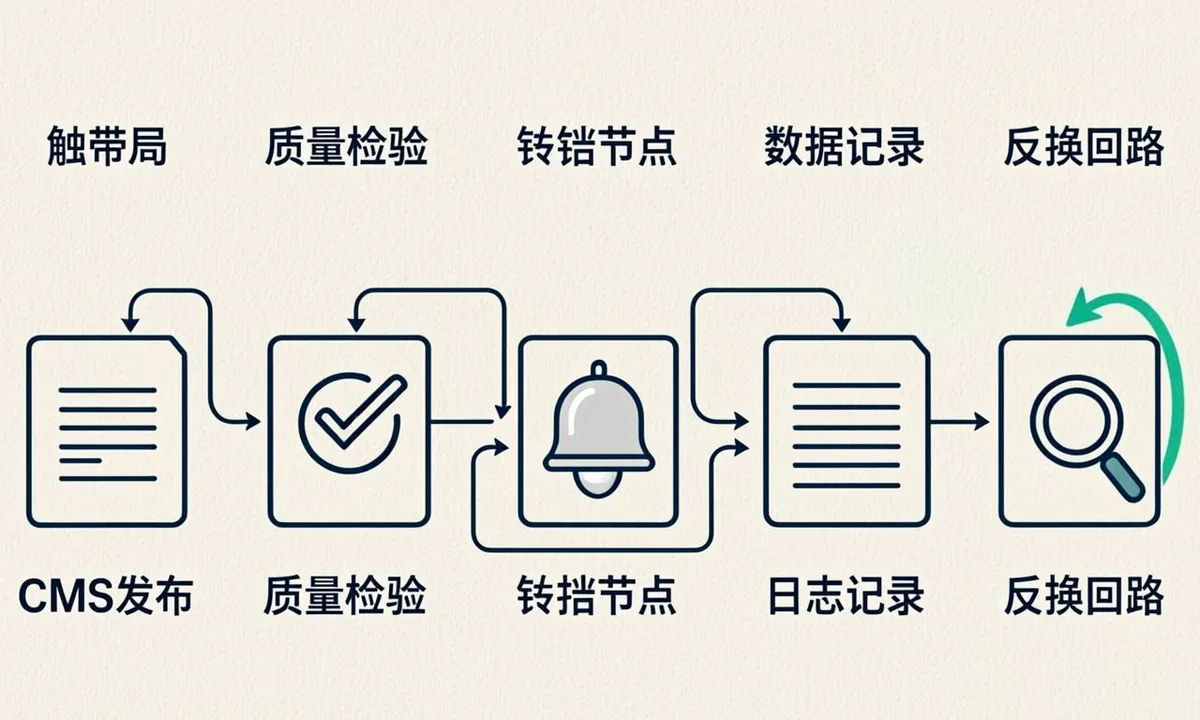
A good publish to index workflow has five parts that work together. First there is a trigger that starts the process at the right moment, usually the transition from draft to published in your CMS. Second there are quality gates that verify the page is ready to be discovered, including indexability, canonical correctness, and internal linking. Third there are notification steps that tell search engines about the change through IndexNow, sitemaps, and where appropriate Google tooling. Fourth there is logging that records what was sent, when, and what response arrived. Fifth there is review that looks at time to index and error patterns and improves the process. If any part is missing the system leaks value.
Triggers should be event based rather than calendar based. Publishing tools like WordPress, Contentful, Sanity, Strapi, Ghost, and custom stacks all fire an event when content status changes. A robust workflow listens for publish, update, and delete as three distinct signals. Publish means a new URL needs discovery. Update means an existing URL needs recrawl. Delete means the URL should return 404 or 410 and search engines should be told through sitemap removal and, for supported types, a URL_DELETED notification. Treating all three as first class events avoids the common pattern where new posts get attention but updates and removals are ignored until they cause index bloat.
Quality gates work best as a short checklist that blocks submission when something is wrong. The page must return 200, must not contain a noindex meta tag or header, must have a self referencing canonical or a deliberate alternate canonical, must be included in the correct sitemap, and must be linked from at least one relevant indexable page. The check should also confirm robots rules allow the path and that the title and meta description are present and unique. These gates can run as a CMS plugin, a pre publish script, or a simple manual list for small teams. The key is that a failed gate stops the notification step. There is no value in asking engines to crawl a page that is currently set to noindex.
Notifications should cover both ecosystems. For Bing, Yandex, Naver, Seznam, and other IndexNow participants, a direct IndexNow submission with your key is the fastest signal. For Google, which does not support IndexNow, the workflow relies on fresh sitemaps with accurate lastmod values, strong internal links, and Search Console inspection for priority URLs. Sites with JobPosting or BroadcastEvent content can also use the Google Indexing API for those eligible URLs. A unified approach that sends both signals at once is described in the two API workflow covering Google and IndexNow together. Your team does not need to memorize these details. The workflow encodes them so every publish follows the same path.
Logging turns activity into evidence. For each event store the URL, the event type, the timestamp, the sitemap that contains the URL, the IndexNow response code, and any Google action taken. Keep this log in a simple table or sheet at first, then move to a database or observability tool as volume grows. Review the log weekly for patterns such as repeated 422 responses from IndexNow, missing sitemap entries, or slow indexing for a specific section. Without this record you cannot tell whether a delay comes from discovery, quality, or crawl capacity.
The table below shows the minimum parts and who typically owns each one in a small team.
| Workflow part | What it does | Typical owner | Tool examples |
|---|---|---|---|
| Trigger | Starts on publish, update, delete | Engineering with CMS admin | CMS webhooks, publish hooks |
| Quality gate | Blocks bad pages from submission | SEO with editor | Checklist, plugin, script |
| Notification | Sends IndexNow plus sitemap refresh | Engineering | Submitter script, sitemap builder |
| Google path | Sitemap plus inspection for priority URLs | SEO | Search Console, Indexing API for eligible types |
| Log and review | Records results and improves process | SEO with content lead | Sheet, database, dashboard |
When these five parts run together, publishing feels calm. Writers press publish, gates confirm readiness, notifications go out within minutes, and the log shows green checks. Managers see time to index shrink from weeks to days or hours for most standard pages. That steady rhythm is the goal. The next sections show how to assign ownership, map content types, and build each part without overengineering.
Roles and ownership across content SEO and engineering
Clear roles prevent the most common failure in content operations, which is diffusion of responsibility. Writers assume SEO will submit URLs. SEO assumes engineering automated it. Engineering assumes content checks indexability. A publish to index workflow names one owner for each gate and one backup. The team can be small. Even with three people you can cover all duties if each duty has a name next to it. The point is not to add hierarchy. The point is to make sure every publish passes through the same hands in the same order.
Content writers and editors own readiness of the page itself. They confirm the topic fills a real gap rather than duplicating an existing URL. They write a specific title that includes the primary term naturally without stuffing. They add a concise introduction that states who the page helps and what it covers. They link to at least one relevant internal hub and from that hub back to the new page where it makes sense. They add images with descriptive alt text and ensure the slug is short, readable, and stable. Editors also confirm the page is set to indexable in the CMS and that any staging noindex has been removed before the final publish click.
SEO also owns the sitemap strategy, including which sections have dedicated sitemaps, how often they rebuild, and what lastmod policy the team follows. When indexing lags, SEO leads the diagnosis by reading coverage reports, checking URL inspection results, and comparing time to index across sections.
Engineering owns triggers, automation, and logs. This includes CMS webhooks or publish hooks, the IndexNow submitter with key management, sitemap generation, queueing with retries, and storage of submission logs. Engineering also owns secrets handling so API keys never appear in client code or chat history. For teams without a dedicated developer, this role can be filled by a technical SEO or a freelancer who sets up a lightweight script once and documents how to rotate keys and read logs. The goal is a system that runs without daily engineering attention but has a clear contact when alerts fire.
Leadership owns prioritization and capacity. Not every URL deserves the same effort. A flagship guide that supports revenue deserves manual inspection and internal link placement on day one. A minor tag archive may deserve no submission at all and may even deserve noindex if it adds no unique value. Leaders help the team say no to low value publishing and yes to updates of high value pages. They also protect time for weekly log reviews and monthly audits. Without that support the workflow fades after the first busy sprint.
A simple RACI style table keeps this visible on one page.
| Task | Content | SEO | Engineering | Lead |
|---|---|---|---|---|
| Confirm unique intent and title | Responsible | Consulted | Informed | Accountable |
| Verify indexable settings and canonical | Responsible | Accountable | Consulted | Informed |
| Maintain robots and sitemap rules | Consulted | Accountable | Responsible | Informed |
| Build publish trigger and IndexNow sender | Informed | Consulted | Responsible | Accountable |
| Review logs and time to index weekly | Consulted | Responsible | Consulted | Accountable |
Start with this table in your team wiki. Add names, not just roles. Review it after the first month and adjust where handoffs felt slow. Most teams find that naming backups for SEO and engineering removes single points of failure. When someone is on leave, the backup knows where the checklist lives, where the logs live, and how to submit a priority URL manually. That continuity is what turns a good intention into a dependable workflow. Clear ownership keeps content team indexing steady and supports a simple editorial seo workflow for every release.
Mapping content types to indexing paths
Not all pages should follow the same indexing path. A breaking news post needs discovery in minutes. An evergreen guide needs careful internal linking and steady recrawls over months. A product page needs sitemap freshness and availability signals. A faceted category with hundreds of filter combinations may need restraint so it does not flood the index with near duplicates. Mapping each content type to a defined path keeps the team fast where speed matters and careful where quality matters.
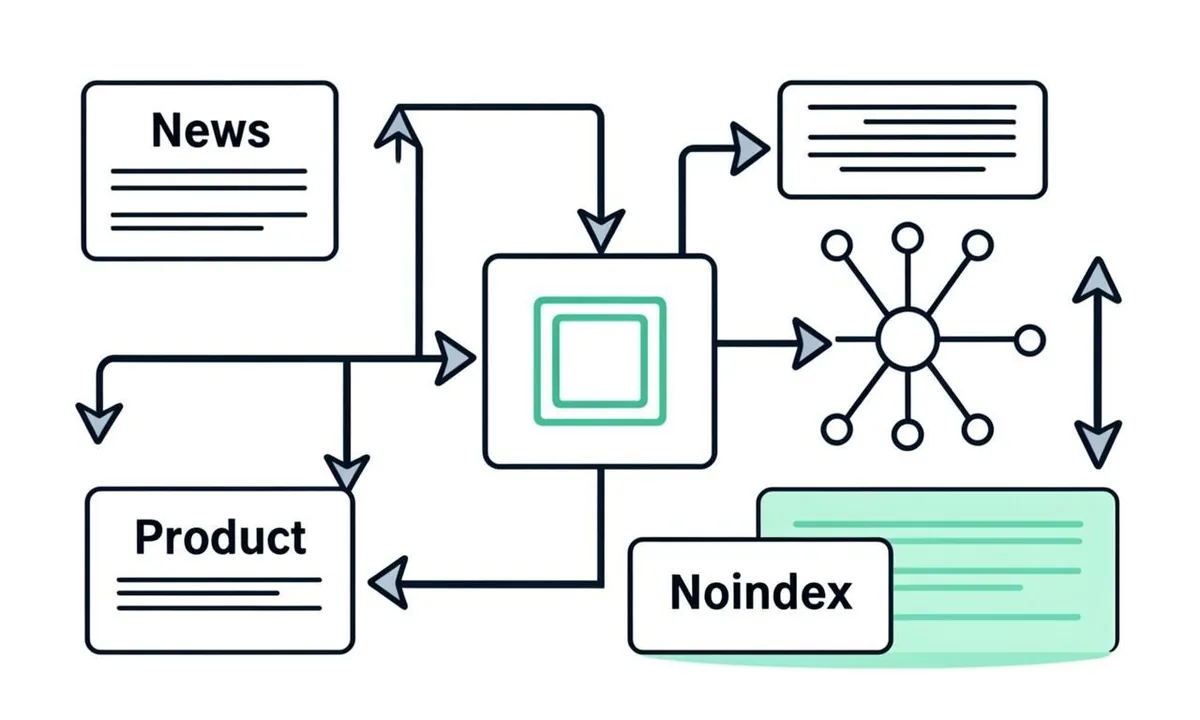
Start by listing the types you actually publish. Most sites have five to eight types, for example posts, guides, news, products, categories, landing pages, docs, job listings, events, and user generated pages. For each type record the typical URL pattern, the sitemap that contains it, the update frequency, the IndexNow policy, and the Google path. A news post might use immediate IndexNow plus news sitemap plus manual inspection for top stories. An evergreen guide might use IndexNow plus standard sitemap plus internal link placement without manual inspection. A low value tag page might use no IndexNow and noindex until it earns traffic. Writing this down removes daily debate.
Consider crawl budget and quality signals as you map. Google allocates more attention to sections that consistently offer unique value and fast responses. If a section contains thousands of thin pages, aggressive submission can backfire by drawing crawls to low value URLs while important pages wait. In that case the workflow should limit IndexNow to new and meaningfully updated URLs, keep sitemaps clean, and add noindex or consolidation for weak pages. The workflow is not only about speed. It is about directing attention to the right URLs.
Job listings and livestreams deserve special handling because the Google Indexing API documents support for JobPosting and BroadcastEvent types. If your site publishes those types with valid structured data, map them to an API path in addition to sitemaps. For all other types, do not present the Indexing API as a general solution. State the scope honestly in your internal docs so future team members do not assume every blog post can be pushed through that endpoint. For IndexNow engines the mapping is simpler, since IndexNow accepts any URL change on your verified host as long as your key file is correct.
Delete paths matter as much as publish paths. When content is removed or consolidated, the workflow should return 404 or 410 for truly gone pages or 301 to the surviving canonical for merges, remove the URL from sitemaps promptly, update internal links that pointed to the old URL, and send IndexNow with the change. For eligible Google types, send URL_DELETED where appropriate. Many teams forget this half of the map and accumulate sitemaps full of dead URLs that waste crawl attention and trigger submitted URL not found errors. A delete checklist of equal weight to the publish checklist prevents that drift.
Document the map in a one page table that lives next to the checklist. Include an example URL for each type so new editors can see the pattern. Review the map quarterly or after any template change. When you add a new content type, add its row before you publish the first URL of that type. That small discipline keeps the workflow aligned with the site as it evolves instead of freezing around last years structure. A written content indexing workflow with a clear index new content workflow helps editors follow the same publishing index process each time.
The pre publish quality checklist
A pre publish checklist is the cheapest way to prevent indexing failures. It takes five to ten minutes, catches most preventable errors, and gives writers confidence that pressing publish will lead to discovery. The list should be short enough to run every time and specific enough to catch real issues. Aim for ten to twelve checks that can be answered with yes or no. If any answer is no, publishing pauses until the issue is fixed or an owner accepts the risk in writing.
Indexability comes first. Confirm the page does not contain a noindex meta tag, does not send an X Robots Tag header with noindex, and is not blocked by robots rules for its path. Confirm the CMS reading or visibility setting allows search engines. If you migrated from staging, view page source on the production URL and search for noindex rather than trusting the editor preview. Confirm the canonical tag points to the intended URL. For most new pages that means a self referencing canonical. For syndicated or near duplicate pages it means a deliberate canonical to the primary version with team agreement.
Content quality comes next. Confirm the title is specific and under about sixty characters, the meta description is between about one hundred fifty and one hundred sixty characters, the H1 states the topic clearly, and the intro explains who the page helps within the first hundred words. Confirm the page offers something distinct from existing URLs on the same topic. If two pages answer the same query, decide which one should rank and consolidate or differentiate before publishing. Confirm at least one internal link points to the new page from a relevant hub and that the new page links out to two or three related internal pages where helpful. Orphan pages with no incoming links are discovered slowly and evaluated as low priority.
Technical readiness closes the list. Confirm the URL returns 200, loads quickly on mobile, and renders main content without requiring interaction. Confirm images have descriptive alt text and reasonable file sizes. Confirm structured data validates where you use it, for example Article or Product markup, without errors in a rich results test. Confirm the URL is included in the correct sitemap or will be on the next rebuild, and that lastmod will reflect the publish time. Confirm analytics and consent handling do not block rendering of core content.
Make the checklist runnable in three ways. Writers run it manually in the CMS for every post. Editors spot check it during review for priority content. Automation runs a subset on every publish event and blocks IndexNow submission when a check fails. The table below shows a starter list you can copy into your CMS guidance.
| Number | Check | How to verify | If it fails |
|---|---|---|---|
| 1 | Returns 200 and loads fast | Open URL in incognito plus page speed check | Fix hosting or template before submit |
| 2 | No noindex in meta or headers | View source and response headers | Remove flag in CMS or plugin |
| 3 | Robots allows the path | Test in robots tester | Adjust allow rules narrowly |
| 4 | Canonical is intentional | View source canonical tag | Correct to self or primary |
| 5 | Unique title and description | SERP preview plus site search | Rewrite to be specific |
| 6 | Distinct intent versus existing pages | Search site for primary term | Consolidate or differentiate |
| 7 | Internal links in and out | Check hub links and page links | Add contextual links |
| 8 | Sitemap inclusion planned | Check sitemap or build log | Add to correct sitemap |
| 9 | Structured data valid where used | Validate with testing tool | Fix markup errors |
| 10 | Alt text and media sizes sane | Inspect images | Compress and describe |
Keep the list visible inside the publishing interface if your CMS allows custom sidebar notes. Teams that must open a separate wiki to find the checklist follow it less often. After the first month, review which checks failed most and consider turning those into automatic validations so humans focus on judgment rather than repetition.
Wiring your CMS to IndexNow and sitemaps
Automation is what makes the workflow scale. Manual submission works for five posts per month and breaks at five posts per day. Wiring your CMS to send IndexNow notifications and refresh sitemaps at publish time removes the memory burden and shortens discovery from days to minutes for participating engines. The setup can be small. A single webhook handler plus a submitter script plus a sitemap rebuild covers most sites. Larger sites add queues and batching, but the core pattern stays the same.
Start with IndexNow key hosting. Generate a random key, save the text file at your site root with the exact name the protocol expects, and verify it loads over HTTPS. Keep a copy of the key in your secrets manager. Every IndexNow submission must include the host, the key, the key location, and the list of changed URLs in JSON. Test with one URL first and confirm a 200 or 202 response. A 400 usually means malformed JSON or mismatched host and key location. A 403 often means the key file is missing or unreachable. A 422 means the URL list contains invalid or cross host URLs. Log the response code for every batch so you can spot patterns. The official details are in the IndexNow documentation, which your engineering owner should read before building.
Next connect the CMS trigger. Most modern CMS platforms can fire a webhook on publish, update, and unpublish. Point that webhook at a small receiver endpoint you control. The receiver should verify the webhook signature, parse the event, extract the canonical URL, run the quality gates, and then queue an IndexNow submission. It should also mark the sitemap as dirty so the next rebuild includes the change. If your CMS cannot fire webhooks, poll its API every few minutes for recently modified content or hook into the publish action with a plugin. WordPress teams can use existing IndexNow plugins or a small custom hook. Headless teams often add the call to their build or deploy pipeline instead.
Sitemaps need equal care. Each sitemap should contain only indexable, canonical, 200 status URLs for one section, with accurate lastmod timestamps that reflect real changes rather than the last build time. Rebuild the affected sitemap immediately after publish for small sites or every few minutes for busy sites. Keep sitemap index files accurate when you have many URLs. Validate that new URLs appear in the sitemap within your target window, for example within fifteen minutes, and alert if they do not. Remember that IndexNow complements sitemaps rather than replacing them. Engines still use sitemaps for full coverage and for URLs that were missed by pings.
Protect the system with queues and limits. IndexNow allows up to ten thousand URLs per request, but most publish events involve one to ten URLs. Queue events, deduplicate repeats for the same URL within a short window, and retry failed batches with backoff. Do not hammer endpoints on bulk imports. Pace large backfills over hours and prioritize new and updated high value pages first. Log request IDs where available and store response codes. With this wiring in place, writers simply publish. The system handles notification, sitemap freshness, and evidence without extra clicks. A stable publish indexing pipeline with automatic index on publish keeps new URLs moving without manual checks.
Handling Google separately without confusion
Teams often assume one submission covers all engines. It does not. Google does not support IndexNow, so your workflow must handle Google through its own path while IndexNow handles Bing, Yandex, Naver, Seznam, and other participants. Mixing these paths in team docs causes confusion and false expectations. State the split plainly in your checklist and automate each side independently so neither is forgotten.
For Google, sitemaps plus internal links do most of the work. Keep sitemaps clean and fresh as described above. Place prominent internal links from crawlable hubs to new important pages on day one. Use Search Console URL inspection and request indexing sparingly for priority URLs rather than for every post, since that tool has strict limits and is not designed for bulk use. General crawling and indexing behavior is described in the Google Search Central crawling and indexing overview. For sites with JobPosting or BroadcastEvent markup, add the Google Indexing API for those eligible URLs with proper service account setup and quota handling. For setup steps, see the complete setup guide for faster indexing. For honest scope limits on other page types, align the team around the documented support rather than off label hopes.
Internal linking deserves emphasis because it influences both discovery and evaluation for Google. A new guide linked from the homepage resource section, a relevant category hub, and two related posts will be found and taken seriously faster than the same guide reachable only through the sitemap. Make link placement part of the publish definition of done. Editors should add at least one incoming link from an indexed hub before marking a story as published. For large sites, audit orphan pages monthly and either link, consolidate, or noindex them. This habit does more for Google indexing speed than repeated manual inspection clicks.
Avoid common Google specific mistakes. Do not leave submitted sitemaps full of redirects, 404s, or noindex URLs. Those entries waste crawl attention and erode trust in your sitemaps. Do not change canonical tags casually after publication without updating sitemaps and links. Do not block CSS or JavaScript resources that Google needs to render the page. Do not assume lastmod alone forces recrawl. It is a hint that works best when the rest of the signals agree that the page matters. When coverage reports show patterns such as alternate page with proper canonical or duplicate without user selected canonical, treat them as information architecture feedback rather than errors to brute force with more submissions.
Teach the team a simple mental model. IndexNow is a direct ping that says this URL changed on this host, please check it soon, and it works for participating engines. Google discovery is an inference based on sitemaps, links, quality, and history, with direct notifications limited to specific structured data types. Both benefit from the same foundations of indexable pages, clean sitemaps, and thoughtful links. When everyone understands the split, nobody asks why an IndexNow 202 did not place the page into Google within the hour. Expectations stay honest and effort goes to the levers that actually move each engine.
Logging monitoring and alerting for every publish
If it is not logged, it did not happen. That rule keeps publish to index workflows honest. Every publish, update, and delete should create a log entry with the URL, event type, timestamp, actor or automation name, sitemap status, IndexNow response, and any Google action. This record lets you answer basic questions in seconds. Did we submit the new guide. Did the receiver see the webhook. Did IndexNow accept the batch. Is the URL in the sitemap. Without it you rely on memory and screenshots.
Start simple. A shared sheet or a small database table with columns for date, URL, event, submitted to IndexNow, IndexNow code, in sitemap, Google inspection requested, and notes covers most needs for teams publishing under fifty URLs per week. Engineering can append rows from the webhook receiver automatically. SEO adds manual rows for inspection requests. Content adds context such as this was a major update with new sections. Review the sheet every Monday for ten minutes. Look for missing submissions, repeated errors, and URLs that remain unindexed after seven days. That short review catches most drift before it becomes a backlog.
As volume grows, move to structured logs with alerts. Store events in your application database or observability platform with retention of at least ninety days. Alert on receiver errors, webhook signature failures, missing key file responses, IndexNow 403 or 422 spikes, sitemap build failures, and sitemap entries that contain non indexable URLs. Keep alerts specific and actionable. An alert that says IndexNow batch failed five times in ten minutes with 403 should link to the key file URL and the recent deploy. An alert that says sitemap contains 120 new 404s should link to the failing URLs and the sitemap build log. Vague alerts get muted. Specific alerts get fixed.
Dashboards help leaders see health at a glance. Track submissions per day, acceptance rate by response code, sitemap freshness lag in minutes from publish to sitemap inclusion, and share of new URLs indexed within seven days using Search Console data. Do not try to track Google index state in real time for every URL. Sample priority sections and trend them. The goal is not perfect telemetry on day one. The goal is enough visibility that silent failures become loud quickly.
Retention and privacy matter too. Logs contain URLs that may include campaign parameters or preview tokens. Strip tokens before storage, restrict access to the log, and define who can see full URLs versus aggregated counts. Document how long you keep detailed rows and when you roll them into monthly summaries. With these habits the workflow becomes auditable. When a launch underperforms you can show exactly what was published, when it was submitted, how engines responded, and where the bottleneck appeared.
Measuring time to index and reporting wins
Time to index is the headline metric for a publish to index workflow. It answers the question leaders actually ask, which is how long after we press publish does the page appear in search results for its exact URL. Define it precisely as the hours from first publish timestamp in your CMS to first observed index timestamp in your checks. Use Search Console URL inspection history, site colon checks as a rough proxy, or rank tracking for exact URL queries. Be consistent about the method so trends are comparable even if absolute numbers are approximate.
Segment the metric so it guides action. Report median and ninetieth percentile time to index separately for news, evergreen guides, products, and docs. Report separately for IndexNow engines and Google since their paths differ. A typical early result is IndexNow engines discovering new URLs within hours while Google takes days for standard content and faster for well linked priority pages. That split is normal and should be explained in every report so nobody expects identical speed across engines. Track the share indexed within one day, within seven days, and within thirty days. Those three buckets show both speed and completeness.
Connect indexing speed to outcomes without overstating cause. Faster discovery does not guarantee rankings, but it does allow early links and engagement to count sooner and it shortens feedback loops for content quality. Show examples where a launch indexed in six hours and earned impressions in week one versus a similar launch that waited nine days and missed its seasonal peak. Keep the comparison honest by noting other differences such as internal link placement and topic competition. Overclaiming that submission boosts rankings will erode trust. The honest claim is that good workflow removes avoidable delay so quality can compete sooner.
Reporting should be short and regular. A monthly one page summary works for most teams. Include volume published by type, median time to index by segment, acceptance rate for IndexNow batches, sitemap freshness, top five slowest URLs with reasons, and one improvement for next month. Share it with content, SEO, and engineering together so fixes get owners. Celebrate concrete wins such as cutting median time from six days to two days for guides after adding hub links on day one. Those stories sustain support for checklist discipline more than abstract best practices.
Use the data to set targets that fit your site. A small blog might aim for ninety percent of posts indexed within seven days on Google and within one day on IndexNow engines. A newsroom might aim for minutes on IndexNow engines and hours on Google for top stories. An enterprise catalog might aim for steady sitemap health with zero submitted 404s and predictable weekly indexing of priority batches. Review targets quarterly. When you consistently hit them, shift focus from speed to quality, such as reducing thin pages or improving internal link depth, since those factors decide whether fast discovery turns into durable visibility.
Rolling out the workflow and keeping it alive
Rollout works best as a pilot rather than a big launch. Pick one section with steady volume and clear ownership, for example the blog or docs, and run the full workflow there for four weeks. Document the trigger, checklist, IndexNow sender, sitemap handling, log location, and review rhythm on a single page. Train the writers and editors in that section with a thirty minute session and a live publish demo. Keep the rest of the site on the old habits during the pilot so you can compare time to index and error rates before and after. A focused pilot surfaces integration issues quickly without disrupting every team at once.
During the pilot, track friction as carefully as metrics. Note every time someone skips the checklist and why. Was it too long. Was it hidden in another tool. Did automation block a valid publish with a false positive. Adjust the checklist to ten items max and move noisy automatic checks into warnings rather than hard blocks where appropriate. Confirm webhook delivery for every event type including updates and deletes, not just new publishes. Test a delete on a staging URL end to end to prove sitemap removal and IndexNow handling work. Fix key file monitoring so an expired or moved key triggers an alert instead of silent 403s.
After the pilot, expand in waves. Add the next content type, connect its sitemap, map its indexing path, and assign owners using the same one page template. Share the pilot results in plain numbers, for example median time to index fell from eight days to three days for pilot posts with zero missed submissions. That evidence earns support for the small engineering time needed to wire additional sections. Resist the urge to automate every edge case at once. A manual checklist plus automatic IndexNow for new URLs plus daily sitemap rebuild covers most value. Add queues, batching, and advanced retries only when volume or error rates justify the complexity.
Keeping the workflow alive requires light but regular care. Review logs weekly, audit sitemaps monthly, revalidate robots rules after every site release, and rotate IndexNow keys on a defined schedule with overlap so submissions never fail during rotation. Revisit the content type map quarterly and update it when templates change. Onboard every new writer with the checklist on day one and show where the log lives. When someone leaves, transfer ownership explicitly rather than letting it fade. These habits take little time and prevent the slow drift that returns teams to manual pings and missed URLs.
Success looks undramatic. Publishing feels normal, notifications go out without thought, logs stay green, and new pages appear in results within the expected window. That calm is the return on a publish to index workflow. It does not promise rankings. It promises that good content gets a fair and fast chance to be evaluated. For content teams that publish week after week, that reliability compounds into steadier traffic, clearer reporting, and fewer emergency investigations.
FAQ
How is a publish to index workflow different from just submitting sitemaps?
Sitemaps alone tell engines where URLs live when they next check the file. A publish to index workflow adds event triggers at publish time, quality gates that block bad pages, immediate IndexNow pings for participating engines, fresh sitemaps with accurate lastmod, internal link placement, and logging of every step. The combination shortens discovery and catches errors that a static sitemap cannot catch on its own.
Does this workflow guarantee indexing in Google?
No. It guarantees fast and clean discovery signals plus eligibility checks, but Google still decides whether to index based on quality, uniqueness, site history, and crawl capacity. What the workflow does is remove avoidable delays and errors so good pages are evaluated sooner. For background on statuses where discovery does not lead to indexing, review coverage guidance and improve content depth, internal links, and canonical clarity.
Do we still need IndexNow if we already maintain sitemaps?
Yes for sites that care about Bing, Yandex, Naver, and Seznam. IndexNow notifies those engines within minutes while sitemap checks happen on their own schedule. The two methods work best together. Sitemaps provide complete coverage and IndexNow provides speed for changes. The setup cost is low once the key file and submitter exist, and the log shows accepted batches clearly.
What should trigger the workflow in our CMS?
Trigger on three events with distinct handling. Publish for new URLs needs full checks plus IndexNow plus sitemap inclusion plus hub links. Update for meaningful changes needs IndexNow with the same URL plus lastmod refresh. Delete or redirect needs sitemap removal plus link updates plus IndexNow to signal the change. Minor edits such as typo fixes can update lastmod without a new IndexNow ping if you want to reduce noise, but define that threshold in writing. Document the choices as part of your index workflow design so editors and developers share the same rules.
How do we handle staging noindex mistakes?
Make indexability the first checklist item and automate part of it. The receiver should fetch the production URL after publish and verify no noindex flag exists in meta or headers and that robots allows the path. If the check fails, block IndexNow submission and alert SEO and the editor immediately. Also separate staging and production settings so staging protections cannot migrate through deploys or theme syncs.
How long until we see faster time to index?
Most pilots show improvement within two to four weeks for IndexNow engines and within four to eight weeks for Google on standard content, assuming checklists are followed and sitemaps stay clean. Priority pages with strong internal links often improve fastest. Track median time to index weekly during the pilot and compare pilot sections to control sections. If numbers do not move, check logs for failed submissions, sitemap lag, or quality gates that are being skipped. Use the pilot to refine content ops indexing and confirm that editorial index automation supports editors rather than adding extra steps.
Sources
- https://www.indexnow.org/documentation
- https://www.bing.com/webmasters/help
- https://developers.google.com/search/docs/crawling-indexing/overview
- https://developers.google.com/search/docs/monitor-debug/search-console-start
- https://schema.org/Article